
Experts Reveal Non-Subsidised Fuel Price Hike Will Not Affect Public Economic Conditions
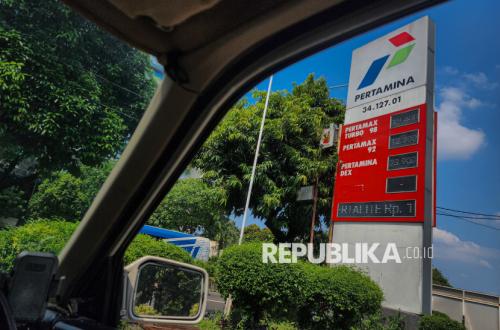
REPUBLIKA.CO.ID, JAKARTA – An energy economics expert from Universitas Gadjah Mada (UGM), Fahmy Radhi, stated that the government’s decision to increase prices of several non-subsidised fuels (BBM) effective 18 April 2026 is appropriate. This price hike represents a correction to previous policies that did not follow market mechanisms.
The fuel price increase in Indonesia occurred relatively later compared to several other countries. Since March 2026, countries such as Singapore, Malaysia, India, and European nations had already adjusted their fuel prices in line with the surge in global crude oil prices. Indonesia only made the adjustment in mid-April, which is seen as an effort by the government to hold back price pressures so they are not immediately felt by the public.
“I think it is already appropriate. In fact, this serves as a correction to previous policies that did not raise non-subsidised fuel prices. So far, non-subsidised fuel prices, especially RON 92 and above, have indeed been determined by market mechanisms in line with economic conditions,” Fahmy said when contacted on Saturday (18/4/2026).
He explained that when global oil prices rise, non-subsidised fuel prices should also increase accordingly. Conversely, prices could fall when global oil prices decline, although not always proportionally.
“When the previous government did not raise non-subsidised fuel prices, in my opinion, that was a misguided decision. And now it is being corrected with this increase on 18 April,” he stated.
Fahmy assessed that this policy will not have a significant impact on the public’s economic conditions. This is because consumption of non-subsidised fuels is relatively small and not used for vital sectors such as the distribution of essential goods.
“The impact on the public, in my view, is not significant. Because the number of non-subsidised fuel consumers is not as large as Pertalite and diesel users. Moreover, non-subsidised fuels are not used for transporting essential goods,” he explained.
According to him, this differs from subsidised fuels like Pertalite and diesel, which, if raised, would immediately trigger inflation and pressure purchasing power. Therefore, the government’s decision to hold subsidised fuel prices is seen as the right step to maintain economic stability.
“If Pertalite and diesel prices are raised, it will definitely trigger inflation and reduce purchasing power. So the decision to raise non-subsidised fuels but hold subsidised ones, in my opinion, is already appropriate,” Fahmy said.
Regarding concerns about users switching from non-subsidised to subsidised fuels, Fahmy viewed the potential as relatively small. He noted that the characteristics of non-subsidised fuel consumers make it unlikely for them to switch to lower-octane fuels. Moreover, the government did not raise prices for Pertamax and Pertamax Green 95, so the public will not immediately switch to Pertalite.
“That risk certainly exists, but it is small. Because non-subsidised fuel users are generally private car owners, even luxury car owners. They will not suddenly switch to subsidised fuels because it could affect their vehicle engines. Moreover, Pertamax and Pertamax Green prices are also not increasing,” he said.
In agreement with Fahmy, an economist from Universitas Negeri Manado (Unima), Robert Winerungan, supported the government’s move on raising non-subsidised fuel prices and not increasing subsidised fuels, Pertamax, and Pertamax Green 95 to protect the purchasing power of the public, especially lower and middle-income groups. This decision, according to Robert, is also to control inflation.
“Non-subsidised fuels are consumed by the upper class, which does not contribute much to inflation,” he said.
Robert also highlighted that compared to many other countries, fuel prices in Indonesia are still relatively cheap, especially for subsidised types like Pertalite and diesel. In fact, in some global comparisons, Indonesian fuel prices are still below the average in Asia and developed countries.
Nevertheless, he reminded the government to anticipate potential shifts in consumption to subsidised fuels through firmer policies. One of them is limiting the use of subsidised fuels for certain vehicles.
“There needs to be regulations, for example, vehicles priced above Rp500 million should not consume subsidised fuels. Do not let this policy be exploited for personal interests,” Robert stated.
He added that the public also needs to play a role in maintaining efficient energy consumption. In addition, the government must ensure that the supply of subsidised fuels remains secure to avoid shortages and long queues in the field.
According to the MyPertamina website, prices of several non-subsidised fuels have risen significantly, including Pertamax Turbo priced at Rp19,400 per litre from the previous Rp13,100 per litre effective 18 April. For Dexlite, the price is Rp23,600 per litre, up from the previous Rp14,200 per litre.
The increase also applies to Pertamina Dex, now priced at Rp23,900, up from the previous Rp14,500. Nevertheless, Pertamina decided not to raise prices for subsidised fuels and some non-subsidised fuels, including Pertamax with RON 92 at Rp12,300 and Pertamax Green at Rp12,900, to remain the main buffer for public purchasing power amid global pressures.