
Experts Highlight Major Challenges in Developing Indonesia's Sharia Economy
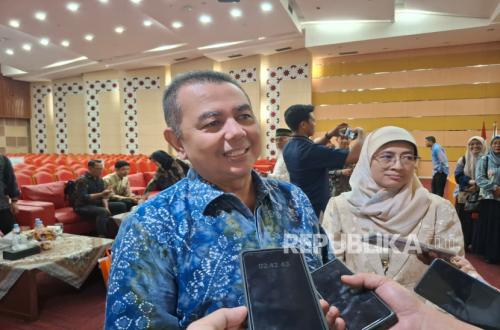
Jakarta — The development of Indonesia’s Islamic economy still faces a classic challenge: a lack of public awareness of Islamic economics. Moreover, conventional finance, which is inclined toward ribawi (usury), has become entrenched in the country.
This was stated by Prof Nurul Huda, an Islamic economics expert from Universitas YARSI in Jakarta. He said that Islamic economics must enter the conventional economy gradually. ‘In my view, we must erode its roots so that Islamic economics also penetrates into that area,’ Prof Nurul said after delivering a national seminar and the inauguration of the Ikatan Ahli Ekonomi Islam Indonesia (IAEI) branch in Jakarta on Wednesday (20 May 2026).
The Deputy Rector of Universitas YARSI reminded that the main objective of all Islamic economic activity is welfare and happiness in this world, and safety in the afterlife. This is referred to as al-falah. The concept has two dimensions not possessed by conventional economics: ukhrawi and worldly. Thus, Prof Nurul explained, al-falah is the fundamental point of difference between Islamic and conventional economics.
Syahruddin Ramlan, Deputy Director of Sharia Financing at the Ministry of Finance (Kemenkeu) RI, added that the challenge in Indonesia’s Islamic economy is still low awareness among Muslim communities toward Islamic economics. ‘Indeed, our awareness of Sharia economics is still low, while we are already used to conventional economics,’ he said. He explained that Indonesians are faced with two choices: conventional economics that they have long known, and Sharia economics. But the problem is that conventional economics has developed for so long. ‘We (the Islamic economy) are only coming in later,’ said Syahruddin.