
Experts Discuss the Importance of Party Cadre Development: The General Chairman Cannot Be a Non-Cadre
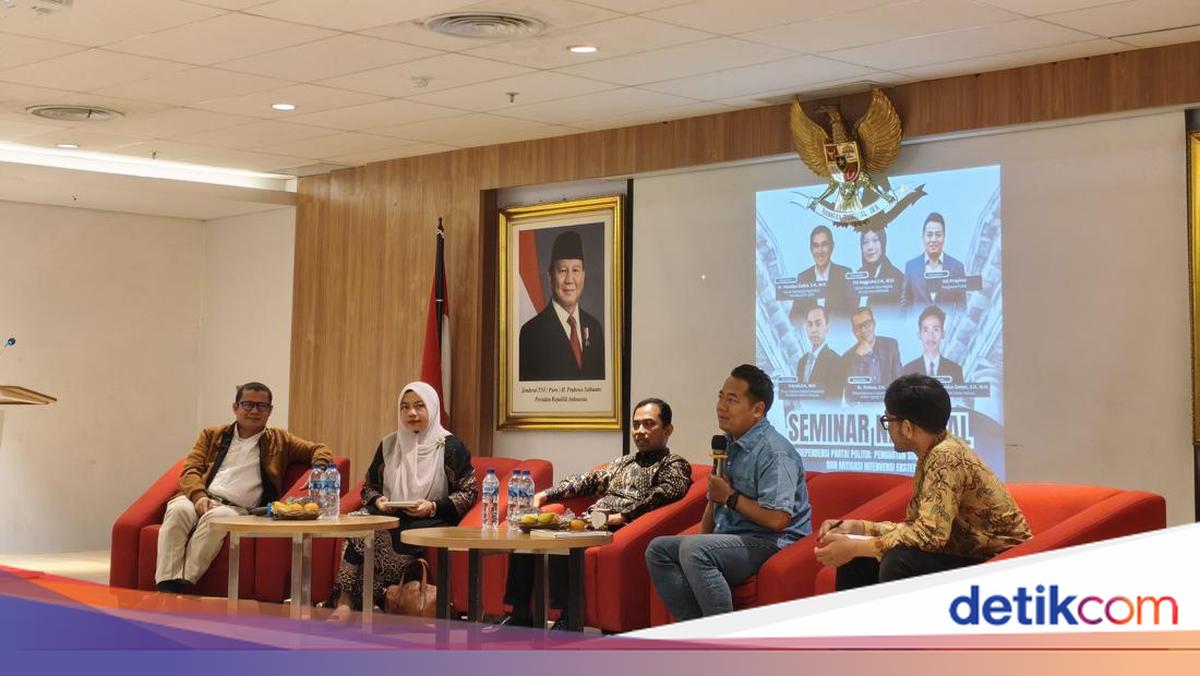
A lecturer in constitutional law at the University of Indonesia, Titi Anggraini, assesses that one indicator of unhealthy democratic governance within political parties is the election of a general chairman who does not originate from the party’s cadres. Party leadership should reflect the cadre development process within it.
This was stated at a national seminar themed ‘Independence of Political Parties: Strengthening Internal Solidarity and Mitigating External Intervention’, organised by Pinter Hukum.
In addition to Titi, the seminar was attended by political observer Adi Prayitno, lecturer from the Faculty of Law at Sultan Ageng Tirtayasa University Firdaus, and lecturer from the Faculty of Law at Nahdlatul Ulama Indonesia University Erfandi. The seminar took place at the National Library Building, Central Jakarta, today, Saturday (28/3/2026).
“The general chairman of a political party should truly be the result of the cadre development mechanism. The decision-making process in the party must also be democratic, listening to the aspirations of officials and members,” said Titi.
Titi also criticised the practice of instant leaders emerging within the party. She assessed that although parties are open, leadership should still be held by individuals who have gone through a long process as cadres.
“A person who has just joined, even within days, should not suddenly become the general chairman. The party must still be managed by cadres who have progressed within it,” she added.
A similar view was expressed by political observer Adi Prayitno. At the seminar, Adi conveyed his view that to create the independence of a party and free it from various interventions, political parties must consistently carry out two things: recruitment and cadre development.
“The serious problem for parties is regeneration and party recruitment, especially in the context of elites,” said Adi.
He exemplified that many party elites emerge through ‘shortcuts’ or without recruitment and cadre development. He said that it is not uncommon for party elites to appear suddenly due to factors such as having capital or an attractive appearance.
“Perhaps only capital, handsome face, seen, maybe only capital she looks beautiful maybe, or maybe because she has money, she is nominated. This violates the principles of party politics,” stated Adi.
“A healthy and strong party is one that has a system based on meritocracy. That is why a healthy and solid party must not, for any intention, end up recruiting unclear people. No wind, no rain, suddenly he becomes the party chairman. There are cases like that. That is unhealthy,” he explained.
Adi assessed that to create an independent party ecosystem free from intervention, parties must also be sterile from the emergence of parties that do not go through party recruitment and cadre development. He said that parties must not be like a car rental, which can be bought and rented at any time just for short-term interests.
“So if we discuss today about independence, eliminating intervention from any party, it is that political parties must be sterile. And rest assured, political parties can be strong, stable, solid, only with those two models. Recruitment and cadre development,” clarified Adi.
“Political parties are not car rentals that can be bought and rented at any time for election interests, then abandoned afterwards. What is the effect? Political parties can be battered and shut down. That must be avoided. And I think this applies to any political party,” he concluded.