
Experts Call for Strengthening National Economic Resilience Through "Islamic Blended Finance"
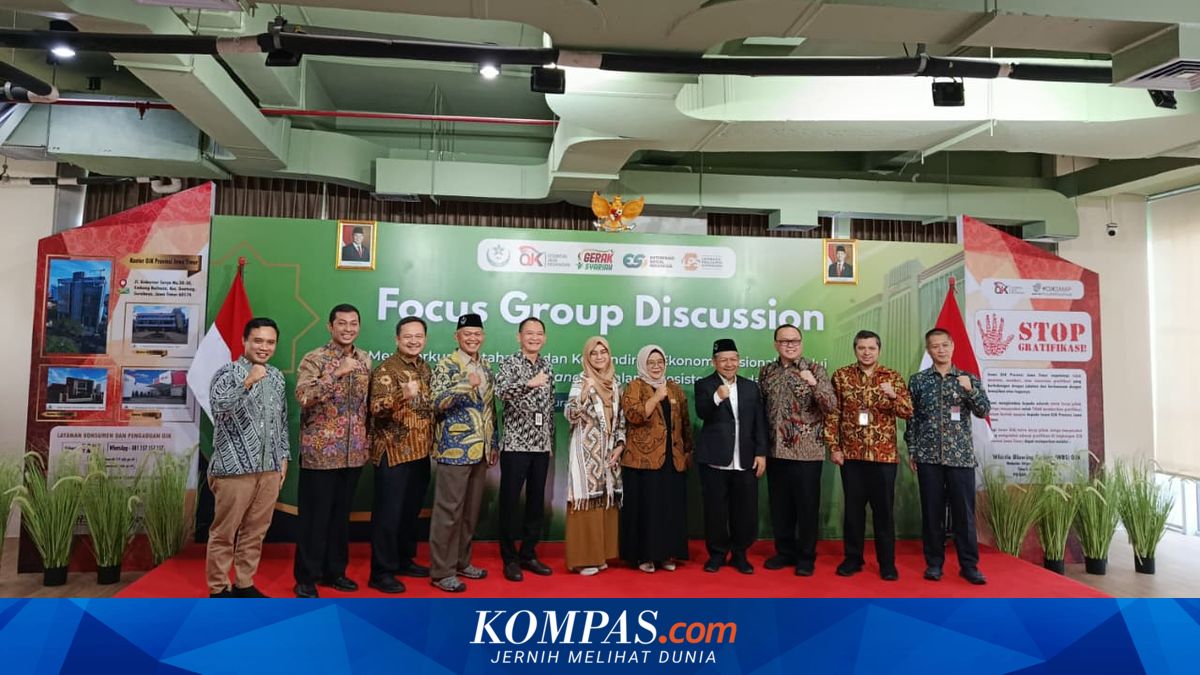
SURABAYA – Strengthening the resilience and self-sufficiency of Indonesia’s national economy requires the optimisation of various alternative financing sources, including through the development of Islamic Blended Financing (IBF) that integrates commercial finance with Islamic social finance.
This emerged during a Focus Group Discussion (FGD) themed “Strengthening National Economic Resilience and Self-Sufficiency through Islamic Blended Financing Mobilisation within the National Funding Ecosystem”, organised on the initiative of Syarikat Islam (SI) East Java at the Financial Services Authority (OJK) Building in East Java Province.
The discussion brought together various experts, including Prof. Mukhtasor from the Sepuluh Nopember Institute of Technology and Chairman of the SI East Java Regional Council, Prof. Achmad Subagio from Jember University, Rosy Wedyawati from the Directorate of Islamic Finance and State-Owned Enterprises at the Ministry of National Development Planning (Bappenas), Prof. Irfan Syauqi Beik from Bogor Agricultural Institute, Prof. Raditya Sukmana from Airlangga University, and Dr. Lisa Listiana from the University of Indonesia.
Mukhtasor highlighted the importance of building national economic self-sufficiency by recalling the ideas of HOS Cokroaminoto, which formed the foundation of the Islamic Association’s struggle to strengthen the economy of the Muslim community. He stressed that currently there remains a policy imbalance between foreign investment and domestic financing sources.
“Foreign investment often receives various facilities, whilst domestic financing sources have yet to receive equivalent policy support,” he stated in an official statement on Sunday (8 March 2026).
In the forum, SI, together with Islamic economy academics, initiated four strategic policy recommendations, including the development of a Government Cooperation scheme with Community Fund Managers (KPPDM), a scheme for guaranteeing and developing productive waqf assets.
Other recommendations included optimising the role of Islamic banks as waqf trustees and utilising strategic waqf assets as underlying assets for Cash Waqf Linked Sukuk (CWLS).
The four recommendations were compiled in the form of a policy brief presented to the Minister of Bappenas during an Islamic Economy Dialogue session.
Meanwhile, Irfan Syauqi Beik explained that the KPPDM scheme opens opportunities for community fund management institutions to participate in development financing, either as operators, through the establishment of Special Purpose Vehicles (SPVs), or through collaboration with other project operators.
Prof. Raditya Sukmana highlighted several best practices in managing productive waqf at the global level, such as the construction of ZamZam Tower in Mecca and the management of Bencoolen Waqf in Singapore.
“With a large Muslim population, Indonesia should ideally not only be the world’s largest halal market but also be able to play a key role as a major producer in the global Islamic economy ecosystem,” he said.
In agreement, Lisa Listiana emphasised the importance of opening broader space for public participation in development financing so that it is not dominated solely by major capital owners.
“Community involvement can reduce economic disparity, create more equitable opportunities, whilst simultaneously strengthening national self-sufficiency,” she asserted.
A representative from the Deposit Insurance Corporation (LPS), Muhammad Rifqi, conveyed that efforts to encourage Islamic banks to serve as waqf trustees and the mechanism for developing and guaranteeing waqf assets began approximately three years ago.
Through this discussion, participants agreed that strengthening Islamic Blended Financing requires policy synergy, institutional innovation, and collaboration between government, regulators, Islamic financial institutions, and Islamic social fund managers to strengthen inclusive and sustainable national development financing.