
Experts Applaud Minister Bahlil's Energy Diplomacy with Russia
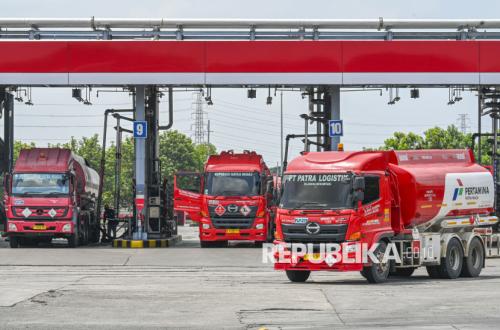
REPUBLIKA.CO.ID, JAKARTA - Energy experts and researchers view the Indonesian government’s move to establish an energy supply cooperation with Russia as a commendable tactical decision. The agreement, reached through a meeting between the Minister of Energy and Mineral Resources (ESDM) Bahlil Lahadalia and the Russian Minister of Energy, Sergey Tsivilev, encompasses the supply of crude oil, LPG, and the development of storage facilities.
Ridho Hantoro, a researcher at the Centre for Energy and Mineral Resources Studies at the Institut Teknologi Sepuluh Nopember (ITS), considers the additional supply from Russia a sensible tactical step in the context of national energy diversification. According to him, this policy can expand supply options while reducing the risks of import concentration, which has long been one of Indonesia’s vulnerabilities.
“The additional supply from Russia is a sensible tactical step to broaden supply options and reduce import concentration risks,” he stated when contacted on Friday (17/4/2026).
Ridho also gave a positive assessment of the planned storage development that is part of this cooperation. In his view, strengthening storage infrastructure is actually a more fundamental step than simply increasing supply volumes.
“Building storage is a more fundamental strategic step because it strengthens system resilience, not just adding temporary purchase volumes,” said Ridho.
While appreciating the government’s move, Ridho reminded that the success of this policy should not stop at diplomatic achievements. He emphasised the importance of technical indicators in implementation, from competitive supply prices, suitability of crude types with domestic refineries, to the effectiveness of LPG in curbing imports.
“The success of this policy will not be measured by its diplomatic headlines, but by very concrete matters: whether the supply prices are more competitive, whether the crude is suitable for refineries, whether LPG truly reduces import pressures, whether the storage is in the right logistical locations, and whether the stock can truly be accessed quickly during crises,” he stressed.
Ridho also placed this cooperation in a broader context as part of the national energy transition and resilience strategy. He reminded that additional supplies from abroad will not solve fundamental issues if not accompanied by strengthening the domestic energy sector.
“This should be seen as part of the energy transition and resilience strategy, not as an end goal. Indonesia still needs to parallelly strengthen domestic lifting, refinery upgrades, fuel consumption efficiency, LPG substitution, bioenergy, and accelerated electrification. Without that, additional supplies will only fix symptoms, not the root vulnerabilities,” he explained.
In line with Ridho, Ahmad Nizar Hilmi, a lecturer and public policy researcher at Universitas Negeri Surabaya (Unesa), also applauded the government’s step. He assessed that this cooperation is not only technocratic in dimension but also part of the global energy economic-political dynamics that influence domestic policy directions.
“From a policy perspective, the energy supply cooperation with Russia needs to be read not merely as a technocratic solution to add stock, but also as part of the global energy economic-political dynamics that shape domestic policy choices,” he said.
On the other hand, he views the government’s step as still relevant as a stabilisation policy amid global pressures. Energy, he said, is a highly sensitive political commodity to economic turmoil.
“Keeping supplies and prices under control means dampening potential social pressures from inflation and economic volatility. Therefore, this policy is pragmatic in the short term, but risks becoming ‘dependency management’ if not accompanied by other more fundamental improvement agendas,” he concluded.