
Expert: Riau Police's Green Policing Solution to Curb Emissions Amid El Nino Threat
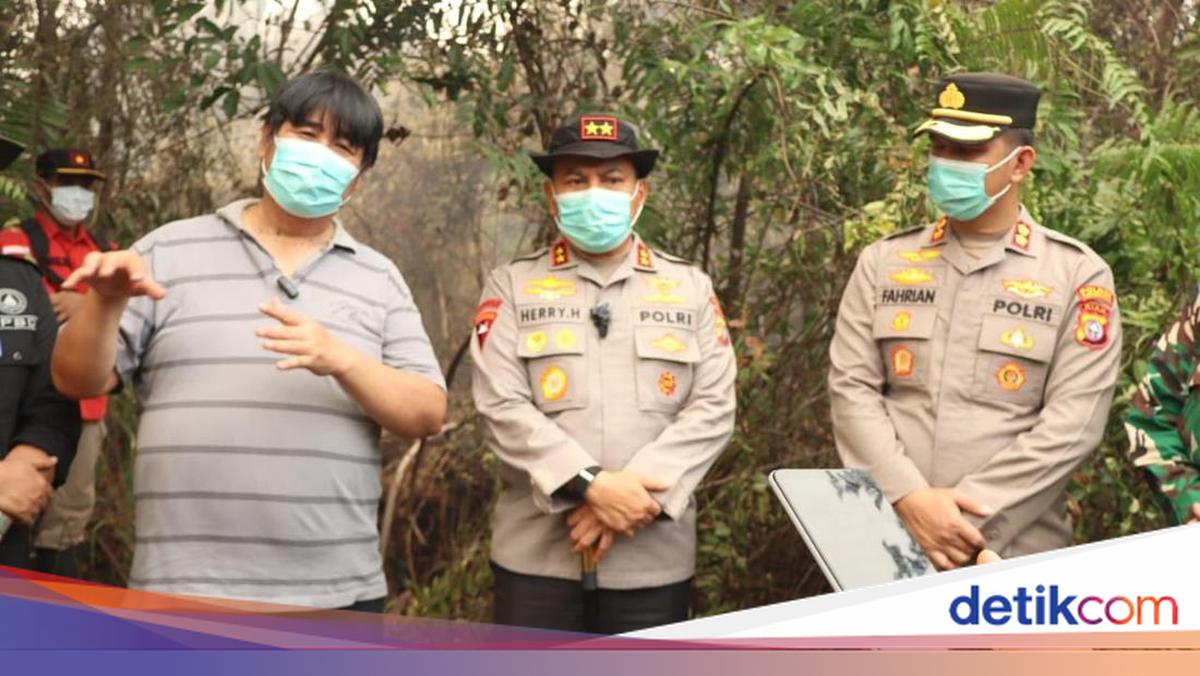
Professor Bambang Suharjo from IPB University has praised the strategic Green Policing programme of the Riau Regional Police. According to him, the ongoing tree-planting campaign led by Riau Police Chief Irjen Pol Herry Heryawan represents a concrete step in preventing forest and land fires (karhutla) amid the threat of Super El Nino.
“Riau Regional Police has implemented Green Policing, including tree planting and so on. Because the fires that occur must be balanced with tree planting. If this is not done, the emissions we have calculated must be revised again,” said Bambang in Bengkalis Regency on Friday (3/4/2026).
According to him, tree planting is one of the effective ways to reduce greenhouse gas emissions. Although it may seem trivial, tree planting can have a significant impact if carried out on a larger scale.
“Because the greenhouse gas emissions we release must be controlled through planting, and Riau Police Chief has done that, even though it looks like ‘playing around’ with planting… planting… planting, but if we look at it scientifically, that is the way to reduce greenhouse gas emissions,” he said.
Bambang, who is also an expert in forest fire forensics, assessed that the Green Policing programme initiated by Riau Regional Police aligns with efforts to reduce emissions or Nationally Determined Contributions (NDC).
“Emissions released due to fires must be balanced with carbon absorption. The way to do it is by planting trees. This is not merely symbolic, but a scientific solution to reduce CO2 in the atmosphere,” he explained.
He added that the effectiveness of tree planting does not only depend on the planting activity, but also on the sustainability of maintenance until the plants grow optimally and can absorb carbon through the photosynthesis process.
“The planting must be ensured to survive. We can monitor their growth, because that is where the CO2 absorption process takes place. This is an important part in reducing the impact of climate change, including El Nino,” he said.
Super El Nino Threat
On that occasion, Prof Bambang Hero Saharjo reminded that this year’s situation requires extra serious attention and proactive steps before haze envelops the archipelago.
The term ‘Super El Nino’ refers to the phenomenon of warming sea surface temperatures in the tropical Pacific Ocean reaching at least 2.7°C above average. Its impacts are far from trivial: shifts in global atmospheric circulation that trigger extreme weather.
“With this 2.7°C condition, it is exactly like the 1997-1998 fire incident, where 10-11 million hectares of land were burned and 500 lives were lost,” said Bambang.
Early Detection
On the same occasion, Riau Police Chief Irjen Pol Herry Heryawan stated that collaborative efforts are needed for early detection of karhutla, especially amid the Super El Nino threat.
“This cannot be done alone, but must be collaborative involving all parties,” said Irjen Herry.
The current collaboration and strategic steps are aimed at finding and extinguishing fire points as early as possible so that fires do not spread, especially ahead of the dry season peak.
“It is better to work hard now before entering the dry season peak, rather than later extinguishing in much larger and more difficult conditions,” he emphasised.