
Expert reveals strategy to sustain EV growth without relying on incentives
Jakarta (ANTARA) - Automotive expert from Institut Teknologi Bandung (ITB) Yannes Martinus Pasaribu believes that the growth of electric vehicles (EVs) in Indonesia can still be maintained even if government incentives potentially change, provided there is support from appropriate strategies on pricing, infrastructure, and ecosystem aspects.
He stated that there are several factors that can replace the role of fiscal incentives in attracting consumer interest in electric vehicles.
“There are five factors that have the potential to replace fiscal incentives,” said Yannes when contacted by ANTARA from Jakarta on Thursday.
He explained that the first factor is the advantage of ownership cost or total cost of ownership (TCO) which must be more economical than fuel-powered vehicles (BBM).
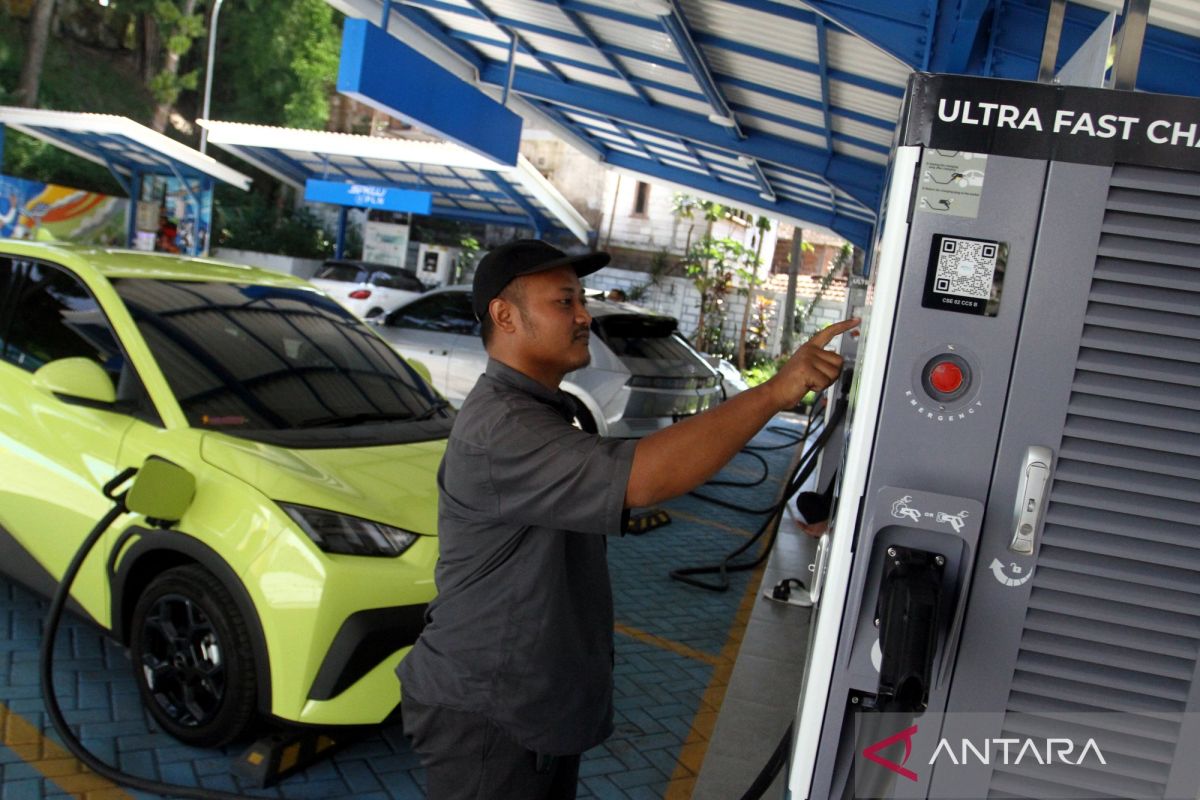
Yannes revealed that the availability of adequate charging infrastructure, including public electric vehicle charging stations (SPKLU) in various strategic locations, also plays an important role in creating an electric vehicle ecosystem.
The third factor is the stability of the vehicle’s resale value, which needs to be supported by long-term battery warranties.
Then, Yannes explained that the fourth factor is supported through innovative financing schemes such as special EV leasing or battery-as-a-service.
Fifth, product differentiation through technology and features not possessed by conventional vehicles can also become a consumer attraction.
“The most fundamental thing is that the BEV price must enter the Rp150 million–200 million zone to reach the actual middle class,” he said.
In addition, he believes that rising fuel prices can become a natural driver for EV adoption.
“Every Rp1,000/litre increase in Pertalite or Pertamax has the potential to accelerate the BEV break-even point by one to two years,” he stated.
Nevertheless, he emphasised the importance of infrastructure readiness as a crucial factor.
He noted that the ratio of SPKLU in Indonesia still lags behind international standards.
“Without mature infrastructure, range anxiety will remain the main obstacle to BEV adoption,” he said.
To maintain sustainable growth, Yannes also encourages the development of affordable electric vehicles through increased local content and mass production domestically.
With such steps, EV growth in Indonesia is assessed to continue in a healthier and more sustainable manner even if dependence on incentives decreases.
“The best strategy is to immediately promote the Rp150 million–200 million EV segment via high TKDN and mass production scale domestically,” he concluded.