
Expert: Proposal to Move Women's KRL Carriages to the Middle is an Absurd Idea
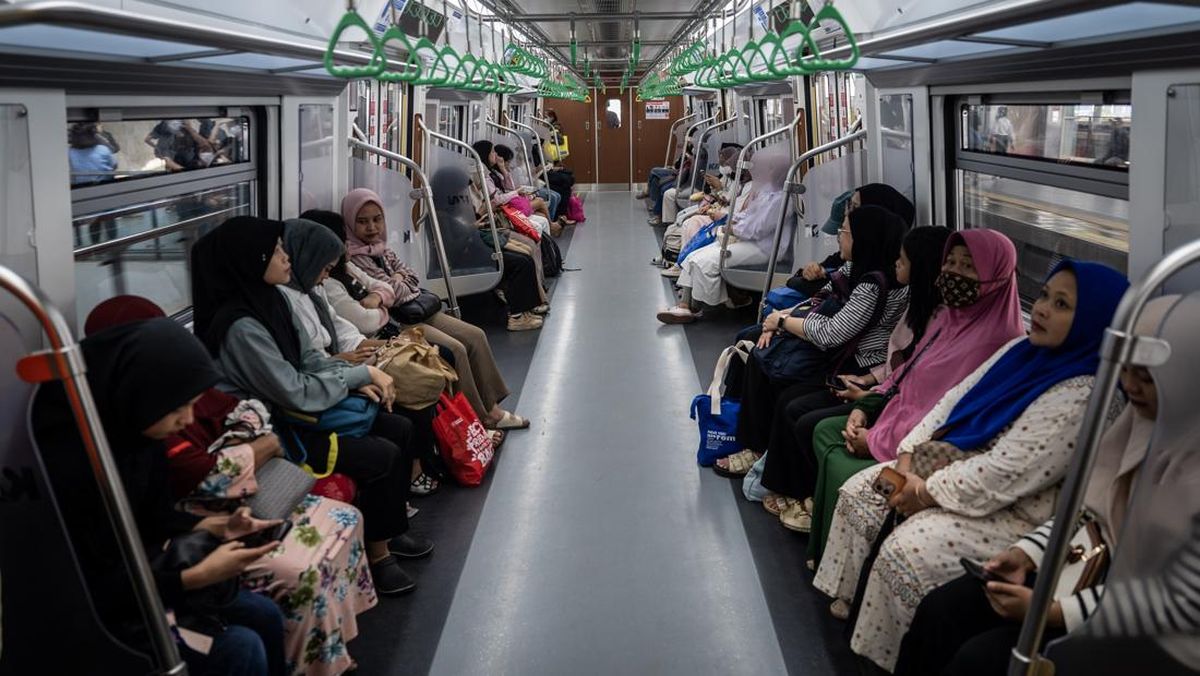
Minister for Women’s Empowerment and Child Protection (PPPA) Arifah Fauzi has proposed relocating the position of women’s carriages on KRL trains to the middle section of the train consist, with men’s carriages moved to the ends. This proposal was made by Arifah following the incident where the women’s carriage of the Cikarang KRL was struck by the Argo Bromo Anggrek train (KA) at Bekasi Timur Station on Monday (27/4). She also claimed to have suggested to PT KAI to move the special women’s carriage to the middle of the consist. “So the men’s at the ends, yes, front and back for men, so women in the middle like that. For now,” said Arifah at RSUD dr. Chasbullah Abdulmadjid in Bekasi City on Tuesday (28/4). This has sparked pros and cons among the public, particularly evident in social media comments. In response to the polemic, Chairman of the Indonesian Transportation Society’s Railway Transportation Forum, Deddy Herlambang, stated that the proposal to move the women’s special train (KKW) to the middle of the consist is an absurd idea. “The one proposing to move the KKW to the middle is just absurd because it’s considered there’s a Women’s Special Train and Men’s Special Train—which is actually a mixed train,” said Deddy via text message on Wednesday (29/4). Deddy explained that KKW is actually not a minimum service standard for trains. He stated that it is a form of exclusive bonus service for women who are reluctant to mix in the train consist with men. Meanwhile, Deddy explained the reason why KKW is placed at the end of the consist is to facilitate women’s mobility in accessing the train. “KKW is placed at the end because it’s executive (special service) because if placed in the middle it would be full of women since most station entry and exit doors are in the middle,” he said. The most important aspect: Safety Deddy emphasised that the most important thing is not the position of the KKW in a train consist. But he stressed that the most important is the safety aspect for passengers. “The important thing is the railway safety management aspect itself,” he said. Previously, Coordinating Minister for Infrastructure and Regional Development Agus Harimurti Yudhoyono (AHY), when asked by the media about the women’s carriage position proposal, instead emphasised evaluation to promote the safety aspect. AHY stressed that fundamental improvements to the public transportation system are to ensure the safety of all passengers regardless of gender. “This is also something we will continue to evaluate, but clearly men and women are the same, they must not become victims in any incident,” AHY firmly stated in Bekasi on Tuesday (28/4). “So what we focus on is not women and men but how the train transportation system and other public transportation systems are safe, secure, provide a sense of security, comfort, and safety first is truly not just a jargon but can truly be implemented well,” he added. Separately, President Director of PT Kereta Api Indonesia (KAI) Bobby Rasyidin emphasised that safety standards for all passengers, both men and women, are the top priority. He assured that there is no difference in the level of security protection between male and female service users on the train. “We also need to emphasise that safety is our top priority. Regarding the PPPA Minister’s proposal to move the women’s carriage position on KRL to the middle area, and men to the end of the consist, Bobby said that this does not relate to the level of safety.”We have absolutely no tolerance for violating or reducing the safety level for our customers and service users from PT Kereta Api Indonesia, whether male or female gender,” said Bobby at Bekasi Timur Station on Wednesday. The fatal accident involving the Electric Rail Train (KRL) and KA Argo Bromo Anggrek occurred at Bekasi Timur Station on Monday (27/4) night. As of Wednesday afternoon, the tragedy has claimed 16 lives and 90 people injured, with details of 44 victims already allowed to go home and 46 other patients still under care.