
Expert: Problematic loans not automatically categorised as crimes
The granting of credit by banks undergoes a series of strict procedures based on the principle of prudence. However, those prudence standards are not uniform.
Jakarta (ANTARA) - Banking law expert Zulkarnain Sitompul states that problematic credit does not automatically qualify as a criminal act.
According to him, no business activity is risk-free, including the banking sector, so no bank has a zero per cent ratio of problematic credit or non-performing loans (NPL).
“The granting of credit by banks has undergone a series of strict procedures based on the principle of prudence. However, those prudence standards are not uniform,” Zulkarnain said in a statement in Jakarta on Saturday.
He explained that each bank has a different risk tolerance (risk appetite) that is outlined in its respective standard operating procedures (SOP).
As long as those SOPs are followed correctly, he said, under banking law, the bank has fulfilled the principle of prudence.
“If the SOP has been followed, it means the bank has been prudent,” he stated.
Regarding the problematic credit of PT Sri Rejeki Isman Tbk (Sritex), which is currently on trial, Zulkarnain views it within the framework of business risks.
In banking practice, he continued, every credit granting is accompanied by risk mitigation mechanisms, including provisioning for losses and calculation of liquidation value.
“Losses do not immediately arise when credit becomes delinquent, but after a comprehensive evaluation process,” he said.
He also highlighted that the basis for credit decision-making refers to the company’s financial statements. In the Sritex case, those financial statements had been audited and received an unqualified opinion.
“Banks have no obligation to re-audit financial statements that have already been audited by a public accounting firm,” he stated.
Zulkarnain cited the Enron case in the United States, which resulted in heavy penalties for auditors and company management due to financial statement manipulation.
On the other hand, he warned of broader risks if every delinquent loan is immediately criminalised, as it could create fear among bankers.
“If everything is considered a crime, no one will dare to be a banker. Credit costs will rise, interest rates will increase, and the business world will be hindered,” he said.
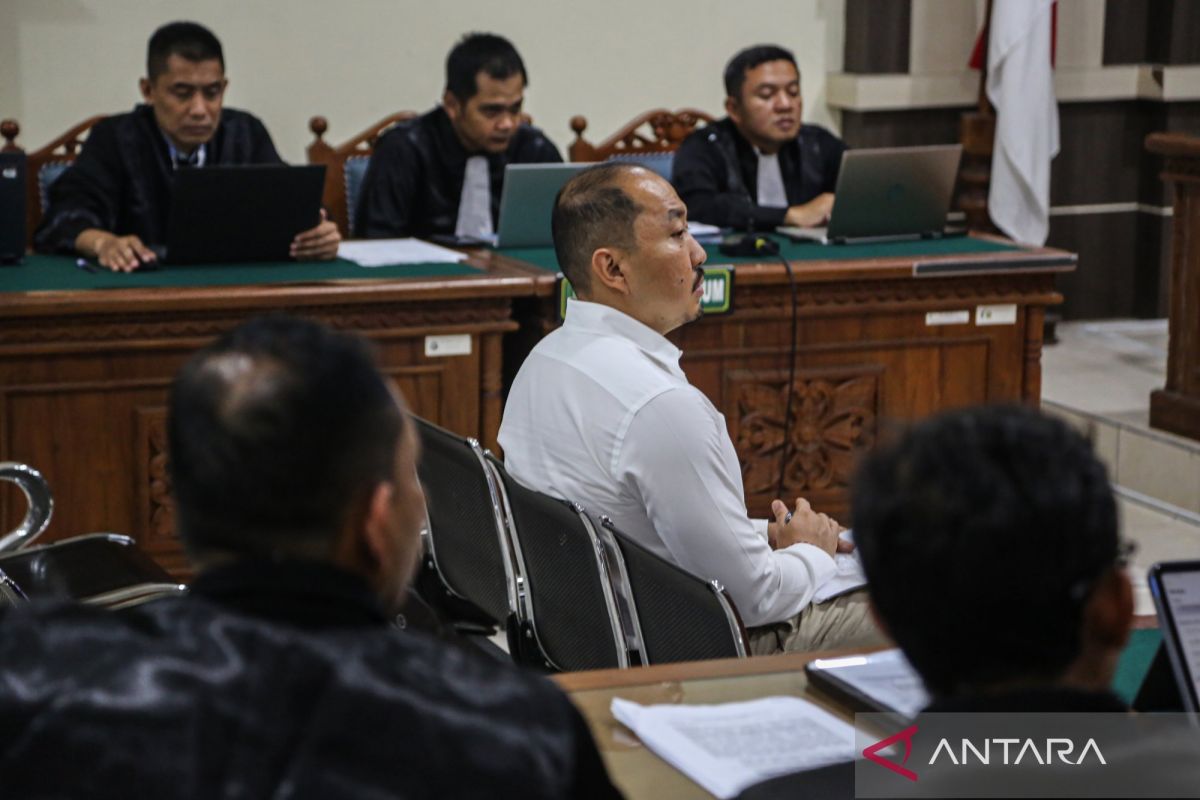
In the case of alleged corruption in granting credit to Sritex, the Director of SME Credit兼Finance Director of Bank DKI for the period 2019–2022, Babay Farid Wazadi, is one of the defendants currently on trial.
He also mentioned that Babay Farid Wazadi had passed the fit and proper test by the Financial Services Authority to hold the position of President Director of Bank Sumut, one of the assessments of which includes the integrity aspect.
“If there were serious issues like bribes or gratuities, he certainly would not have passed. That means his integrity was assessed as good,” he said.
Thus, he views the case as not straightforward because on one side there is a demand for law enforcement over alleged state losses, while on the other side there is the view that business risks cannot be automatically criminalised.