
Expert: Perpetrators must be tried in general courts in the Andrie Yunus case
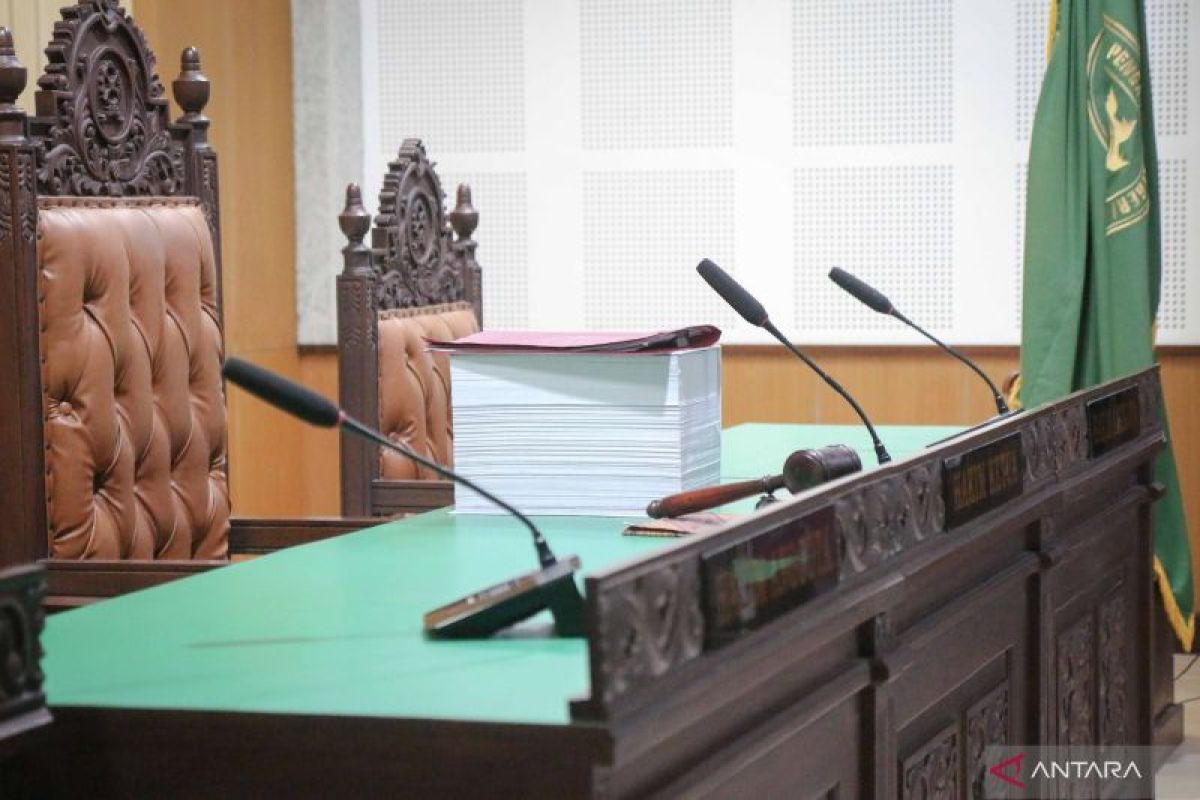
Jakarta (ANTARA) - Criminal law expert and Secretary General of the Indonesian Association of Criminal Law and Criminology Lecturers (Asperhupiki) Ahmad Sofian states that the acid-throwing case committed by TNI personnel against KontraS activist Andrie Yunus must be tried through general courts.
Sofian also explains that applying military courts is inappropriate because the victim is a member of the general public or the incident did not occur in a military emergency situation, whether a state of war or a state of rebellion.
“Therefore, general courts are the most appropriate when they commit general criminal offences first. Second, when they or members of the military, TNI members, commit criminal offences not in a military emergency situation or locus, or in an atmosphere of war or rebellion,” he clarified to ANTARA when contacted in Jakarta on Thursday.
In normal circumstances when TNI members commit criminal offences, he said, the military court system should not be applied, but rather the general court system, namely criminal cases of TNI members who commit general criminal offences such as assault, theft, destruction, and rape.
This context aligns with the principle of criminal offences committed by TNI personnel.
According to Sofian, legal cases involving criminal offences in Indonesia that involve TNI personnel have already gone astray in applying the military court system.
This misapplication is found in Article 65 paragraph 1 of Law Number 34 of 2004 on the TNI, which states that the TNI in administration, discipline, and criminal offences are subject to the military court system.
“In this TNI Law, particularly in Article 65 paragraph 1, it is stated that TNI soldiers who commit criminal offences, whether general criminal offences or military criminal offences, are subject to and tried in military courts,” he said.
He continued, “As long as Article 65 paragraph 1 remains in the TNI Law, the perpetrators of the acid-throwing criminal offence against Andrie Yunus will certainly be tried under Law Number 31 of 1997 on Military Courts.”
That Article 65, said Sofian, contradicts Article 27 paragraph 1 of the 1945 Constitution (UUD), which states that all persons are equal in status before the law and government, and thus the government must uphold the law and governance.
This contradiction is seen as placing TNI personnel in a higher position compared to civilians.
Therefore, said Sofian, by placing TNI members who commit general criminal offences to be tried in military courts, it shows that those TNI members have a position that is not equal to other citizens when other citizens commit general criminal offences.
“Yet they are both committing general criminal offences. This, in my view, is the current issue: whoever commits a general criminal offence, whoever it is, must be subject to Article 27 paragraph 1 of the UUD, subject to the law in the same position as the law, and tried in the same court, not receiving privileges in military courts,” he stated.
He said that to process the case in general courts, a judicial review to the Constitutional Court (MK) is needed.
In addition, President Prabowo Subianto also needs to issue a Government Regulation in Lieu of Law (Perppu) that mandates perpetrators to be tried through general courts, facing the Criminal Procedure Code (KUHAP) and the new Criminal Code (KUHP).
“If, for example, Article 65 paragraph 1 has not been annulled, then it will be quite difficult to try TNI members who committed the criminal offence against Andrie Yunus, the KontraS activist, in general courts, unless the President issues a Perppu to try them under the new KUHAP Law and the new KUHP Law, and this Perppu states that Article 65 paragraph 1 is declared inapplicable,” said Sofian.