
Expert Explains Joint Liability Risks and Circular Decision-Making in LNG Trial
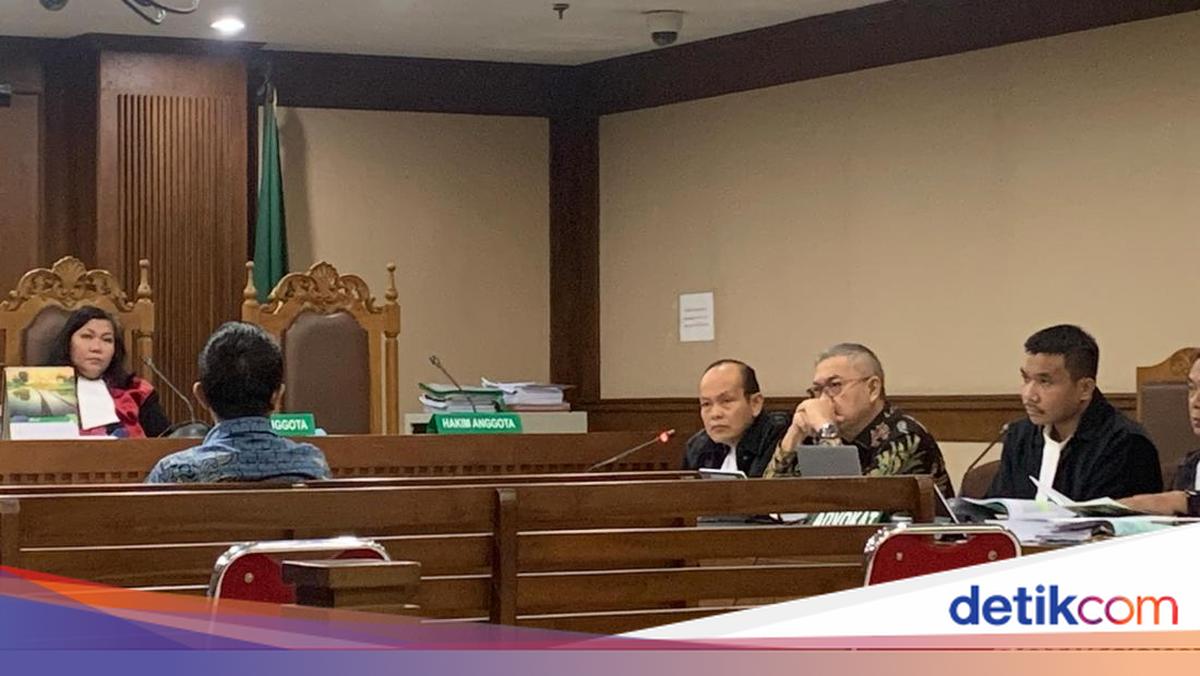
Prosecutors presented BUMN governance expert Anas Puji as a witness in the trial of an alleged corruption case involving the procurement of liquefied natural gas (LNG) or natural gas. Anas explained the risks of joint liability in board meetings and the concept of circular decision-making procedures.
The trial was held at Jakarta’s Corruption Court on Thursday, 12 March 2026. The defendants are Hari Karyuliarto, former Director of Gas at PT Pertamina, and Yenni Andayani, former Vice President of Strategic Planning and Business Development in Pertamina’s Gas Directorate.
Anas stated that decision-making in board meetings is collective and collegial in nature. He explained that there is a risk of joint liability if the decision subsequently causes losses.
“Under BUMN Regulation No. 1 of 2011, Section 5 Article 12 also discusses board meetings. There are six articles here—could you explain them?” asked the prosecutor.
“When a board meeting is regulated under BUMN law, corporate law, government regulations, and ministerial regulations on BUMN, the directorate’s decision-making must be collective and collegial. Everything is conducted in the meeting forum, everyone receives equal opportunity, and if someone objects, there is a dissenting opinion,” Anas replied.
“If at some point a decision causes losses, there is a risk of joint liability. Why do I emphasise this so boldly? Because each person in their capacity has the right and authority to approve or reject,” Anas added.
Anas assessed that all parties participating in board decision-making can be held accountable. He stated that all parties have the right to express agreement or disagreement at a board meeting.
“And this is legally protected. If they object with a dissenting opinion, but if they approve and subsequently it causes company losses, then all parties can be held accountable up to joint liability,” Anas said.
Anas then explained the mechanism of circular decision-making. He said that a circular meeting is not held physically but is circulated.
“Secondly, the mechanism within the meeting is also regulated in the articles of association regarding circular decision-making. A circular is not a physical meeting forum, but it is circulated, and there must certainly be a manual regulating it,” Anas said.
Anas stated that circular decisions cannot be made if any party expresses disagreement. He said that if any party objects, then the circular decision has no binding legal force.
“First, before making a circular decision, it must be approved by everyone, all directors. If anyone objects, then a decision cannot be made. Secondly, everyone must sign and approve. If there is a dissenting opinion, then the circular decision cannot be made and has no binding legal force,” Anas said.
“What is the difference? In a circular, everyone must absolutely agree. In a board meeting, there can be a dissenting opinion, but if many agree, then the decision with the most votes is used,” he continued.
Anas stated that the proposing party in circular decision-making is not obligated to provide data. According to him, if directors feel there is insufficient data, they can professionally request such data.
“Must the proposing party in a circular meeting provide an explanation to other directors regarding contract details?” asked the prosecutor.
“Well, excuse me, I should clarify. Actually, a circular is not a meeting but is directly circulated. The forum is circulated. First, there is no obligation for the proposer to provide data or anything. What is preserved under the articles of association and law is that everyone must sign. If the data is deemed insufficient, then directors who believe the data is lacking should professionally request it,” Anas said.
“The matter of conveying data details and so forth becomes the personal responsibility of each person. If they feel ‘I have enough with this data, I can sign,’ they can do so. If they feel ‘I do not have enough data, I do not want to sign,’ that is their right and is protected by law,” he continued.
Charges
Previously, prosecutors at the Corruption Eradication Commission (KPK) charged two new defendants in the alleged LNG procurement corruption case that caused state losses of USD 113 million. The two defendants are Hari Karyuliarto, former Director of Gas at PT Pertamina, and Yenni Andayani, former Vice President of Strategic Planning and Business Development in Pertamina’s Gas Directorate.
The indictment hearing was held at Jakarta’s Central Corruption Court on Tuesday, 23 December 2025. Both are charged with committing acts together with Galaila Karen Kardinah, former Pertamina Director General, also known as Karen Agustiawan, who was previously convicted in this case.
“Committing acts of unlawfully enriching themselves or others or a corporation, namely enriching Galaila Karen Kardinah alias Karen Agustiawan by IDR 1,091,280,281 (IDR 1 billion) and USD 104,016 as well as enriching the corporation Corpus Christi Liquefaction LLC by USD 113,839,186 (USD 113 million),” the prosecutor stated.
Prosecutors said the loss figure was based on a report from the Indonesian State Audit Board (BPK) investigation. Prosecutors stated that gas purchases were made on the grounds that domestic gas stocks were limited, so Pertamina needed to purchase gas from the United States.
Prosecutors said Karen issued the principal permit for LNG procurement without implementation guidelines for LNG procurement. The LNG procurement, prosecutors said, was conducted based on best practices always followed by Pertamina as the state’s LNG seller.
After going through various negotiation processes and internal deliberation procedures, gas purchases were made by Pertamina from Corpus Christi Liquefaction LLC. However, prosecutors said, Pertamina did not yet have a permanent LNG buyer in the domestic market that would absorb or purchase LNG from the US company.
Prosecutors stated that LNG purchases were not accompanied by analysis or economic calculations.