
Expert Discusses US-Iran War 'Lingering' if Peace Agreement Remains Stalemated
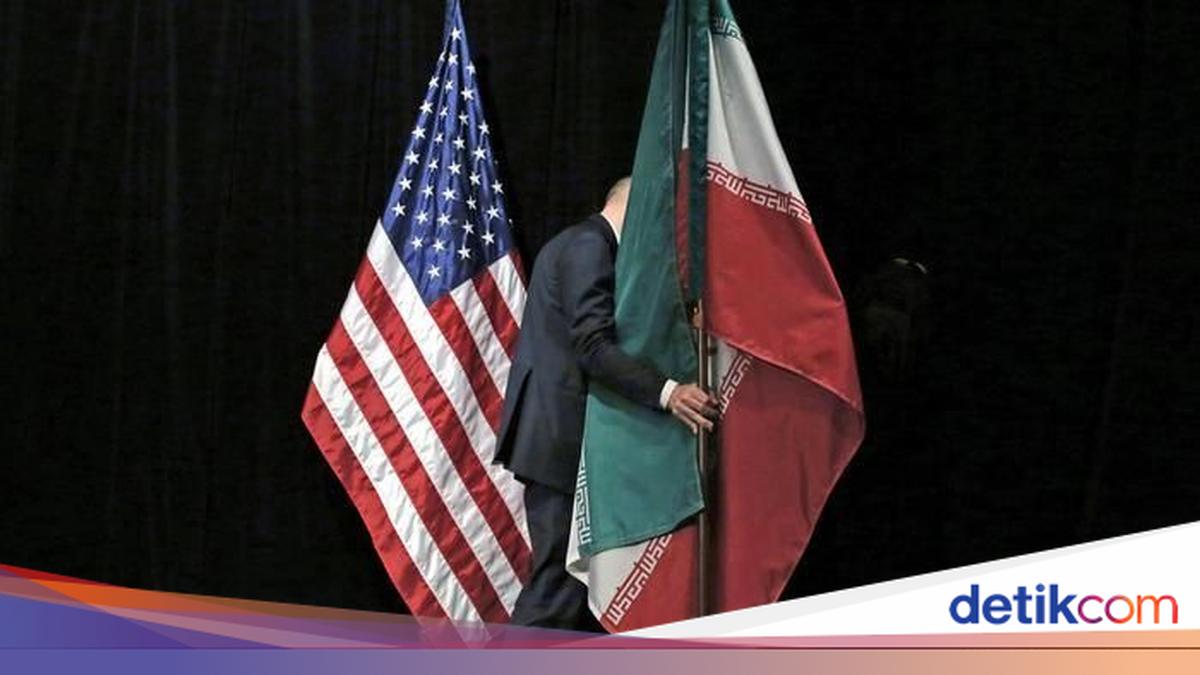
The United States (US) and Iran have yet to reach a peace agreement to end the war, which is instead characterised by mutual threats. What is the fate of the Middle East if the agreement between the US and Iran fails?
US President Donald Trump described the proposal submitted by Iran as ‘rubbish’. Iran immediately responded by issuing an ultimatum to the US that ‘there is no other alternative’ but to accept the proposal.
Professor of international law at the University of Indonesia (UI), Hikmahanto Juwana, sees a high likelihood that the US and Iran will fail to reach an agreement. If it indeed fails in the end, he predicts the war will continue, albeit not intensely.
‘If it fails, the war will seem to still be ongoing but the intensity will not be like before because there is already a ceasefire. So it’s like between Russia and Ukraine,’ Hikmahanto told reporters on Thursday (14/5/2026).
Hikmahanto outlined four reasons why the war will not continue intensely. First, Operation Epic Fury has been declared over by the US government.
Second, Trump has not yet obtained approval from the US Congress to attack Iran again. Third, the budget for the war has not been approved.
‘(The fourth reason) Meanwhile, for Iran, if there is no US attack on Iran, then Iran will not attack,’ Hikmahanto stated.
‘So the war will be put on hold by the US and Iran,’ he said.
If that is the case, the biggest issue is the Strait of Hormuz, one of the world’s largest oil distribution routes. The future of the Strait of Hormuz will be in question.
‘Will the suspension of the war cause the Strait of Hormuz to remain closed or can it be reopened? This is what the world is trying to achieve without involving the US,’ Hikmahanto explained.
‘As done by France and the UK, which will escort tanker ships and use weapons if attacked,’ he continued.
US-Iran Negotiations Still Stalemated
Previously, Donald Trump rejected Iran’s counter-proposal, which he called a ‘stupid’ and ‘rubbish’ proposal. Trump also described the US-Iran ceasefire in place since early April as in a ‘critical condition’.
The Iranian government, on Tuesday (12/5), rejected the idea of changing its proposal. Tehran’s chief negotiator, Mohammad Bagher Ghalibaf, instead issued an ultimatum to the US that ‘there is no other alternative’ but to accept the terms proposed by Iran for peace in the Middle East, or face ‘failure’.
Iran emphasised that it will not enter the second round of peace negotiations with the United States (US) unless five conditions set by Tehran to build trust with Washington are met.
According to a report by Fars News Agency, the five conditions set by Tehran include ‘ending the war on all fronts, especially in Lebanon’, lifting sanctions, releasing frozen Iranian assets, providing compensation for war damages, and recognising Iran’s sovereign rights over the Strait of Hormuz.