
Expert deems omnibus method highly efficient for electoral law revision
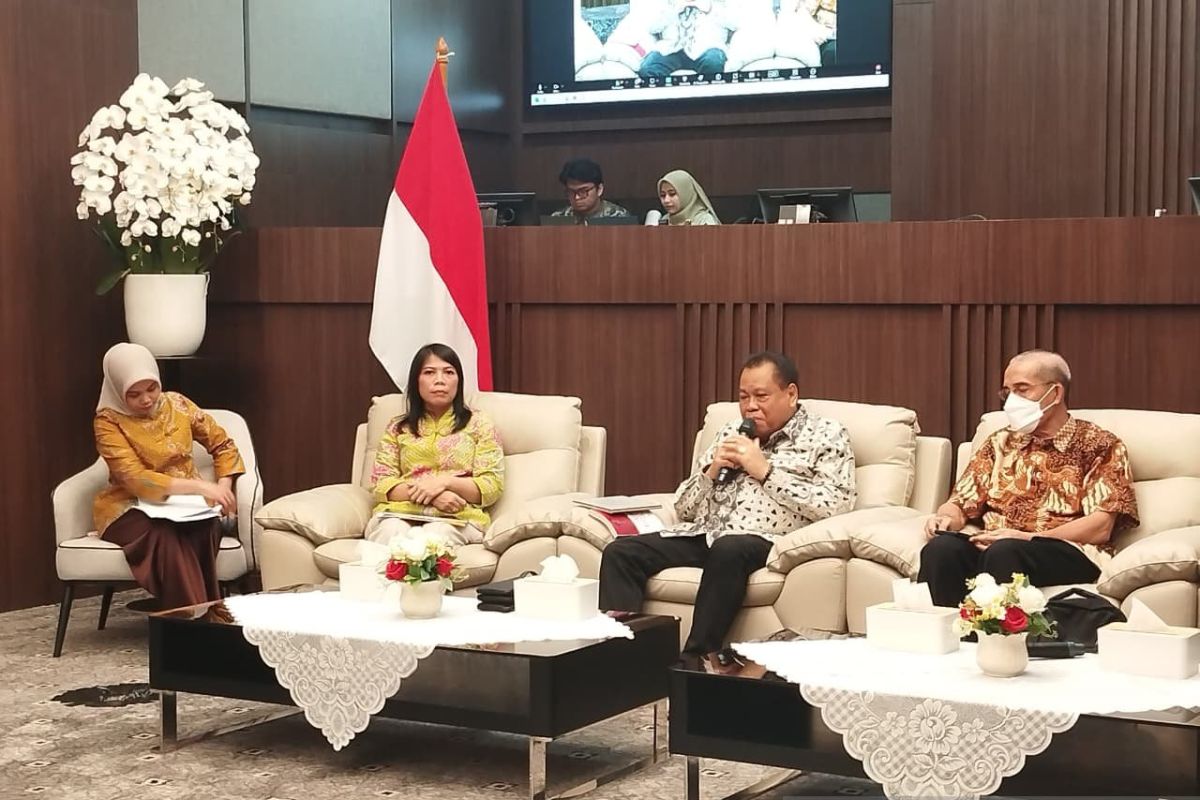
Jakarta – Constitutional law expert and former Constitutional Court Chief Justice Arief Hidayat has stated that the proposed revision of Law Number 7 of 2017 on Elections using the omnibus method is deemed highly efficient.
“The reason is this: the Constitutional Court’s decision no longer distinguishes between the general election regime and the regional election regime. Both are now elections. They fall under the provisions contained within the electoral clauses,” Arief stated during a discussion at the Election Organiser’s Honorary Council (DKPP) building in Jakarta on Thursday, 12 March.
According to him, this proposal could face obstacles due to Indonesia’s political culture, which has repeatedly altered the Electoral Law every five years to serve political interests in elections.
“If we were to consolidate it into one omnibus law, that would be better, but we have a weakness now. Particularly, electoral laws always tend to be modified again ahead of the next elections,” he said.
“Over time, every five years without fail, they are changed. Why? In academic terms, the intention is to win. In a democracy, elections are about wanting to win – that’s impossible, isn’t it? There must be winners and losers. If everyone wins, what kind of country is that?” Arief continued.
On the same occasion, electoral expert Hadar Nafis Gumay stated that ideas concerning the Electoral Law revision, including the omnibus approach, need to be discussed further formally by the House of Representatives (DPR RI).
“Right now there is the omnibus idea. Previously I met with a group proposing the stembus accord idea or parliamentary threshold – that’s fine. These ideas are good, let’s discuss them, but conduct the discussion formally within the DPR so time is not wasted,” he said.
According to him, discussion of the Electoral Law revision must begin in the formal forum of the legislative body to maximise the time available in absorbing ideas put forward by the public.
“That should already begin in October this year,” he added.