
Expert backs Customs measure to seal imported jewellery retailers
“So, I support it, but this must be done consistently. Let’s not have any more individuals involved. Because the practice of under-invoicing, then illegal imports and so on, which often happens, harms the country and results in a lot of lost revenue, up to trillions of rupiah. In the midst of our state budget needing high revenue, these kinds of leaks must be eradicated,” said Telisa in a statement in Jakarta, Wednesday.
Telisa emphasised that the rules must continue to be enforced given the many leaks that occur in customs and import duties. This effort, she added, should be a deterrent to business actors and send a signal to them that the government is now serious.
“Regarding these imported gold items, it is suspected that there are administrative processes that have been violated, so there are goods that have not been registered or are suspected of being illegal. When the goods enter, there are customs duties that must be paid by the importer. Because when that is not paid, it is also considered a form of maladministration. Whether it has not been paid or has not been reported,” she said.
However, she advised that there should be prior socialisation that the government is now enforcing the rules, so that it is not done suddenly.
Because it will have a negative impact on the precedent that the Indonesian government is not friendly to entrepreneurs, and in the end, entrepreneurs will become afraid and so on.
“For example, if they have been warned several times, but are not cooperative, for example, if they are called, they do not come and do not report, then there will be a second warning, then the third warning has not yet been given, then a surprise inspection and sealing can be carried out, it should be done in stages like that. So that it does not create fear among entrepreneurs, that is also what we are guarding. Because we really need entrepreneurs now to be willing to invest,” she said.
Separately, Senior Economist from INDEF, Tauhid Ahmad, believes that Customs must have received information that there are parties taking advantage of weaknesses in the import practices that are occurring. Therefore, they need to carry out verification up to the sealing.
Tauhid assessed that what the government is doing through Customs with this investigative process must have a basis.
“If there is a court process later, business actors can appeal. If it turns out that Customs is wrong, they can return the rights of business actors. However, if there are indeed problems, it is the right of the state to enforce the law,” said Tauhid.
According to him, there are three main issues that need to be looked at, namely whether there is indeed a practice of under-invoicing. Then whether there is smuggling, or there is tax evasion on import duties.
“Customs is an instrument of law enforcement and has investigators. This is their authority. It is up to the business actors to feel that they have not done these three things: under-invoicing, smuggling and import duties, and they have evidence. They can convey this in court,” he said.
The positive impact of this sealing, he added, is that it is a shock therapy that shows that the government is now starting to be firm. Practices such as under-invoicing, smuggling, or tax evasion must be stopped so that the country does not lose potential revenue. The country does not lose revenue.
In addition, it can also be a momentum to clean up individuals who may be “colluding” with business actors.
“Later, it can be investigated who is involved, both from within and outside. There is an opportunity for that, but we need to wait for the results of the investigation,” he said.
Meanwhile, Yusuf Rendi from the Center of Reform on Economics (CORE) said that what the Minister of Finance said about the indication of “Spanish” goods, meaning half stolen, does describe a practice that is a classic problem in high-value commodities. Both under-invoicing and direct smuggling.
“If there are imported jewellery items that are sold openly in elite shopping centres but do not meet customs obligations, that is clearly not just an administrative error, but a serious violation that must be addressed,” he said.
From the state’s point of view, Rendi continued, the impact is fiscal, because it erodes revenue in layers, starting from Import Duties, Import VAT, to Article 22 Income Tax.
“For luxury goods with high value, the potential for leakage is also not small. In the midst of the government’s efforts to maintain the credibility of the state budget and pursue revenue targets, allowing this sector will damage fiscal discipline,” he emphasised.
Secondly, he said, from the perspective of the business world, this enforcement is important to create fair competition.
Because jewellery business actors who comply with the rules and pay taxes are harmed if they have to compete with illegal goods that can be sold cheaper because they do not bear the tax burden.
“So, this step by Customs is not only about state revenue, but also protection for business actors who comply with the rules. In addition, this kind of illegal import practice can also have a broader impact on the economy. Unrecorded transactions mean that there is a flow of foreign exchange that does not enter official statistics. On a certain scale, this can disrupt the quality of trade data and even put hidden pressure on the exchange rate. Not to mention the risk to the shadow economy or the potential for money laundering,” he said.
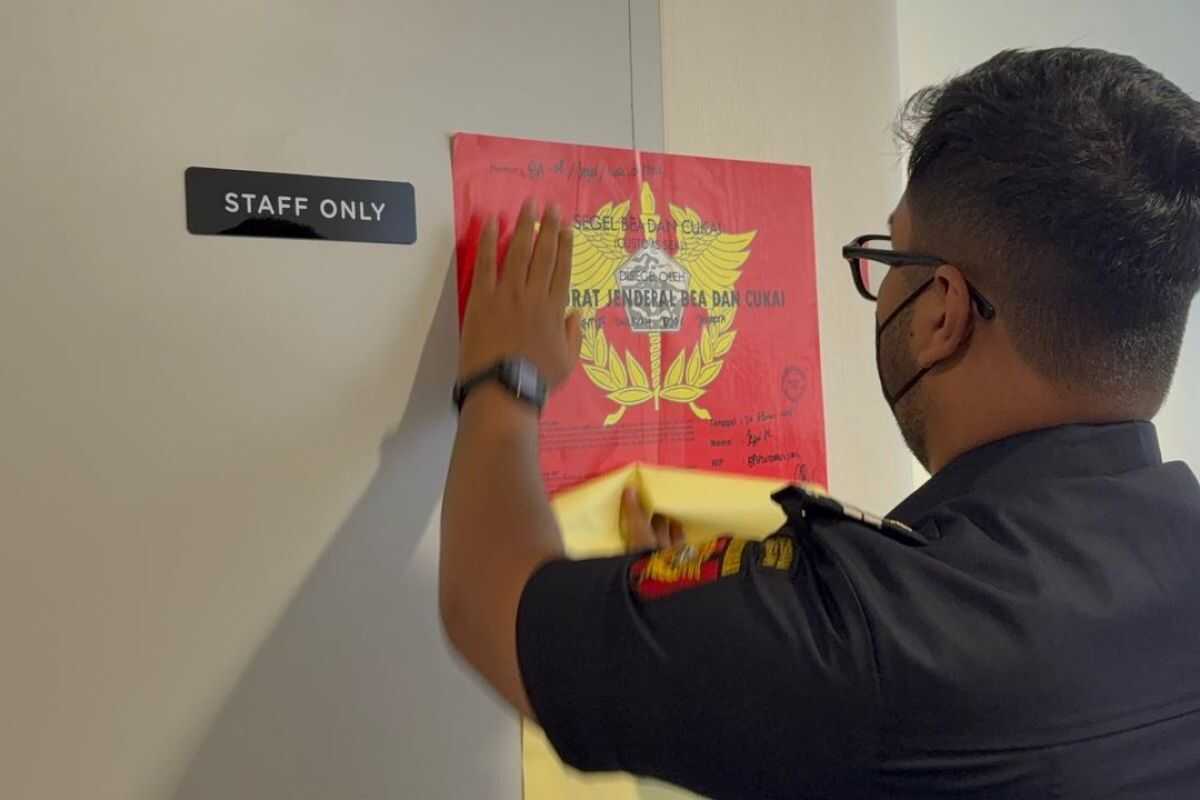
As is known, the Directorate General of Customs, Jakarta Regional Office and the Directorate General of Taxes, Jakarta North Office, conducted inspections at Bening Luxury in Pluit, Penjaringan, Jakarta.