
Expert Analysis on the US-Iran Two-Week Ceasefire
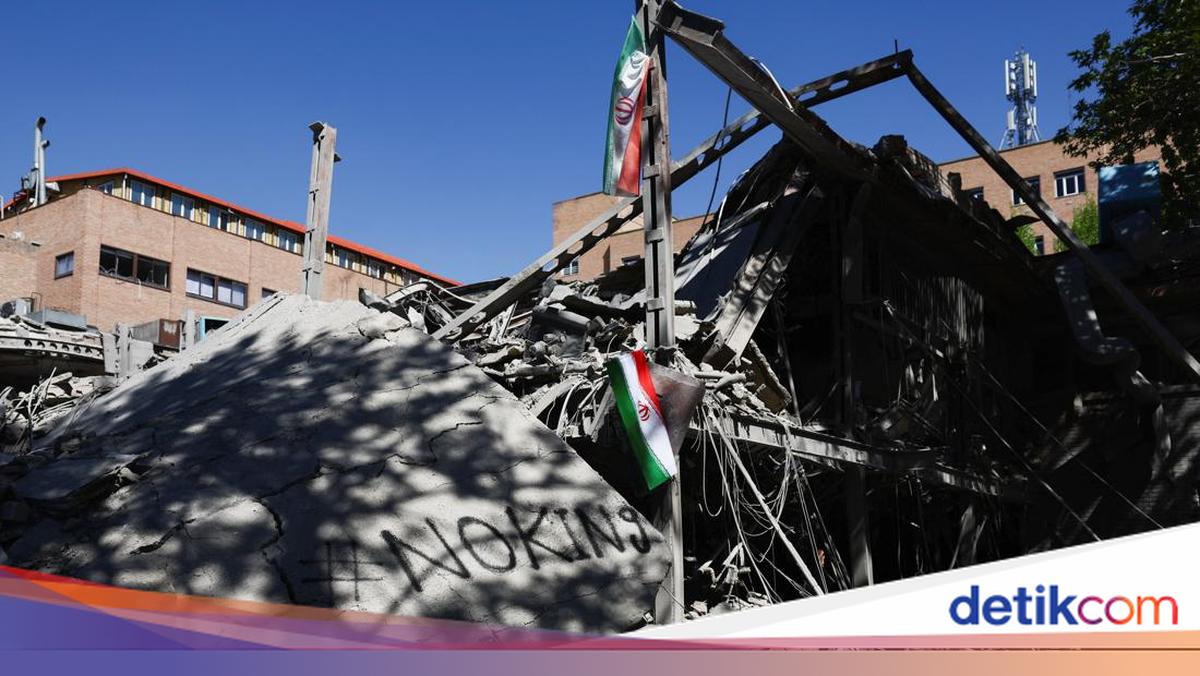
A lecturer from the International Relations Department at the University of Indonesia (UI), Asra Virgianita, assesses that the temporary ceasefire between the United States (US) and Iran for two weeks does not guarantee long-term peace. Asra considers the agreement to be more tactical than strategic. “If this agreement is viewed from the perspective of the two-week timeframe, it seems unlikely to become permanent,” Asra told reporters on Thursday (9/4/2026). “It appears to be a way for both parties to ‘take a breath’ momentarily, while calculating or assessing next steps, including gauging the opponent’s reaction and whether they will truly de-escalate—this can be seen as part of crisis management,” she continued. According to her, the agreement tends to be short-term oriented. She stated that it is not aimed at comprehensively resolving the conflict. “So it can clearly be read that the purpose is short-term rather than for long-term needs (ending the conflict),” she said. In her view, the chances of this ceasefire evolving into a permanent agreement remain very small. She explained that achieving that would require more intensive efforts to build trust between the two countries. “The chances are small for it to become permanent; intensive and long-term efforts are needed to build trust or confidence-building measures (CBMs) with one another,” she clarified. “Two weeks is too short to ensure a safe situation. Each party is still on high alert in responding to the security situation,” she added. The same view was expressed by Professor of International Relations at the Faculty of Social and Political Sciences, University of Indonesia (UI), Fredy Buhama Lumban Tobing. He assesses that the two-week ceasefire agreement provides space for both countries to conduct strategic calculations moving forward. “In my opinion, the two-week ceasefire agreement gives both parties, the US and Iran, the opportunity to make strategic calculations for the future, whether the conflict will continue or be ended,” he stated. According to him, the opening of the Strait of Hormuz is part of each party’s strategy to build an image in the eyes of the world. He believes that, based on Iran’s strategic geopolitical position, it will be difficult to develop into a permanent agreement. “So far, considering Iran’s such strategic geopolitical position and the content of the 10 demands submitted by Iran, it seems difficult to see the prospect that this two-week ceasefire will develop towards a permanent one,” he explained. In his view, the key to making the agreement lead to long-term peace heavily depends on the attitude of the United States, particularly President Donald Trump. “The key lies with Trump. He must discard his aggressive ambitions towards Iran far away,” he said. Previously, Iran’s Foreign Minister, Abbas Araghchi, announced that Iran would agree to a ceasefire “if attacks against Iran are stopped.” He added, “during the two-week period, safe shipping lanes through the Strait of Hormuz will be possible.” According to Araghchi, this would be done “through coordination with the Iranian Armed Forces and taking into account existing technical limitations.” Araghchi’s statement came shortly after US President Donald Trump said that the United States and Iran would pursue a two-week ceasefire on the condition that Iran opens maritime traffic in the Strait of Hormuz. “I agree to suspend bombing and attacks against Iran for two weeks,” Trump stated on Truth Social.