
Expert: 10 GW Solar Power Plants More Realistic as First Step Towards 100 GW
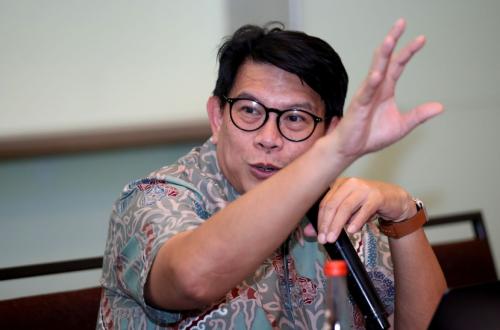
REPUBLIKA.CO.ID, JAKARTA – Energy expert Eko Adhi Setiawan from the Department of Energy Systems Engineering at the Faculty of Engineering, University of Indonesia, believes Indonesia should start developing solar power plants (PLTS) gradually through an initial 10-gigawatt (GW) project before pursuing the government’s ambitious 100 GW PLTS target. According to Eko, a phased approach is crucial for Indonesia to establish a proven implementation model before scaling up significantly. ‘I’m pleased with the 100 GW and 320 GWh battery target, but I suggest starting with 10 GW as a proof-of-concept phase,’ Eko stated during a media briefing on Friday, 29 May 2026. He said a 10 GW target is more realistic in terms of human resource readiness, system operations and maintenance, and developing the national solar energy industry ecosystem. With a more manageable capacity, local workforce development and inter-agency coordination are easier to achieve. According to Eko, national PLTS development requires cross-sector collaboration, from vocational schools, polytechnics, universities, PLN, Pertamina, local governments, to energy technology vendors. ‘The economic potential can be more focused, and local workforce development can be accelerated,’ he said. He estimated the initial 10 GW project could reach thousands of villages with approximately 0.8 to 1 megawatt (MW) of solar capacity per village. Battery capacity needed is estimated at 1 to 3 megawatt hours (MWh) per village. With this approach, project implementation is deemed more realistic than pursuing tens of gigawatts in a short time. Eko said the pilot project could serve as a basis for evaluation before nationwide expansion. He said rural PLTS development should prioritise areas directly linked to productive economic activities. He noted that each village’s energy needs differ, so system designs cannot be standardised. Eko explained coastal and fishing villages require electricity for cold storage, ice plants, fish processing, and dock lighting, while agricultural villages need water pumps, irrigation systems, and harvest drying facilities. ‘No village should be treated the same. Economic characteristics must be considered,’ he said. For small islands and remote areas, solar power and batteries can replace diesel generators while supporting clean water and household electricity. Tourist villages need power for homestays, culinary services, lighting, electric vehicle charging stations, internet, and other tourist facilities. For villages with micro, small, and medium enterprises (MSMEs), electricity is needed to operate production machinery, product packaging, and product cooling storage. Eko also highlighted villages connected to PLN’s grid but suffering from low voltage and frequent blackouts. He said solar power and batteries can serve as backup power sources to maintain community economic activities. He said the initial 10 GW project should be treated as a proof-of-concept phase to assess the real-world impact of solar energy development on rural communities. ‘An audit will clarify whether energy costs decrease after PLTS installation, whether local economic production rises, and whether community income increases,’ he said. Furthermore, the initial phase is crucial for determining the right size of PLTS and battery systems to match community needs. According to Eko, many village microgrid projects fail due to overspecification. He said such errors often arise from project planners using electricity demand assumptions that don’t align with rural consumption patterns. ‘Building power systems in areas without prior electricity access is far more challenging than in cities,’ he said. According to Eko, communities in areas without electricity often cannot predict their future energy needs. Therefore, rural electricity system design must be phased and based on actual community requirements. ‘Cities are easier because electricity consumption patterns are clear. In villages without electricity, people themselves are often unsure what they’ll use it for,’ he said.