
Experience-based consumption gains momentum in China
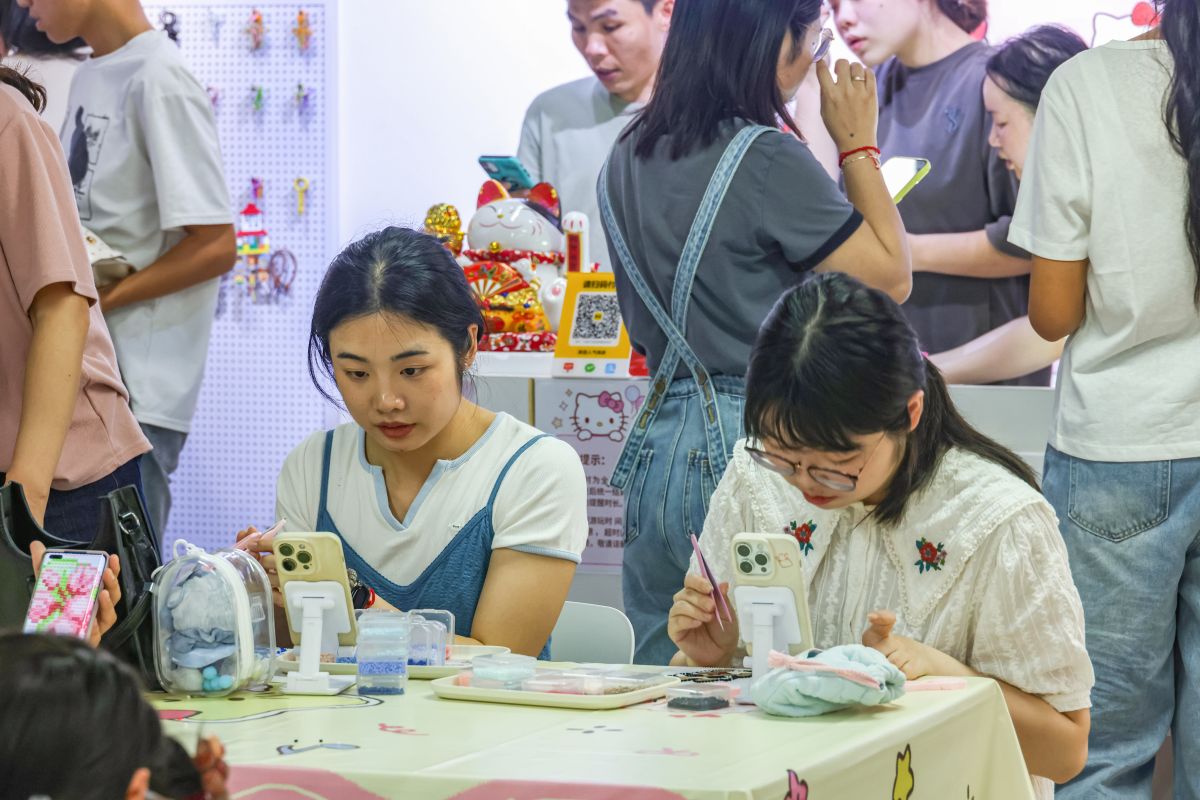
Taiyuan (ANTARA) - Various handmade crafts such as pottery-making, creating decorative stickers, and assembling Perler Beads (small plastic beads shaped like tubes) are experiencing a rapid surge in popularity among Chinese consumers, signalling the growth of the experience economy as a new consumption trend.
Originally considered a niche hobby, experience-based handicrafts have now evolved into a mainstream lifestyle choice and a steadily expanding segment in China’s consumer market.
According to market research firm iiMedia Research, the market value of “emotional consumption” in China has surpassed 2.3 trillion yuan (1 yuan = Rp2,514) or approximately 320 billion US dollars (1 US dollar = Rp17,142) in 2024 and is estimated to exceed 4.5 trillion yuan by 2029, in line with the expanding experience economy.
In recent years, various workshops offering pottery and handmade jewellery creation have seen a surge in demand, particularly among young consumers.
Small shops that were previously overlooked have now become popular weekend destinations, often fully booked.
At a handicraft shop in a commercial district in Taiyuan City, Shanxi Province, northern China, consumers gather around tables engaging in various activities.
Some assemble bead designs according to patterns, while others paint natural landscapes, and a young couple works together to shape clay crafts.
Compared to traditional consumption focused on products, more consumers are now shifting to experience-driven spending, placing greater emphasis on emotional value and personal attachment rather than the products themselves.
“I made a plate inspired by my cat,” said consumer Zhao Wei.
“It might not be as perfect as something made by professionals or machines, but what’s important is that it reflects my own feelings,” she said.
Economist Guan Qingyou stated that “experience” has become a key factor influencing consumption decisions.
“Consumers are increasingly focused on the entire process and emotional satisfaction, rather than just owning items,” Guan said.
He added that consumption motivations have shifted from conspicuous consumption to self-fulfilment, with younger consumers particularly viewing spending as a way to enhance personal happiness.
The social aspect of handicraft activities further boosts their popularity. Being easy to learn and requiring little space, such activities provide a low-cost platform for direct socialisation among families, friends, and couples.
The resulting products are often visually appealing and widely shared on social media, forming a cycle of experience, creation, and sharing.
The boom in the experience economy is also driving the development of related industries and expanding employment opportunities.
Data from business registration platform Qichacha shows that 6,955 handicraft-related companies were registered in 2025, up 31.08 percent year-on-year.
“Our business is also growing along with this trend,” said Wu Jingjing, an employee at the local handicraft shop.
As the experience economy continues to gain momentum, the new consumption model represented by handicrafts opens up new growth potential and promotes integrated development across related industries.
This further expands market opportunities and injects more diverse and sustainable momentum into China’s economic growth.