
Expanding Oil Reserves to Three Months Could Cost Indonesia $22 Billion, Expert Says
Expanding Oil Reserves to Three Months Could Cost Indonesia $22 Billion, Expert Says
Jakarta. Indonesia may need to invest at least $22 billion to build new oil storage facilities capable of covering up to three months of national fuel demand, an oil and gas industry expert said Thursday.
The estimate reflects the scale of infrastructure required to strengthen Indonesia’s energy security, particularly amid rising global geopolitical tensions that increase the risk of supply disruptions.
Indonesia currently consumes about 1.6 million barrels of fuel per day. Adding storage capacity equivalent to just 10 days of consumption would require facilities capable of holding around 16 million barrels, according to energy analyst Hadi Ismoyo.
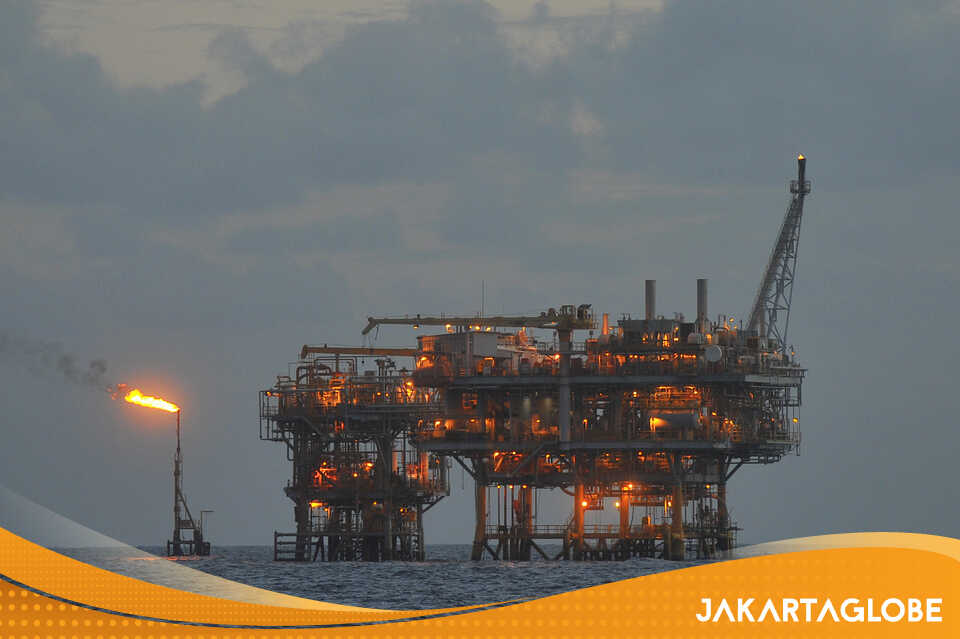
That volume is roughly equivalent to eight units of Floating Storage and Offloading (FSO) Banyu Urip, located in East Java, he said.
Energy and Mineral Resources Minister Bahlil Lahadalia previously said Indonesia’s existing fuel storage capacity can cover only around 25 days of domestic demand. Such limited reserves leave the country vulnerable to supply disruptions and price volatility, particularly during geopolitical crises such as the ongoing conflict in Iran.
Costly Infrastructure Expansion
Hadi said building a single floating storage facility requires around $400 million in investment and typically takes about 36 months to complete. Constructing eight additional floating storage units would therefore require roughly $3.2 billion in investment.
However, achieving the government’s longer-term goal of expanding fuel reserves to around 70 days of supply — equivalent to approximately 112 million barrels — would require far larger infrastructure.
Assuming each floating storage unit can store 2 million barrels, Indonesia would need about 56 additional storage facilities, bringing the total investment requirement to roughly $22.4 billion, Hadi said.
Leasing Could Offer Short-Term Solution
As a short-term alternative, Hadi said leasing storage facilities could be more practical than building new ones immediately.
However, he cautioned that rental costs can surge significantly during emergencies.
“In critical or emergencies, storage rental costs can rise to 1.5 to 2 times normal rates,” he said.
The government could also maximize the use of floating storage facilities in the Riau Islands or rent additional capacity from Singapore if domestic storage proves insufficient.
Leasing a single floating storage unit is estimated to cost around $200,000 per day, meaning eight units would require about $1.6 million per day, according to Hadi.
For long-term energy resilience, Hadi recommended that the government prioritize building onshore storage facilities, which are significantly cheaper than floating storage.
Tags: Keywords: