
Existing Since 1951, Why Is THR Synonymous with New Money?
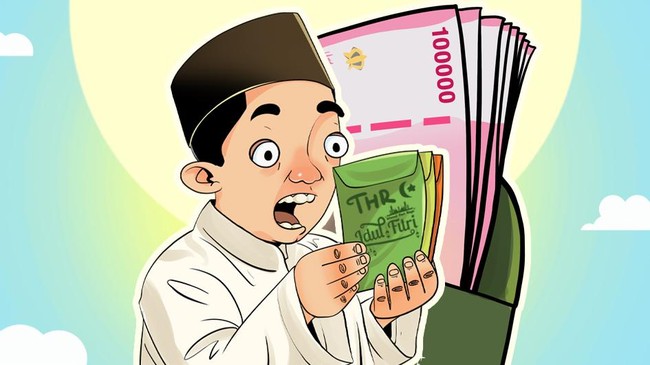
Tunjangan Hari Raya (THR) has become an inseparable part of Eid al-Fitr celebrations in Indonesia. Besides being synonymous with giving money to family and relatives, this tradition is also closely associated with the habit of exchanging old money for new notes before distributing them in Lebaran envelopes. However, with technological advancements, the way people distribute THR is beginning to change, including through digital transfers and e-wallets.
When Did the THR Tradition Begin in Indonesia?
The THR tradition in Indonesia has roots in the early years of independence. In 1951, the cabinet of Prime Minister Soekiman Wirjosandjojo provided allowances ahead of Eid al-Fitr to civil servants to help with Lebaran needs. This policy then sparked protests from private sector workers demanding similar treatment. Pressure came from labour organisations such as the All-Indonesian Central Labour Organisation (SOBSI), affiliated with the Indonesian Communist Party.
In response to these demands, in 1954 the government began encouraging companies to provide “Lebaran Gifts” to workers. This policy evolved and eventually became an obligation for companies to give festive allowances to employees, which to this day is widely known as THR.
Why Is THR Synonymous with New Money?
Besides serving as an allowance for workers, at the community level THR developed into a tradition of sharing money with family, especially children. Many families believe this small token of appreciation can motivate children to be enthusiastic about worshipping during Ramadan, such as fasting, reading the Quran, and performing Tarawih prayers.
Uniquely, people often exchange old money for new denominations to be distributed during Lebaran. This phenomenon has even given rise to various new money exchange services ahead of the holidays. Many people are willing to queue to get new denomination banknotes that will be put into THR envelopes.
According to anthropology expert from Airlangga University, Djoko Adi Prasetyo, this habit is inseparable from longer cultural roots. He explained that the tradition of giving money during Eid al-Fitr is believed to originate from similar practices in the Middle East, which were then adopted by Indonesian society and underwent acculturation with local culture.
“Some historical records from the Islamic Mataram Kingdom show that this culture has occurred from the 16th to 18th centuries. Kings and nobles usually gave new money to the children of their followers during Eid al-Fitr as a form of gratitude after performing the fasting worship,” he said, as quoted from UNAIR News.
According to him, giving new money also has symbolic meaning, namely representing purity, cleanliness, and an expression of gratitude after performing a full month of fasting worship.
Shifting to Digital THR
With the development of financial technology, the way people distribute THR is now beginning to change. If previously new money in envelopes was the main symbol of Lebaran, now some people are starting to give THR through bank transfers or digital wallets. Even, many young people jokingly offer their account QR codes to be scanned by parents or relatives during Lebaran gatherings.
Although the form has changed, Djoko assesses that the social meaning of the tradition remains the same. According to him, THR still reflects values of affection, respect, pride in being able to share, and expressions of gratitude to family and relatives.
He also views changes in the form of traditions as natural in cultural dynamics. “We must also understand that culture is not eternal. As long as the culture still has supporting communities, the culture will remain sustainable. Conversely, if the community no longer supports it, the culture can erode or even disappear,” he said.
Nevertheless, for many Indonesians, the sensation of receiving an envelope containing new money during Lebaran remains a unique experience that is hard to replace, even as the era of digital payments advances.