
Execution Focus on TLKM 30 Strategy: Telkom Strengthens Corporate Fundamentals and Governance
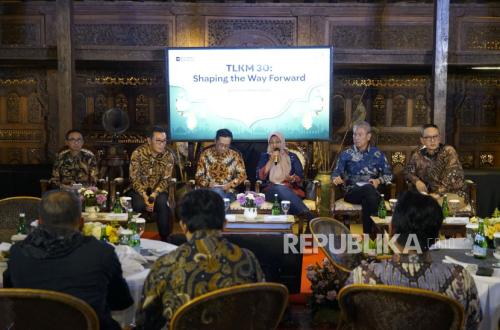
Jakarta — The TLKM 30 transformation represents Telkom’s reform agenda to strengthen business fundamentals. The year 2026 marks a key milestone for Telkom to demonstrate the implementation of this strategy.
The strategy encompasses business portfolio restructuring, strengthening good corporate governance (GCG), subsidiary restructuring and streamlining, and the formation of strategic holding structures to drive operational excellence and unlock value from TelkomGroup’s assets.
This was communicated by Telkom’s President Director Dian Siswarini during the TelkomGroup Business Update on Friday, 6 March 2026. Also present were Telkom’s Director of Legal & Compliance Andy Kelana, Director of Wholesale & International Service Budi Satria Dharma Purba, Director of IT Digital Faizal Rochmad Djoemadi, and Director of Human Capital Management Willy Saelan.
TLKM 30 is designed as a medium-term transformation strategy through 2030 to enhance Telkom’s performance and competitiveness as a globally competitive digital ecosystem enabler. Through this initiative, Telkom is structuring its business portfolio more strategically and strengthening corporate governance practices so that each business line can develop optimally and create sustained added value for the company and all stakeholders.
Strengthening Corporate Governance Practices
The TLKM 30 transformation aligns with the state-owned enterprise total governance reset agenda through strengthening transparent, prudent, and disciplined asset management practices. These efforts include asset quality normalisation, accountable expenditure practices, and alignment of financial records to ensure more accurate and fair company reporting.
In its implementation, Telkom is driving operational excellence improvements through strengthening discipline, improving business processes, and managing capital allocation more efficiently. This is also supported by corporate culture transformation emphasising collaboration, accountability, and performance orientation and value creation.
These steps accelerate resource management efficiency, thereby solidifying Telkom’s business fundamentals, particularly amid global uncertainty challenges and the need for digital infrastructure independence.
As a company with dual listing on the Indonesia Stock Exchange (IDX) and New York Stock Exchange (NYSE), Telkom continuously ensures compliance with regulations applicable in both Indonesia and the United States. Several transformation progress indicators have been visible since TLKM 30 implementation began in mid-2025.
One example is the formation of FiberCo through spin-off of wholesale fibre connectivity business and assets to PT Telkom Infrastruktur Indonesia (TIF) or InfraNexia, as the initial step in unlocking value from digital infrastructure business.
InfraNexia will focus on developing fibre business whilst improving operational efficiency and investment, and opening opportunities for network sharing and strategic partnerships to create added value for all stakeholders. Moving forward, this entity is expected to become a new engine of growth for TelkomGroup. Besides FiberCo, Telkom is also preparing strategic steps to unlock value from other infrastructure assets, including data centre and tower businesses through NeutraDC and Mitratel.
As part of the transformation process, Telkom is also conducting streamlining through restructuring business entities within TelkomGroup. The company is evaluating various subsidiaries to ensure focus on core telecommunications and digital business whilst creating a leaner and more efficient organisational structure.
The initial implementation of this streamlining effort is the signing of a Conditional Sale and Purchase Agreement (CSPA) by PT Multimedia Nusantara (TelkomMetra) towards the full divestment of PT Administrasi Medika (AdMedika) and its subsidiary TelkoMedika, which operates in the health sector third-party administrator business, as a form of non-core portfolio restructuring within TelkomGroup.
At the same time, Telkom is strengthening its role as a strategic holding. In this model, Telkom focuses on value creation and governance oversight functions, whilst business operations are conducted by operating company entities that serve as the primary drivers for each business line.
Dian explained that TelkomGroup will strengthen its business structure through operating companies focused on four main pillars as engines of company growth going forward: B2C, B2B ICT, Digital Infrastructure, and International Business. Through this structure, Telkom seeks to ensure each business line has sharper focus whilst being able to move more swiftly in optimising the potential of Indonesia’s digital ecosystem.
“We are executing TLKM 30 to unlock greater value from all of Telkom’s business potential whilst strengthening the company’s contribution to the nation and shareholders through increased value and dividends. At the same time, with support from collaboration amongst all stakeholders, we are driving this transformation to deliver positive impacts for the economy and society through increasingly equitable and quality digital connectivity services,” Dian said.