
Excessive Social Media Scrolling May Make Teenagers Vulnerable to Anxiety and Low Confidence
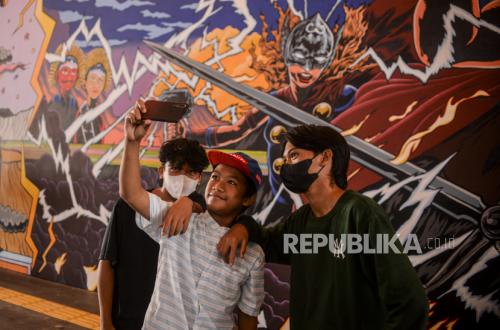
Jakarta — Psychologists have warned that excessive social media use amongst teenagers can trigger a range of psychological impacts, from social comparison to sleep disorders. One of the most commonly observed effects is the tendency of adolescents to engage in excessive self-comparison with others.
“Teenagers can feel insufficiently attractive, insufficiently popular, or insufficiently successful after viewing what appears to be perfect lives of others on social media,” said Teresa Indira Andani, S Psi, M Psi, a clinical psychologist and graduate of the University of Indonesia’s Master of Professional Clinical Psychology programme, on Saturday, 14 March 2026.
She explained that social media content typically showcases only the best aspects of people’s lives. However, teenagers who are in the identity-formation phase do not yet possess the full capability to distinguish between reality and representation.
Consequently, continuous social comparison can significantly influence self-esteem. “If validation becomes overly dependent on likes and comments, self-worth becomes highly external. In other words, confidence depends on the responses of others,” she said.
Beyond this, intense social media use is also linked to the emergence of fear of missing out (FOMO), which manifests as anxiety about not staying informed on current information or social trends. Teenagers can feel anxious when they are not keeping up with the latest developments or are not participating in digital conversations with their peers.
Another common impact is sleep disruption. Using devices late into the evening, particularly before bedtime, can reduce sleep quality and affect concentration the following day.
Nevertheless, Teresa emphasised that social media is not inherently harmful. Many teenagers use it to learn, build communities, and express their creativity. “Problems arise when usage is unbalanced and not properly managed,” said the psychologist, who is commonly known as Tesya.
She believes that the role of parents and the surrounding environment is crucial in helping teenagers use social media in a healthy and proportional manner.