
Examining the Economic Impact of War on Indonesia
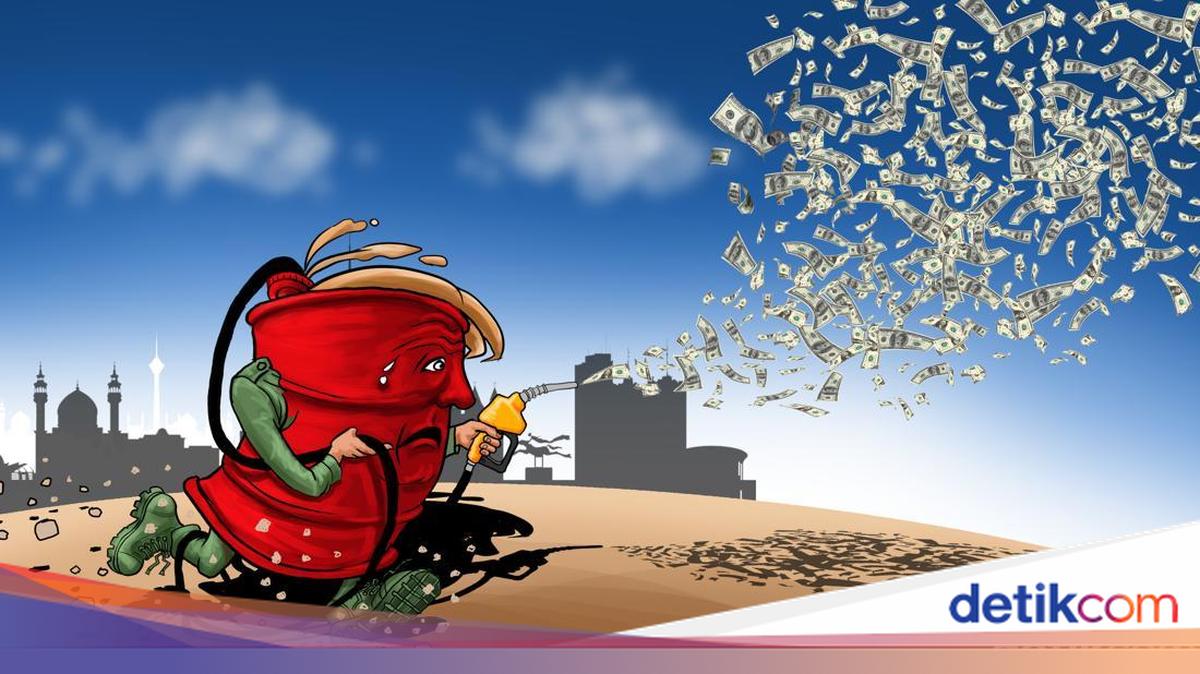
Attacks by the United States and the Zionist regime of Israel on the Islamic Republic of Iran have not only altered the security landscape in the Middle East. These tensions have also sparked concerns about global economic conditions, including for Indonesia.
M Rizal Taufikurahman, Head of the Centre for Macroeconomics and Finance at the Institute for Development of Economics and Finance (Indef), stated that every escalation of conflict in the world’s energy-producing region typically directly affects global markets through multiple channels simultaneously.
When conflict escalates, the energy market usually reacts immediately. Global oil prices surge, tanker shipping routes in the Persian Gulf region become riskier, and energy costs for importing nations rise accordingly.
Global markets have already shown such a reaction. Brent crude oil prices even spiked to around USD 119.50 per barrel on 9 March 2026 before fluctuating again.
“Meanwhile, dollar strengthening puts pressure on the currencies of energy-importing nations. For Indonesia, this combination is dangerous because we remain a net energy importer, so external shocks quickly enter the exchange rate, inflation, and fiscal sectors,” Rizal told detikX.
This oil price increase is also linked to concerns about the security of global energy distribution routes. Two most critical points are the Strait of Hormuz and the Bab-el-Mandeb, which are the main routes for tanker ships from the Gulf region to Asia, Europe, and America.
“The Strait of Hormuz is the world’s most important energy chokepoint. The US Energy Information Administration notes this route continues to channel approximately 20 per cent of global oil trade and more than 20 per cent of global LNG trade,” Rizal explained.
Bab-el-Mandeb, meanwhile, serves as an important link between the Red Sea and the Suez Canal. If both routes are disrupted simultaneously, the impact extends beyond crude oil supplies to also affect global energy distribution costs.
“If both these routes are disrupted at once, shipping costs, insurance premiums, and global energy prices rise. For Indonesia, the effect is not just on crude prices, but also on finished fuel prices, LPG, and freight costs,” Rizal noted.
This vulnerability is also related to Indonesia’s energy import structure, which remains fairly dependent on the Middle East region.
“Approximately 20-25 per cent of Indonesia’s crude imports pass through the Strait of Hormuz, while approximately 25 per cent of crude and 30 per cent of Indonesia’s LPG imports originate from the Middle East,” Rizal stated.
This means that if the conflict lasts long, Indonesia potentially faces two pressures simultaneously: more difficult supply acquisition and higher prices.
“The risk is not merely retained volumes, but also supply substitution at higher prices, longer transit times, and greater LPG supply volatility that is more sensitive to regional shocks,” Rizal elaborated.
Domestically, the government actually still maintains national energy reserves, though their thickness is not particularly large if global disruptions persist for extended periods.
“National energy stocks stand at approximately 21-23 days for fuel, which Pertamina describes as the normal range in the national logistics system,” he explained.
For LPG, the safe supply margin is even thinner. Data from the Energy and Mineral Resources Ministry in early 2026 shows national stock resilience at approximately 10-16 days, averaging around 12.8 days.
Beyond the energy sector, global turmoil also potentially threatens the stability of the rupiah’s exchange rate. Bhima Yudhistira, Executive Director of the Centre of Economic and Law Studies (Celios), believes global uncertainty is typically followed by weakening of developing nations’ currencies.
“The transmission occurs through three channels,” Bhima said.
One is the increased need for foreign exchange because of higher energy import costs. Additionally, global uncertainty prompts investors to withdraw funds from developing country markets.
“Markets experience outflows,” Bhima told detikX.
Capital outflows from both bond and equity markets can weaken the rupiah’s exchange rate whilst increasing volatility in financial markets.
“Food imports, electronics imports… become more burdensome,” he explained.
According to Bhima, this condition potentially increases production costs across various industrial sectors because many components remain dependent on imports.
“There is still room for approximately Rp 340 trillion,” Bhima stated.
He believes these funds can be used to strengthen energy subsidies and maintain public purchasing power.
Bhima also mentioned one programme that warrants reconsideration is the Free Nutritious Meals Programme (MBG), which the government is currently implementing.
“The MBG should be cut,” Bhima said.
He estimated such adjustments could yield significant budget savings.
“There is approximately Rp 290 trillion in potential savings from MBG,” he said.
Beyond exchange rate pressure, geopolitical tensions potentially spark panic in the domestic market if not properly managed. Bhima Yudhistira believes uncertain global situations often trigger excessive public anxiety.
According to him, the government must maintain clear public communication to prevent panic that drives excessive commodity purchases. “Without clear government communication, panic buying could occur, particularly on energy commodities or basic necessities,” he emphasised.
Can Indonesia Serve as Mediator?
Amid rising geopolitical tensions, the Indonesian government has expressed readiness to serve as mediator in the conflict between American and Israeli Zionist attacks on Iran. However, several researchers believe implementing such a step proves difficult in international diplomatic practice.
Edwin Martua Bangun Tambunan, Professor of Security and Peace Studies at Pelita Harapan University, stated that in conflict resolution processes, mediators are typically selected by parties involved in the dispute.