
Examining the Advanced Technology of Jasa Marga Command Center, the Toll Road Traffic Control Hub
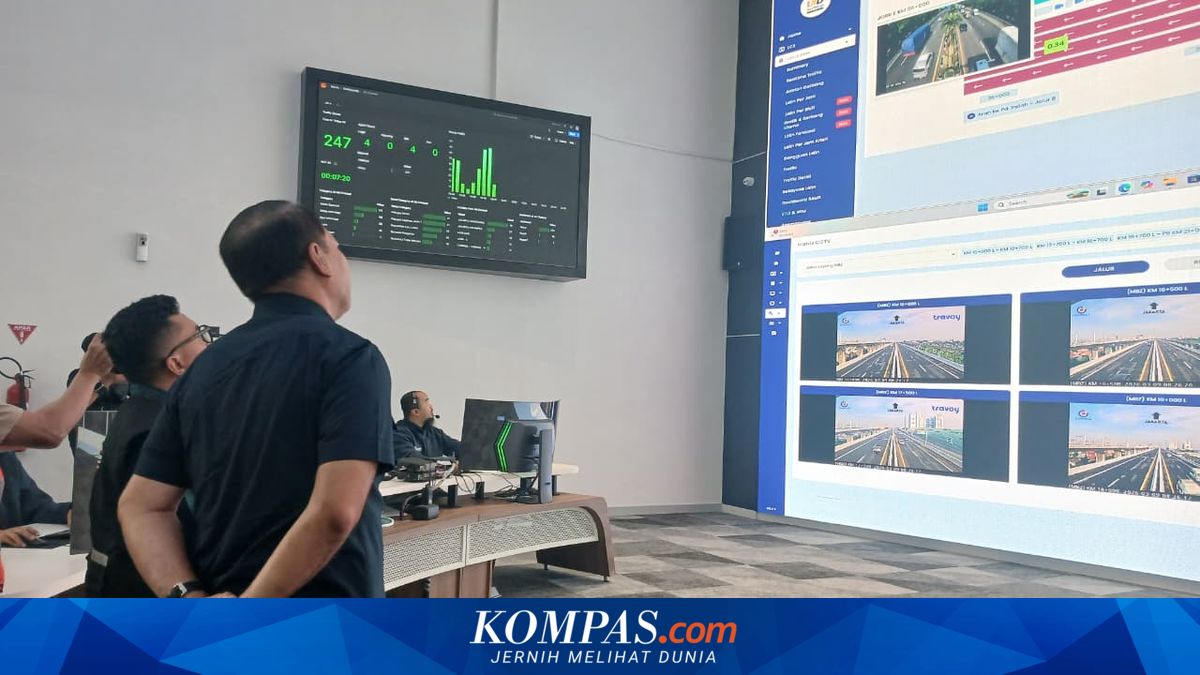
BEKASI — The Merapah Trans-Jawa 2026 team continued its journey on the third day with a visit to the Jasa Marga Tollroad Command Center (JMTC) in Jatiasih, Bekasi, West Java on Monday, 9 March 2026. The programme received full support from the Indonesian Toll Association (ATI), PT Jasa Marga (Persero) Tbk, Honda Prospect Motor (APM), ASTRA Infra, PT Citra Marga Nusaphala Persada Tbk, and Waskita Toll Road.
Upon arriving at JMTC, the Merapah team met directly with the President Director of PT Jasa Marga (Persero) Tbk Rivan Achmad Purwantono to assess Jasa Marga’s readiness to handle the Lebaran exodus and return traffic in 2026.
Based on the Merapah team’s observations, JMTC contains cubicles where customer service officers assist toll road users of Jasa Marga. There is a large display screen that monitors CCTV feeds to provide real-time data on vehicle congestion across toll sections and rest areas, overloaded vehicles using the toll road, water level monitoring equipment, and non-contact toll payment technology or Radio Frequency Identification (RFID).
“That is what is interesting because we do not need to use Google or Waze, so we do not have to rely on them because we have created our own system,” Rivan told the Merapah team.
Jasa Marga estimates that the volume of vehicles during the Lebaran exodus period this year will increase significantly. Rivan stated that based on calculations from H-10 to H+10 Lebaran, the number of vehicles expected to pass through is predicted to reach 3.5 million units.
“In this projection from H-10 to H+10, approximately 3.5 million vehicles are expected to pass through. This means that compared to the normal flow, there is growth or an increase of around 17 per cent, or 1.8 per cent between last year’s Lebaran and this year’s,” he said.
Of that total, approximately 50 per cent of vehicles are estimated to move towards the East, including travel to Bandung and the Trans-Jawa route. Meanwhile, 28 per cent of vehicles are moving towards the West heading to Merak, and approximately 21 per cent heading to Bogor.
Because these two traffic flows meet around KM 66 to KM 70 of the Jakarta-Cikampek Toll, this area has the potential to experience significant congestion if not properly anticipated.
In addition to monitoring vehicle flow, Jasa Marga is also ensuring the readiness of toll road infrastructure before the exodus period begins.