
Examining China's State Capitalism Versus Indonesia's
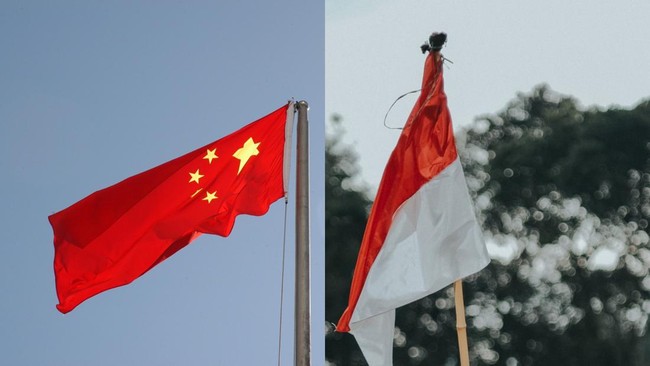
There is one book that I believe is very good to read to understand the direction of national economic development, titled: “Paradox Indonesia dan Solusinya” published in May 2022. The author is President of the Republic of Indonesia, Prabowo Subianto.
One of the major ideas in this book that colours national economic policy can be found on page 120. It stems from Prof. Sumitro’s concept of a mixed economy, which is neither capitalism (beyond capitalism) nor socialism (beyond socialism).
The major idea of President Prabowo’s economic development, or Prabowonomics, can be termed as state capitalism or constitutional economy. The reference is clear: paragraph 2 of Article 33 of the 1945 Constitution (UUD), which states that “branches of production which are vital for the state and affect the life of the people shall be controlled by the state.”
Prabowonomics is certainly in stark contrast to neoliberal market economy ideas, such as those of Milton Friedman, Von Hayek, and Thatcher. They believed that “the best government is the least government.” The smaller the role of government, the better. The government acts only as a supervisor or regulator.
State Capitalism à la Prabowo
The shift in the direction of national economic development from a liberal market economy towards state capitalism positions the government not merely as a supervisor. The government is actively involved in national economic activities as a prime mover or pioneer.
State capitalism changes the direction of national economic policy, increasing policy uncertainty. Perceptions of risk to the national economy rise. The country risk premium increases, causing capital outflows.
This is reflected in the extreme depreciation of the rupiah exchange rate, reaching its historical lowest point of Rp13,357 per US dollar on 30 April 2026. Similarly, the Composite Stock Price Index (IHSG) around 7,007 on 30 April 2026, heading towards its lowest point in the past year.
The pendulum of the national economy shifting towards state capitalism generates negative sentiment. In a free foreign exchange regime (free capital mobility), negative sentiment leads to net foreign capital outflows. The exchange rate depreciates, and the IHSG plunges.
Within the Mundell-Fleming policy framework, the impossible trinity, Indonesia’s economy has operated from the beginning under a floating exchange rate regime (sacrificing exchange rate stability). However, it maintains a free foreign exchange regime and monetary policy independence. This contrasts with China’s state capitalism, which chooses the policy option of maintaining exchange rate stability and macroeconomic policy independence from exposure to external factors.
State capitalism à la Xi Jinping is implemented in a capital control regime. The aim is to limit short-term foreign capital flows (hot money) in and out of the Chinese economy, which was proven to cause the 1997-1998 Asian financial crisis.
State Capitalism à la Xi Jinping
In line with economist Keyu Jin, a brilliant Chinese national and professor of economics at the London School of Economics (LSE), in her book titled “The New China Playbook, Beyond Socialism and Capitalism” published in 2024.
China’s economic development cannot be judged from the perspectives of capitalism and socialism. The Chinese model is better described as socialism or capitalism that metamorphoses according to Chinese values and culture. It is also called managed capitalism or major economy.
China’s hybrid economy prioritises the role of government through fiscal policy instruments, monetary policy, industrial policy, financial system regulation (adopting capital controls), state financing, and prioritising the role of State-Owned Enterprises (BUMN).
The difference between China’s state capitalism and Indonesia’s is that China’s state capitalism moves from state control to a market economy. Meanwhile, Indonesia’s state capitalism does the opposite, from liberal (free capital mobility) to state supervision and control. The Chinese government gradually opens its economy to the outside. This is reflected in the process of liberalising China’s financial system, which to this day still adheres to a capital control regime.
China’s central bank, the People’s Bank of China (PBOC), hinders Chinese banks from borrowing abroad and limits the value of shares that foreign investors can buy in China’s stock market. This policy effectively eliminates hot money flows and reduces stock price fluctuations (Eichengreen, 2023). To this day, the PBOC limits the international circulation of the Chinese yuan. The Chinese yuan is not yet fully and freely convertible to other currencies.
In line with Eichengreen and Kawai (2015), the PBOC also creates two Chinese yuan money markets: the mainland market (mainland China) and the offshore market (outside mainland China). This is reflected in two interest rates: the domestic money market interest rate, CNY (mainland), and the foreign money market interest rate, CNH (offshore). The interest rate differential reaches 10 percent.
This policy aims to ensure the availability of Chinese yuan for importers abroad, but at the same time, the PBOC controls foreign exchange traffic between countries. The Chinese yuan is traded freely in the domestic money market, but restrictions are imposed on transactions in the Chinese yuan money market abroad (offshore).
So, what can the Indonesian government learn from the Chinese state capitalism model? What policy options can be taken to ensure that the implementation of state capitalism does not lead to rupiah per US dollar exchange rate volatility and IHSG fluctuations?
One risk that needs to be mitigated is the increasing perception of risk due to changes in national economic policy. The country risk premium rises. Through the risk premium channel, this causes net foreign capital outflows, extreme rupiah depreciation per US dollar, and weakening IHSG.
Next, referring to Mundell-Fleming