
Ex-CIA Boss Criticises Trump: He Created the Oil Crisis in the Middle East
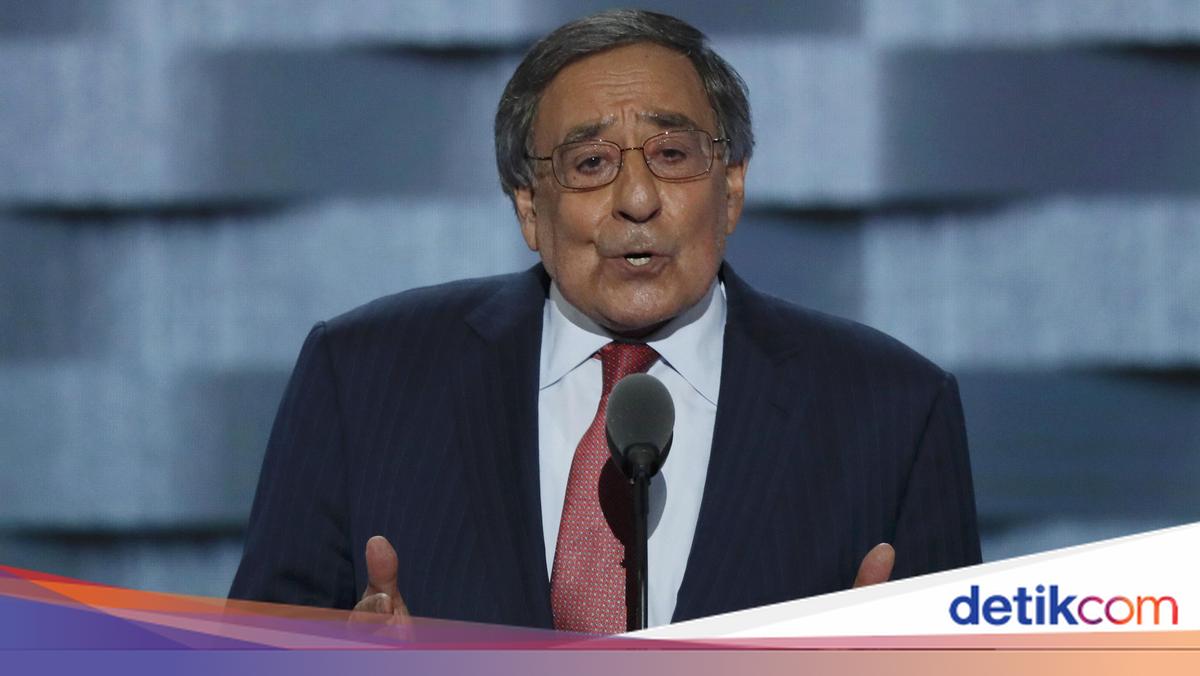
Former US Defence Secretary and ex-CIA Director believes that US President Donald Trump is caught between two difficult choices after three weeks of war in Iran and has sent a message of weakness to the world. Panetta criticised what Trump has done in the Iran war as not the role of a national leader.
Cited from The Guardian on Tuesday (24/3/2026), Panetta, who served in the administrations of Bill Clinton and Barack Obama, recalled that national security officials have always been acutely aware of Iran’s ability to create an energy crisis by blocking the Strait of Hormuz. That scenario is now unfolding, leaving Trump with no exit strategy beyond wishful thinking.
“He tends to be naive about how things can happen,” said Panetta, 87, who oversaw the operation to find and kill Osama bin Laden, in a telephone interview. “If he says it and keeps saying it, there’s always hope that what he says will become reality. But that’s what children do. That’s not what presidents do.”
The Iran war began on 28 February with what Trump hoped would be a decisive blow. An Israeli surprise attack killed Iran’s supreme leader, Ayatollah Ali Khamenei. The US and Israel quickly gained air superiority. However, the longer the conflict rages, the more the initiative seems to be slipping out of control.
Thirteen US military members and, according to Iranian health officials, more than 1,400 Iranians have been killed, while Khamenei has been replaced by his son, Mojtaba Khamenei. Trump is struggling to claim the image of victory at home due to rising oil prices, declining poll numbers, and signs of fracture in his electoral coalition. He is angry at media coverage and sending mixed signals about the goals or when the “excursion,” as he calls it, will end.
Panetta said: “We replaced an old leader, a supreme leader who was nearly dead at the time the Iranian people were ready to take to the streets in the hope that they could finally change their government. And instead, today we have a more entrenched regime, we have a younger supreme leader who will be in power for a while, and he is far more hardline than the first supreme leader. That didn’t go well.”
The regime has retaliated against the US and Israel by effectively closing the Strait of Hormuz, causing chaos in the global energy market. One-fifth of the world’s traded oil flows through that waterway.
For Panetta, this is a crisis caused by Trump himself. “It’s not hard to understand that if you’re going to go to war with Iran, one of the biggest vulnerabilities is the Strait of Hormuz, and (it) can create a major oil crisis that can drive fuel prices skyrocketing.
“In every national security council I’ve been in where we discussed Iran, that subject always came up. For some reason, they didn’t consider that it could be a consequence or they thought the war would end quickly and they wouldn’t have to worry about it.”
He continued: “Whatever it is, they weren’t prepared for it and now they’re paying the price because, if there’s an exit for Trump, it’s by declaring victory and everything’s over and we’ve succeeded in all our military objectives. The problem is he can declare victory all he wants, but if he doesn’t get a ceasefire, he has nothing.
“And he won’t get a ceasefire as long as Iran keeps threatening him with the Strait of Hormuz.”
Trump said he does not plan to deploy US troops in Iran, but also sent thousands of marines to the Middle East as a possible sign of an upcoming operation. On Friday (20/3), he refused to confirm reports from Axios media that he was considering occupying or blockading Iran’s Kharg Island to pressure Iran to reopen the strait.
Panetta said: “He’s facing a very difficult problem, namely: Will he expand the war by trying to open the Strait of Hormuz so he can eliminate that influence and perhaps finally negotiate with Iran? Or will he just walk away and declare victory, even though everyone will clearly understand that he has failed?”
“He’s in a very difficult position right now, but no one else is responsible for his position but Donald Trump.”
On Saturday (21/3), after Trump posted that other countries might need to help keep the Strait of Hormuz open, the reaction was less than enthusiastic. On Friday (22/3), Trump called NATO a “paper tiger” without the US and mocked its members as “cowards.” He kept his war plans against Iran secret from allies other than Israel.
Panetta commented: “If you’re planning a war, it’s not a bad idea to talk to your allies. Alliances are important to be able to support any kind of military effort. We’ve learned that lesson a long time ago, since World War II. But (Trump) has taken an insensitive approach to alliances and now he suddenly finds himself in a place where he has to turn to allies, to NATO and to others, all of whom of course he hasn’t treated well during his presidency, to try to help him out of trouble.”
The former defence secretary added with a chuckle: “Karma is coming soon.”
He suggested that Trump abandon his fanciful thinking and “face reality” that he must use the military to open the strait, neutralise Iran’s defences along the coast, and deploy ships to escort oil tankers through it.
“Without a doubt there will be casualties and it will clearly expand the war, but I don’t”