
Europe's Strongest Fortress Falls! 3 Ingenious Strategies by Al-Fatih to Raise the Banner of Islam
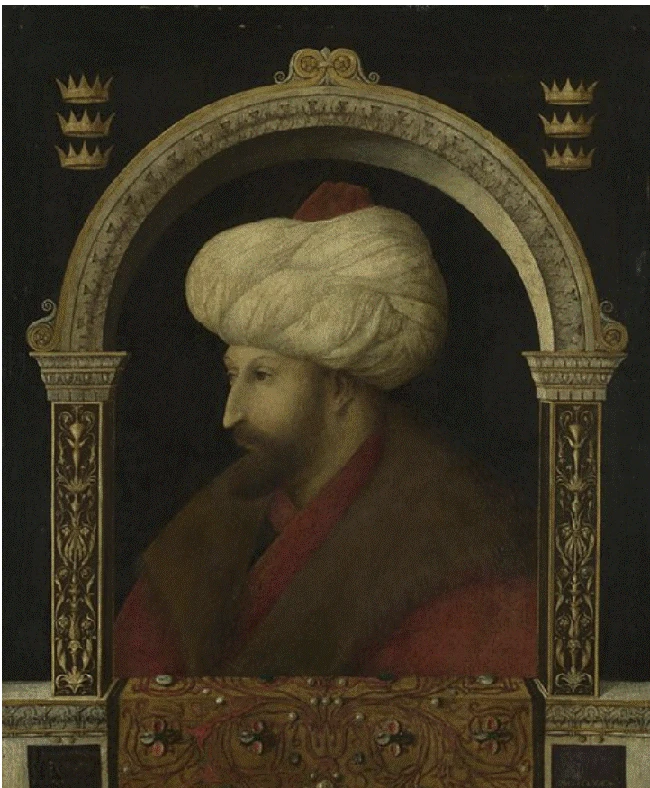
The Fall of Constantinople (Istanbul) in 1453 was one of the most monumental events in world history. The city, long known as the strongest fortress in Europe, fell to the hands of the 21-year-old sultan Muhammad al-Fatih.
Under strict tutelage, he grew into a devout, intelligent, and resolute leader. Muhammad Al-Fatih is recorded as one of the most influential figures in world history. In Western literature he is known as Mehmed II, sultan of the Ottoman Empire who captured Constantinople in 1453.
The conquest marked a turning point as it ended the Byzantine Empire’s more than a thousand-year rule. After the victory, Constantinople subsequently developed into Istanbul, the seat of the Ottoman administration.
Muhammad Al-Fatih was born on 30 March 1432 in Edirne. He was the son of Sultan Murad II and began to lead the Ottoman Empire at about 19.
The epithet ‘Al-Fatih’, meaning ‘the Conqueror’, was bestowed on him after his success at Constantinople at the age of 21, a city long known as the strongest fortress in Europe.
That success earned him recognition as both a military leader and an intellectual. He was fluent in several languages, from Arabic, Turkish, Persian, Greek to Latin, and had a keen interest in science, military strategy, and governance.
Under his leadership, the Ottoman realm expanded to include the Balkans, Anatolia, and the Black Sea region. This expansion made the Ottoman Empire one of the great powers of the world at the time.
In Islamic historical tradition, the conquest of Constantinople is often linked to a hadith of Prophet Muhammad recorded by Ahmad ibn Hanbal in Musnad Ahmad, which says the city will some day be conquered by a leader and army that are good.
“Latuftahanna al-Qustanthiniyyah, falani’ma al-amir amiruha, walani’ma al-jaysh dzalikal jaysh.”
Translation: “Truly Constantinople will be conquered. What a good leader is its leader, and what a good army is that army.”
Here are the three main strategies that led him to conquer Constantinople.
Purely Military Strategy: The Strength of the Army and Giant Cannon Technology
Mehmed II built a formidable force of more than 250,000 soldiers, supplemented by high-quality armaments. One key step was recruiting an engineer named Orban (Urban) to design the giant cannon, the era’s most advanced weapon. The cannon was extremely heavy and tailored to breach the thick walls of Constantinople, which had long been deemed impregnable.
In addition, Al-Fatih erected the Rumeli Hisari fortress in the Bosporus, at the strategic narrow point. The fortress blocked relief routes from Europe to Byzantium and strengthened Ottoman control over the waters around the city.
He also prepared more than 400 ships to support the siege from the sea.
Grand Strategy: Tactical Maneuvering and Intelligence Operations
Constantinople was defended on three sides by sea (the Bosporus, the Sea of Marmara, and the Golden Horn) and by a multi-layered fortification with tall towers. The city was guarded by a massive chain across the Golden Horn to prevent enemy ships from entering.
Al-Fatih then gathered detailed information about the fortress and enemy defences, even carrying out direct reconnaissance. The land route from Edirne to Constantinople was repaired to enable passage of the giant cannon.
The most legendary move was moving the Ottoman fleet over land for about 3 kilometres using large wooden beams coated with oil. The ships slid across the land toward the Golden Horn, passing the chain barrier. This strategy surprised Byzantium and delivered a psychological blow to the city’s defence.
Non-Military Strategy: Morale, Spirituality, and Psychological Warfare
Al-Fatih understood that war also involves morale and the mind. On the eve of the final assault on 28 May 1453, he ordered his troops to strengthen prayer and worship. He visited every encampment to ensure readiness and boost fighting spirit.
On the night before the assault, the Ottoman troops lit large fires around the camps while shouting takbir. This psychological tactic induced fear in the defenders of Eastern Rome.
After the victory, Al-Fatih entered the city and visited Hagia Sophia. He guaranteed the safety of the residents inside before converting it into a mosque and holding the first Friday prayers there. This firm yet measured approach demonstrated a blend of strength and policy in his leadership.