
Europe's Dilemma Amid the US-Iran Tinderbox
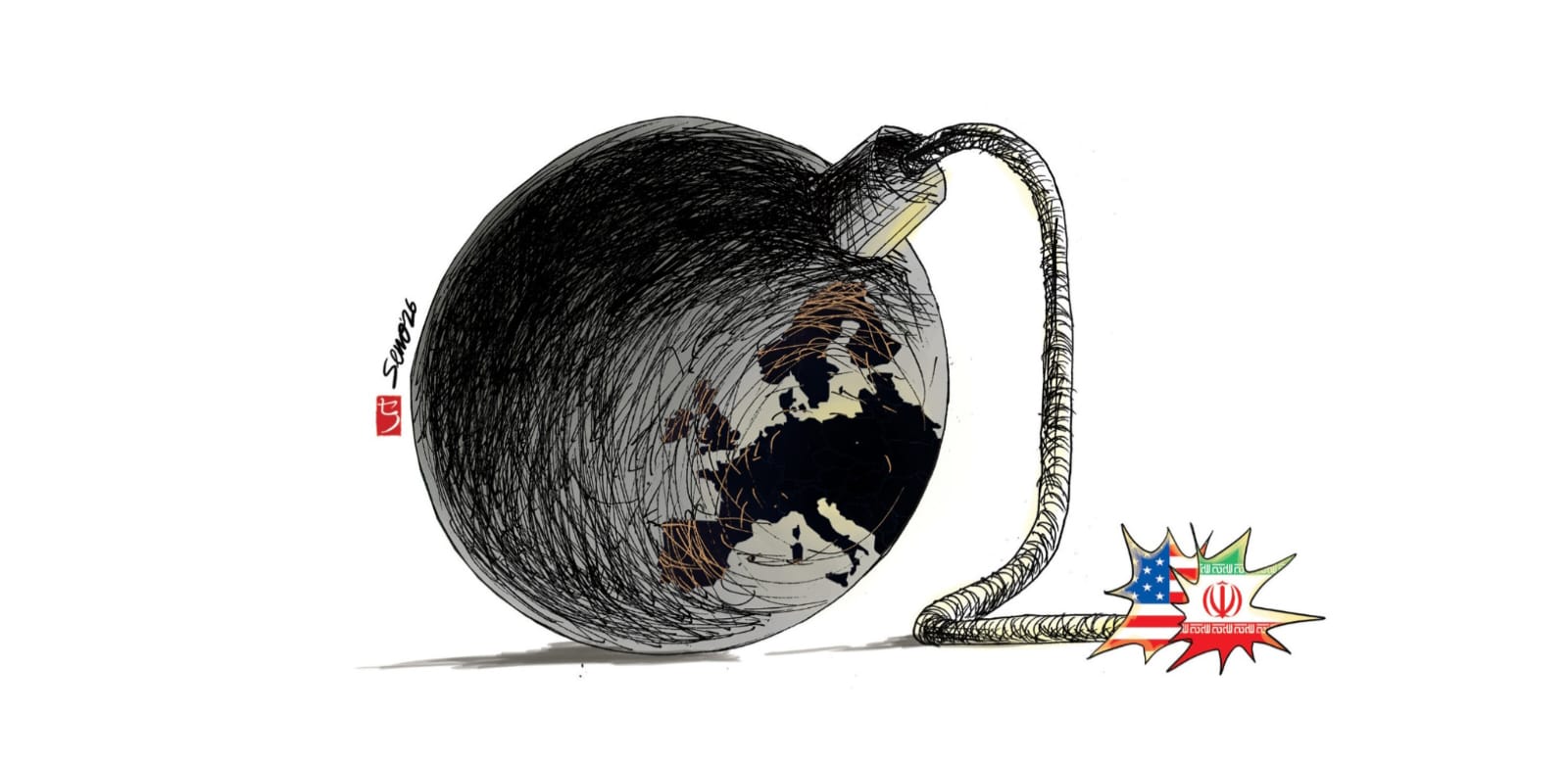
The spark of war in the Middle East may be far from Brussels, but the heat from the embers of conflict reaches the heart of Europe. Every explosion in the Persian Gulf echoes in the meeting rooms of the European Union—dividing interests, testing solidarity, and questioning the meaning of the European-American alliance.
In the vortex of the US-Iran conflict, the European Union, as one of the world’s power poles, is not merely a spectator. It is a party trapped in difficult choices, unfortunately not entirely within its control. US-Europe relations in recent times have been coloured by bursts of political-diplomatic events.
A series of recent events clarifies the symptoms of ‘hot-cold’ in those transatlantic relations. Consider, for example, America’s unilateral tariff policies against European products, pressure on NATO allies to increase military spending, and Washington’s unilateral tendencies in various global issues.
All of this shows a consistent pattern: America is increasingly acting alone, even against its allies. That tension even extends to sensitive issues related to territorial sovereignty when the US expressed its desire to annex Greenland—a Danish autonomous territory under the Kingdom of Denmark’s jurisdiction.
For many European countries, the Greenland issue is not merely a matter of Arctic geopolitics, but a symbol of how Washington increasingly views allies through the lens of unilateral strategic interests. The strong reactions from Denmark and several EU leaders show that sensitivities regarding sovereignty and respect for partners have now become a new source of friction in transatlantic relations.
Similarly, when the US decided to withdraw from the Joint Comprehensive Plan of Action (JCPOA), the agreement on limiting Iran’s nuclear enrichment with the P5+1 (The Big Five plus Germany). That US action became a crucial turning point in its relations with Europe. For Europe, that step was not just foreign policy, but a disregard for the collective diplomacy that has long been the foundation of American-European foreign policy.
This is where the root of the problem emerges: a difference in paradigms. The European Union sees the international order as a space of norms and institutions, while American foreign policy behaviour increasingly prioritises the logic of power. Joseph S. Nye Jr. in The Future of Power (2011) emphasises that legitimacy and shared values are the main glue of alliances. When those shared values are eroded by unilateralism and egocentric interests, the alliance loses its strategic meaning.
What is happening now is the erosion of trust in its most tangible form. And it seems to loom in the aura of American-European relations.
However, shared values are not the only dilemma facing Europe in its relations with the US. Economic interests speak in a louder and more straightforward language, presenting another equally complex dilemma. The European Union is highly dependent on global energy stability. Every escalation in the Persian Gulf, especially around the Strait of Hormuz, immediately triggers surges in energy prices and inflationary pressures in Europe.
In an economy not yet fully recovered from the Covid pandemic and the Russia-Ukraine war, for Europe, a US-Iran war is not just a geopolitical threat, but also a concrete economic risk that is directly felt.
At this point, Europe’s dilemma becomes even sharper. On one side, it cannot fully oppose the US openly due to high security dependence through NATO. On the other side, following Washington’s steps in war with Iran means risking its own economic stability.
Europe is very vulnerable to global energy turbulence triggered by Middle East conflicts. Because around 15%–20% of the European Union’s oil imports still come from the Middle East region. Support for escalating American pressure on Iran could drag Europe into a new wave of energy crisis. Tensions in the Persian Gulf could disrupt global oil distribution through the Strait of Hormuz, a vital route for global energy supplies, ultimately triggering surges in oil and gas prices in the European market.
For a region still facing inflationary pressures and growth slowdowns post-energy crisis from the Russia-Ukraine war, this situation could worsen industrial production costs, raise prices of basic necessities, and suppress people’s purchasing power. Not only that, compliance with American sanctions policies also limits the room for manoeuvre for European companies in international trade and investment.
The experience after the US withdrawal from the Joint Comprehensive Plan of Action (JCPOA) shows how many large European companies eventually withdrew from the Iranian market for fear of secondary sanctions from Washington, even though their own governments still supported the nuclear agreement.
This economic calculation explains why several European countries are cautious, even reluctant to follow Washington’s invitation to support military actions against Iran. Germany has openly rejected involvement in the regime change agenda in Iran, while Spain and Italy tend to take more cautious positions towards military escalation.
Even in the UK and France, support for Washington is not entirely solid due to strong domestic public opinion pressure rejecting new involvement in Middle East wars.
That European rejection or caution is at least influenced by three factors. First, strategic trauma from the 2003 Iraq War that left heavy political and economic burdens for Europe. Second, concerns that a prolonged war between the US and Iran will trigger a new wave of migration and security instability to the European region.
Third, the awareness that major conflict in the Middle East will increasingly benefit America as an energy producer.