
Europe witnesses wave of protests condemning US-Israel attacks on Iran
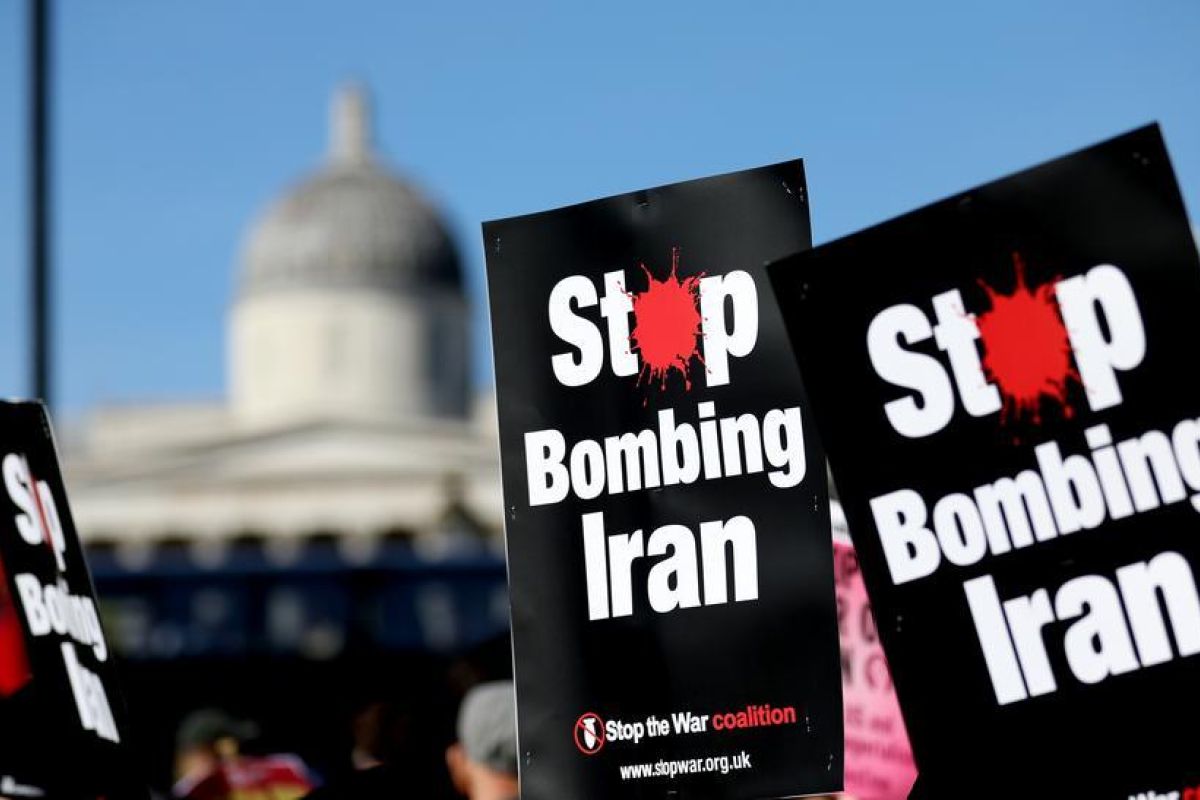
London (ANTARA) - Thousands of demonstrators took to the streets in London on Saturday (21/3), joining a swelling wave of protests across Europe against the United States (US) and Israel’s military attacks on Iran.
In the British capital, a sea of protesters marched from Russell Square to Whitehall, waving banners and chanting slogans condemning the strikes. Their voices echoed through central London as concerns over the escalating conflict spilled onto the streets.
In another protest action that day, participants called for an immediate ceasefire and an end to foreign interventions in the Middle East.
Mariam, a protester holding a poster reading “STOP THE WAR ON IRAN”, criticised Washington’s naming of the operation as “Epic Fury” and instead called it an “Epic Failure”.
“No foreign interventions. Don’t interfere in the Middle East and stop the bombing. People have the right to live in peace. You can’t bomb people for democracy,” she said.
Another protester named Adrian, who came from Birmingham, described the attacks on Iran as “completely outrageous” and “frankly exhausting”. He warned that the consequences, including rising oil prices and global insecurity, are already being felt.
Elsewhere, protests were also reported in various European cities. In Lisbon, several hundred people gathered in the rain on 14 March near the US Embassy in a demonstration organised by the Portuguese Council for Peace and Cooperation.
Supported by more than 70 groups, the participants condemned what they called US and Israeli aggression, chanting “Yes to peace, no to war” and calling for disarmament.
The London demonstration was part of a broader wave of protests in Europe on Saturday, reflecting growing opposition to the ongoing strikes.
In Spain, thousands gathered in Madrid, with authorities estimating around 4,000 participants.
The protesters marched from Atocha to Puerta del Sol, carrying banners reading “No to war, no to NATO” and “Spain is not the U.S.”.
Leaders from the Podemos party, including General Secretary Ione Belarra and Political Secretary Irene Montero, also attended the action.
Montero called for Spain to leave NATO, highlighting broader criticism of Western military policies in the region.
In Bulgaria, hundreds took to the streets in Sofia on 2 March, carrying banners reading “No war against Iran” and “U.S. military aircraft are not welcome here”. The protesters called for an end to the attacks and the withdrawal of US military aircraft from Bulgarian territory.
Similar demonstrations took place in countries such as France and Greece as the conflict entered its third week.
Amid this public reaction, criticism also came from European analysts. Rob de Wijk, a professor at Leiden University in the Netherlands, described the US actions as “blatant blackmail” and warned that it could pose risks to European security. He argued that Europe should reduce its dependence on the US and strengthen its strategic autonomy.