
Europe on the Brink, Aviation "Apocalypse" Looms
The shadow of the global energy crisis is spreading to Europe’s aviation sector. Within weeks, airlines in the region are expected to face serious pressure due to dwindling supplies of aviation turbine fuel (avtur), as the conflict between Iran and the US-Israel bloc drags on.
International Energy Agency Executive Director Fatih Birol has warned that Europe may only have jet fuel reserves for around six weeks. If oil supplies from the Middle East do not recover soon, flight disruptions are said to be just a matter of time.
“I can say that in the near future we will hear news that some flights from city A to city B may be cancelled due to a shortage of jet fuel,” Birol told The Associated Press, quoted on Friday (17/4/2026).
This warning comes amid a surge in global energy prices triggered by the conflict since late February. Iran’s effective closure of the Strait of Hormuz, a vital export route for oil from the Gulf region, has shaken the world’s energy supply chain.
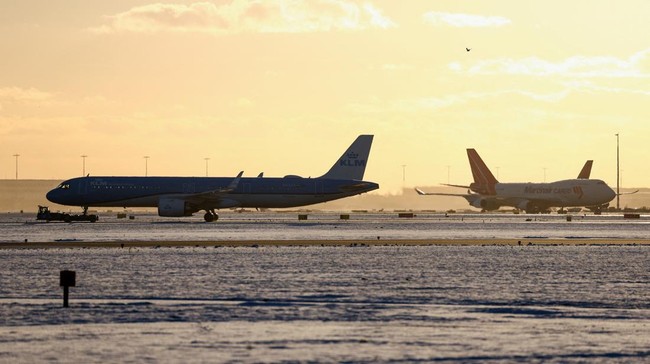
The impact is already being felt at the airline level. KLM, part of the Air France-KLM group, has announced it will cut 160 flights over the next month due to high jet fuel prices based on kerosene.
The Dutch airline emphasised that the decision is not due to a physical shortage of fuel, but rather operational cost pressures.
“This concerns a limited number of flights within Europe which, due to the increase in kerosene costs, are currently no longer financially viable to operate. There is no shortage of kerosene,” KLM stated.
Nevertheless, the airline assured that disruptions to passengers would be minimised. “KLM expects the May holiday period to be busy and ensures that passengers can travel to their holiday destinations as planned.”
This step reflects the growing financial pressure on the aviation industry, even for airlines that have hedged against fuel prices. Air France-KLM itself has hedged 87% of its fuel exposure, yet still chose to cut flights to curb losses.
The cuts are focused on busy routes such as between Amsterdam’s Schiphol Airport and London and Düsseldorf, where passengers can relatively easily be rerouted to other flights.
Although no real shortage has occurred so far, the situation is expected to worsen. Fuel shipments dispatched before the war are still arriving in Europe, but the last wave has now reached its destination.
Birol said the remaining reserves are thinning out. “There may only be about six weeks of jet fuel left,” he stated.
Previously, the Airports Council International Europe lobbying group had even warned the European Union that the region is only three weeks away from a potential fuel shortage.
Under normal conditions, airports and airlines typically hold reserves for about six weeks. However, the prolonged conflict has depleted additional reserves, while alternative suppliers lack the capacity to replace Gulf supplies.
Birol described the situation with a sharp analogy. “There used to be a group called Dire Straits. Now this is truly a dire strait, and it will have a major impact on the global economy. The longer it lasts, the worse the impact on economic growth and inflation worldwide,” he said.
This crisis not only affects aviation but also the global economy at large. Birol warned of further consequences in the form of surging energy prices across various sectors.
“The impact is higher petrol prices, higher gas prices, and high electricity prices,” he said, adding that some parts of the world will be hit harder than others.
Brent crude oil prices remain more than 30% above pre-war levels. This rise in energy prices also adds political pressure on US President Donald Trump.