
Europe Divided! "Giants" Disagree, Effort to Block Israel Fails
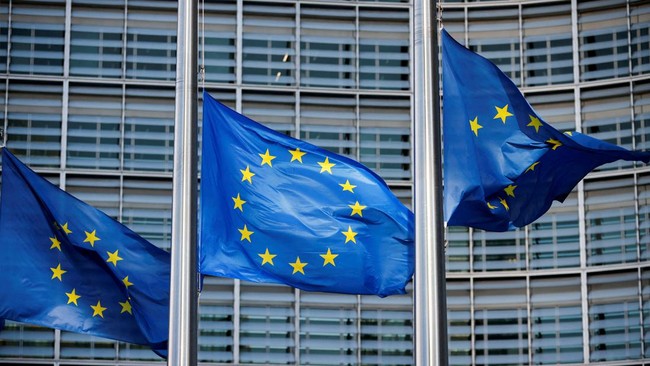
Attempts by several European countries to pressure Israel through economic diplomacy have once again hit a dead end. In a crucial meeting of EU foreign ministers, the push to freeze official relations with Israel failed to garner sufficient support.
Several European countries, including Spain and Ireland, advocated for suspending the agreement governing relations between the EU and Israel. However, the effort did not succeed due to a lack of support from other member states.
The call was made during the EU foreign ministers’ meeting in Luxembourg. Several ministers called for the partial or full cessation of the association agreement that has been in effect since 2000. They raised various concerns, from Israel’s settlement construction in the West Bank, humanitarian conditions in Gaza, to new laws regarding the death penalty.
“Today, Europe’s credibility is at stake,” said Spanish Foreign Minister Jose Manuel Albares on Tuesday (21/4/2026) local time, as reported by Reuters.
Nevertheless, differing views among member states made concrete action difficult to achieve. The EU’s foreign policy chief, Kaja Kallas, acknowledged that there was not enough support to proceed with the plan, although discussions would continue.
“I do not see any change in positions in the room regarding suspension,” Kallas said in a press conference after the meeting.
She added that the ideas emerging from the discussion would be taken to the EU Trade Commissioner for follow-up.
Previously, in September, the European Commission had proposed suspending certain trade provisions in the agreement, covering around €5.8 billion in Israeli exports. However, Israel rejected the proposal, describing it as “morally and politically deviant”.
To suspend trade aspects, qualified majority support is required, namely 15 out of 27 member states representing 65% of the EU population. Meanwhile, full suspension of the agreement can only be done if all members unanimously agree.
Several major countries like Germany and Italy chose to maintain their positions. Berlin emphasised that a dialogue approach remains the primary path.
German Foreign Minister Johann Wadephul stated that his country remains committed to promoting a two-state solution for Israel and Palestine.
“However, this must be done through critical and constructive dialogue with Israel,” he said.
On the other hand, countries like Belgium also pushed for changes in EU policy, while recognising the existing political obstacles.
Belgian Foreign Minister Maxime Prevot said his country understood that full suspension was likely difficult to achieve. “Realising that full suspension is unlikely to be achieved given the positions of various European countries,” he said.
The EU itself is Israel’s largest trading partner. The value of goods trade between the two reached €42.6 billion in 2024, according to EU data.
In addition to the discourse on suspending the agreement, the EU is also considering sanctions against Israeli settlers involved in violence and certain Israeli ministers deemed to hold extremist views. However, this step also requires unanimous approval from all member states.
Diplomats hope that sanctions against settlers committing violence can be approved soon after the new Hungarian government is formed in May. Israel itself describes violence by settlers as acts by a “fringe minority”.
Meanwhile, Sweden and France previously circulated a document calling for stronger EU action to limit economic involvement with illegal settlements.
Israel’s settlements in the West Bank are considered illegal by the United Nations and most of the international community. However, Israel rejects that interpretation. On the other side, Palestine hopes the West Bank territory will become part of their future state.