
EU and Indonesia Establish Investment Desk to Strengthen Bilateral Economic Ties
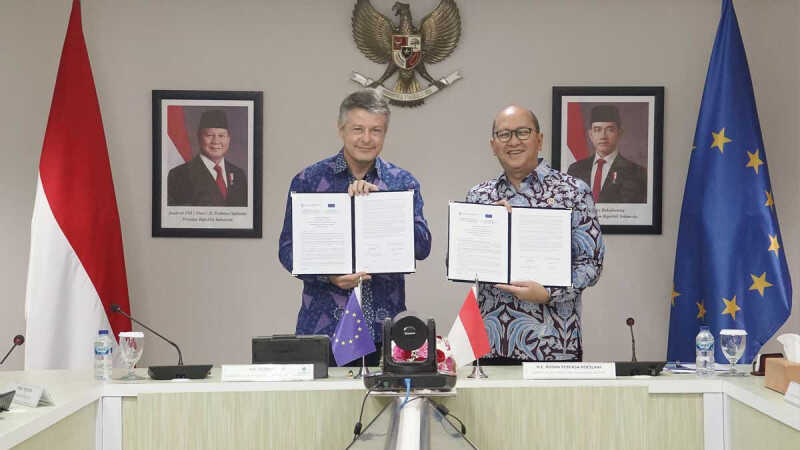
Efforts to strengthen economic relations between Indonesia and the European Union (EU) have entered a new chapter. The EU Delegation to Indonesia and the Ministry of Investment/Investment Coordinating Board (BKPM) have officially signed a Cooperation Statement to establish an EU Desk within the Ministry of Investment.
The inauguration of the EU Desk marks a strategic commitment from both parties to enhance investment cooperation whilst promoting higher quality and sustainable capital flows. The initiative is also part of the synergy towards the Comprehensive Economic Partnership Agreement (CEPA) between Indonesia and the EU.
“The EU Desk is not just a facility, but a symbol of our shared ambition to create impactful investments based on sustainability and high quality principles. This aligns with the EU’s Global Gateway strategy, which emphasises investment in infrastructure development and future-oriented sectors,” said Denis Chaibi, the EU Ambassador to Indonesia.
The signing of the cooperation was conducted alongside the Minister of Investment, Rosan Roeslani, who welcomed the initiative as a concrete step to strengthen bilateral relations and expand investment opportunities in various strategic sectors.
The EU Desk will serve as a centralised service hub for EU investors looking to invest in Indonesia. Its services include market intelligence provision, business establishment and licensing guidance, facilitation of business cooperation, identification of potential investment opportunities, and collaboration on regulations and policies.
Technical support for the EU Desk’s operations is provided by the EU through the EU-Indonesia Cooperation Facility (EUICF). Its presence at the BKPM office allows for direct integration with national investment policies and facilitates investor communication with Indonesian regulators.
In line with Indonesia’s economic transformation efforts and the EU’s green agenda, the EU Desk will pay special attention to future-oriented sectors. Priority sectors will include renewable energy and energy efficiency, automotive (including electric vehicles), information and communication technology (ICT), electronics, logistics, modern agriculture, and sustainable fisheries, among others.
With the support of the EU Desk, European investors are also expected to find it easier to access potential projects, including those involving co-financing with financial institutions from EU member states and private sector partners.
The EU Desk will also act as a bridge between business actors and the government, facilitating investment policy dialogues, identifying regulatory barriers, and promoting alignment of standards between Indonesia and Europe.
According to Denis Chaibi, the initiative reflects the EU’s determination to not only be a trading partner but also a long-term investment partner contributing to inclusive and sustainable economic development in Indonesia.
“With the EU Desk, we want to ensure that investors receive adequate support, and that every incoming investment brings added value, both for the economy and the Indonesian people,” Chaibi concluded.