
ESDM: By February 2026 there have been 790 emission earthquakes at Mount Karangetang
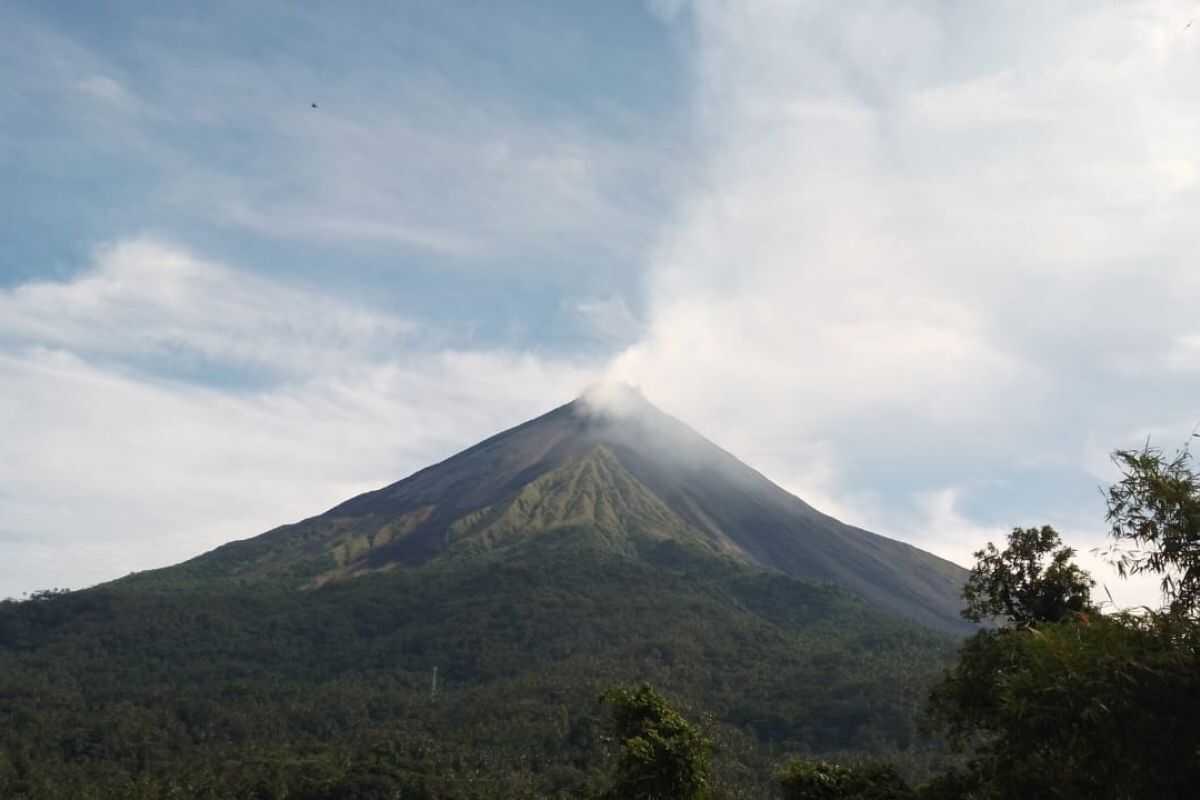
Manado — The Geological Agency of the Ministry of Energy and Mineral Resources (ESDM) recorded that up to mid-February 2026 there were 790 emission earthquakes at Mount Karangetang, in the Sitaro Islands Regency, North Sulawesi (Sulut). “In addition to emission earthquakes, 102 harmonic tremors, 127 non-harmonic tremors, and four hybrid/multi-phase earthquakes were recorded,” said Acting Head of the Geological Agency, Lana Saria, in a report on Mount Karangetang’s activity for the 1–15 February 2026 period, received by ANTARA in Manado on Thursday. During this period there were also 36 shallow volcanic earthquakes, 63 deep volcanic earthquakes, two local tectonic earthquakes, one felt at MMI I and 50 distant tectonic earthquakes. Furthermore, the northern crater was observed with white ash plumes ranging from moderate to thick, rising up to a maximum of 100 metres above the summit; no lava ejection from the plume was seen, rumbling sounds were sometimes heard, and no lava blocks were falling. The seismic activity in this period declined compared with the previous week; the emission earthquakes also declined, though their intensity remained high. Residents are advised to beware of pyroclastic clouds from the summit where an old lava dome remains and could collapse at any time along with lava effusion. The characteristics of Mount Karangetang’s pyroclastic clouds arise from the accumulation of falling/landsliding lava material, and people should also watch for lahar during heavy rainfall at the summit. Based on comprehensive analysis and evaluation up to 15 February 2026, Karangetang’s activity level was at Level II (Waspada) with recommendations adjusted to the current hazard potential. Residents, visitors or tourists are urged to observe danger radii, including prohibitions on activities and approaching within 1.5 kilometres of the main crater (south) and the second crater (north), and 2.5 kilometres in the southwest and southern sectors from the main crater. Communities around Karangetang are advised to prepare nose-and-mouth masks to mitigate respiratory hazards in the event of ash fall. Finally, communities living along riverbanks that originate from the summit should heighten preparedness for the threat of lahars during heavy rain and possible flash floods.