
Escalation of Conflict Remains High, Nurul Arifin Supports Indonesia's Delay in Sending Peacekeeping Troops to Gaza
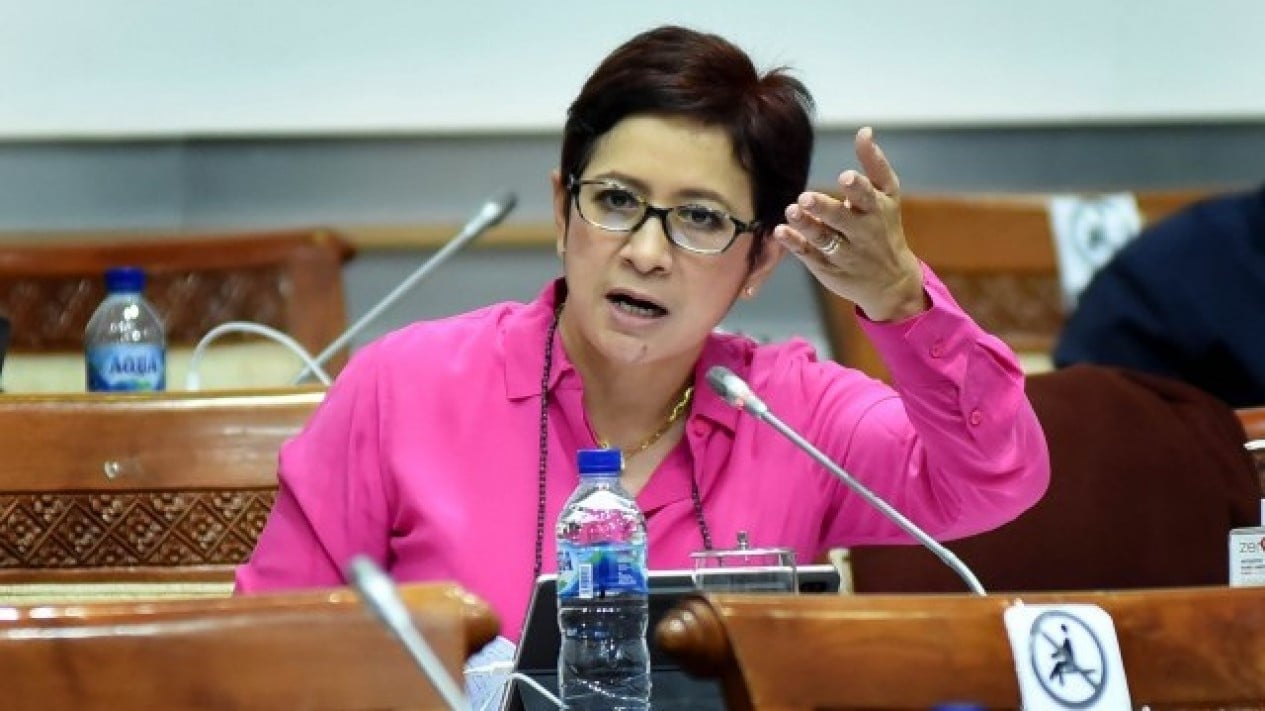
Jakarta – Member of the Indonesian House of Representatives Commission I from the Golkar Party faction, Nurul Arifin, supports the government’s move to delay the dispatch of 8,000 peacekeeping troops to Gaza, Palestine.
According to her, this step is appropriate amid the still heated geopolitical situation. Nurul also assesses that this policy reflects the government’s caution and careful consideration.
“This is not about retreating or lacking courage, but about reading the situation clearly. We cannot send troops to a conflict area with high escalation without certainty of a clear mission framework,” said Nurul in her statement on Wednesday, 18 March 2026.
She emphasised that Indonesia’s involvement in peacekeeping missions must remain within the framework of international law and structured mechanisms, such as operations under the United Nations Peacekeeping. Without that, the risks on the ground are deemed too great.
According to Nurul, the current conditions in Gaza are not yet fully conducive for the presence of a large number of troops. Moreover, the international command structure and operational mechanisms under the International Stabilization Force (ISF) are still evolving.
On the other hand, she sees this delay as opening up space for Indonesia to play other equally strategic roles. For example, Indonesia could strengthen diplomatic channels and humanitarian aid.
“Indonesia can still be present, not always with troops. We have diplomatic strength and a strong moral position on the Palestinian issue. That can be maximised,” she stated.
From a budgetary perspective, Nurul said that sending thousands of troops abroad requires significant costs, from mobilisation and logistics to operational needs during duty.
With the delay, the government has room to rearrange defence budget priorities.
“The Indonesian National Armed Forces (TNI) must remain ready. Do not let it be that when the decision is made, we are not yet optimal. So readiness continues, but deployment waits for the right moment,” she explained.
Nurul assesses that this step reflects Indonesia’s position as a nation that is increasingly mature in determining its role on the global stage. Not reactive, but also not passive.
“We want to continue contributing to world peace, but in a measured way. National interests remain number one, without reducing our humanitarian commitment,” said Nurul.