
Escalating War: Saudi Arabia Secretly Launches Direct Attack on Iranian Territory
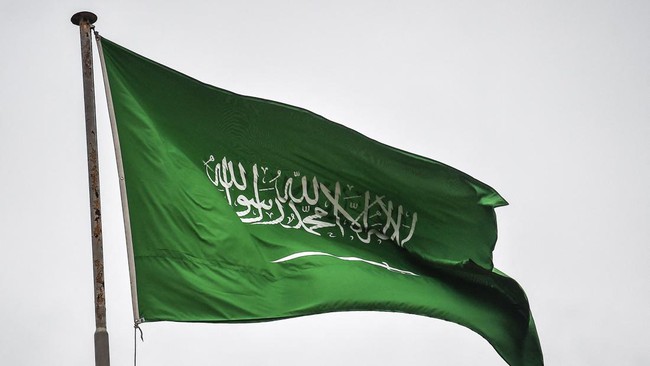
The Middle East war has expanded far beyond what the public has known. Saudi Arabia is reported to have secretly launched a direct military attack on Iranian territory in retaliation for a series of missile and drone strikes that hit the kingdom during the ongoing Iran-US-Israel war.
This information was revealed by two Western officials familiar with the matter and two Iranian officials. If true, this action marks the first time Saudi Arabia is known to have conducted a direct military operation on Iranian soil, while also signifying a major shift in Riyadh’s stance, now seen as far more aggressive towards its main regional rival.
According to Reuters on Wednesday (13/5/2026), the attack was carried out by the Saudi Air Force at the end of March. One Western official described the operation as a “proportionate retaliatory strike in response to Saudi Arabia being attacked.”
However, the exact targets struck by Saudi Arabia in Iran remain unknown.
The Saudi government has not openly confirmed the report. When asked for comment, a senior official from the Saudi Foreign Ministry did not directly answer whether the kingdom had indeed attacked Iran, while the Iranian Foreign Ministry has yet to respond.
The war, which has raged for the past 10 weeks, has shaken the security balance in the Gulf. Saudi Arabia has long relied heavily on US military protection, but the recent conflict shows that the US umbrella defence system has not fully protected the kingdom from Iranian attacks.
Conflict Spreads to Gulf Countries
The Saudi attack on Iran demonstrates that the war, which began with US and Israeli airstrikes on Iran on 28 February, has now directly drawn more Middle Eastern countries into the conflict.
Since the military operation began, Iran is said to have attacked all member states of the Gulf Cooperation Council (GCC) using missiles and drones. The targets were not only US military bases but also civilian airports, oil infrastructure, and public facilities.
Iran has also closed the Strait of Hormuz, the main route for global energy trade, causing major disruptions to the global supply chain.
Not only Saudi Arabia, but the United Arab Emirates (UAE) is also reported to have carried out military strikes against Iran. The Wall Street Journal reported this action on Monday.
The combined actions of Saudi Arabia and the UAE show that the Gulf monarchies, which have long been targets of Iranian attacks, are now beginning to retaliate directly.
However, the approaches of the two countries differ. The UAE is seen as taking a harder and more aggressive stance towards Tehran and rarely engaging in open diplomacy.
In contrast, Saudi Arabia is said to still be trying to prevent further escalation while maintaining communication with Iran, including through the Iranian ambassador in Riyadh.
A senior Saudi Foreign Ministry official also reaffirmed the kingdom’s official position, which continues to prioritise efforts to ease the conflict.
“We reaffirm Saudi Arabia’s consistent position in support of de-escalation, restraint, and reducing tensions for the stability, security, and prosperity of the region and its people,” he said.
Retaliation Followed by Diplomacy
According to Iranian and Western officials, Saudi Arabia informed Iran about the attack. This was followed by intensive diplomatic communication accompanied by Riyadh’s threats of larger retaliation if attacks on its territory continued.
This step then resulted in an informal agreement between the two countries to lower the conflict’s temperature.
Ali Vaez, Director of the Iran Project at the International Crisis Group, assessed that this pattern shows both countries understand the great risks if the war continues to expand.
He said the Saudi retaliatory strike followed by a de-escalation agreement demonstrates a “pragmatic recognition on both sides that uncontrolled escalation carries unacceptable costs.”
According to him, the situation does not mean the two countries trust each other, but rather that they both have interests in preventing the conflict from turning into a full regional war.
“Not because of mutual trust, but because of shared interests in limiting the confrontation before it develops into a broader regional conflict,” he said.
This informal agreement began to take effect in the week before Washington and Tehran agreed to a ceasefire on 7 April.
One Iranian official also confirmed the de-escalation agreement with Riyadh.
He said the move aimed to “stop hostilities, protect mutual interests, and prevent increased tensions.”
Saudi-Iran relations have been marked by sharp rivalry for decades between the Middle East’s largest Sunni and Shia powers. The two support different groups in various regional conflicts.
However, in 2023, China successfully mediated reconciliation between the two countries, leading to the restoration of diplomatic relations and a ceasefire between Saudi Arabia and the Iran-backed Houthi group in Yemen.
With the Red Sea remaining open for shipping, Saudi Arabia has still been able to continue oil exports during the conflict, unlike most other Gulf countries. This has made the kingdom relatively more protected from the war’s impacts.
Avoid the “Furnace of Destruction”
In an opinion article in Arab News last weekend, former Saudi intelligence chief Prince Turki al-Faisal described the kingdom’s strategy during the war.
He wrote, “when Iran and others try to drag the kingdom into the furnace of destruction, our leadership chooses to endure the pain caused by the neighbouring country to protect the lives and property of its people.”
The Saudi attack is said to have emerged after tensions rose for weeks.
At a press conference in Riyadh on 19 March, the Foreign Minister