
Escalating Middle East Conflict Said to Impact Non-Subsidised Fuel Prices
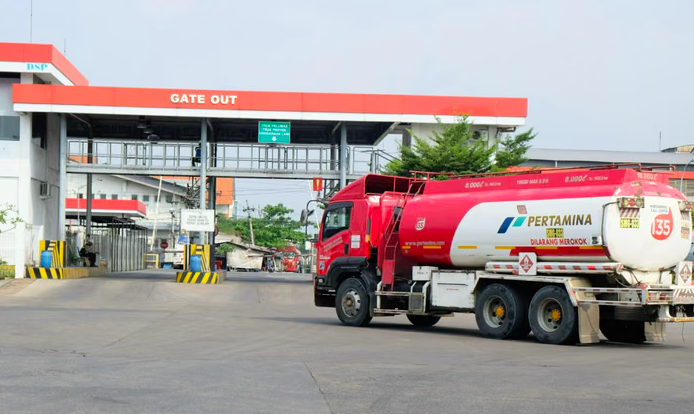
Secretary General of the Indonesian Young Entrepreneurs Association (Sekjen HIPMI), Anggawira, views the rise in non-subsidised fuel (BBM) prices as a reasonable step amid global pressures from escalating geopolitical conflicts, particularly in the Middle East. He states that this situation will directly impact the surge in global crude oil prices, which serve as the primary benchmark for determining domestic fuel prices.
He explains that the increase in non-subsidised fuel prices cannot be separated from the dynamics of the interconnected global energy market. According to him, Indonesia does not have full control over fluctuations in world oil prices, which are currently under significant pressure.
“The rise in non-subsidised fuel prices in the current geopolitical situation is indeed reasonable and difficult to avoid. Non-subsidised fuel prices essentially follow global crude oil prices, the rupiah exchange rate, shipping costs, and risk premiums due to conflicts,” said Anggawira when contacted on Tuesday (31/3).
He elaborates that Brent crude oil prices, which have moved in the range of 100 to 115 US dollars per barrel and even higher due to disruptions in the Strait of Hormuz, are exerting significant pressure on domestic fuel prices. This condition opens up room for price adjustments if the trend persists.
Currently, non-subsidised fuel prices such as Pertamax are around Rp12,300 per litre, Dexlite Rp14,200 per litre, and Pertamina Dex Rp14,500 per litre. If global oil prices do not soon decline, price adjustments are seen as a rational step to ensure the sustainability of energy supply.
Anggawira assesses that the increase in non-subsidised fuel prices, which remains reasonable at 5 to 10 percent, should be implemented. However, he reminds the government to make gradual adjustments to minimise impacts on inflation and public purchasing power.
“Realistically, an increase considered reasonable for non-subsidised fuel is in the range of 5-10%. This means Pertamax, currently around Rp12,300 per litre, could rise to Rp12,900-13,500 per litre,” he stated.
From a business perspective, he continues, the fuel price increase will indeed impact operational costs, particularly in the transportation and logistics sectors. However, this situation also encourages businesses to pursue efficiency and innovation in energy use.
“For the trucking, logistics, shipping, bus, travel, and goods distribution sectors, fuel components can account for 30-40% of total operational costs,” said Anggawira.
Meanwhile, public policy expert and Lecturer at the Faculty of Social and Political Sciences at Parahyangan University (Unpar), Kristian Widya Wicaksono, views the rise in non-subsidised fuel prices as a logical consequence of the integrated global energy system. According to him, this phenomenon reflects the transmission of prices from international to domestic markets.
“The rise in non-subsidised fuel prices amid the heating up of Middle East geopolitics is an unavoidable consequence in the interconnected global energy system,” said Kristian.
He explains that from a public policy perspective, the price increase is not merely an internal government decision but a response to rising supply risks and global uncertainties. Therefore, price adjustment policies need to be viewed more broadly in the context of national energy stability.
Kristian adds that the tolerable limit for price increases must consider the economy’s absorption capacity and potential impacts on inflation. Empirically, increases within a certain range can still be managed without causing major disruptions.
On the other hand, he reminds the public to respond rationally to this situation, including by conserving energy consumption and adjusting household spending patterns. “The government is also expected to respond with transparent, gradual policies and strengthen social protections for vulnerable groups,” he stated.
Thus, he says, the rise in non-subsidised fuel prices should not be seen merely as economic pressure but also as an opportunity to promote energy efficiency and accelerate the transition to a more sustainable energy system in Indonesia.