
Escalating Geopolitics Creates Opportunity for Indonesia to Capture Export Markets
Global geopolitical dynamics that are increasingly heating up have created extraordinary turbulence in the world’s supply chain. However, behind this uncertainty, Indonesia sees a strategic gap to strengthen its export position, particularly in non-traditional markets.
Tony Prianto, Director of State Financial Risk Management at the Directorate General of Financing and Risk Management (DJPPR), emphasised that the Special Export Assignment (PKE) scheme being aggressively pursued by the government is designed to provide impetus for exporters targeting non-traditional countries. Amid disruptions faced by major players like China due to tensions with the United States (US), Indonesian products have an opportunity to fill the market void.
According to Tony, PKE serves as a solution to structural barriers often encountered by entrepreneurs, such as limited working capital or lack of sufficient track record (goodwill) to access commercial banking. “If war is already happening now, and geopolitics is also tense, that actually provides opportunities for entrepreneurs. Markets usually dominated by China are disrupted, and this is where PKE provides additional support, both in terms of guarantees and working capital.”
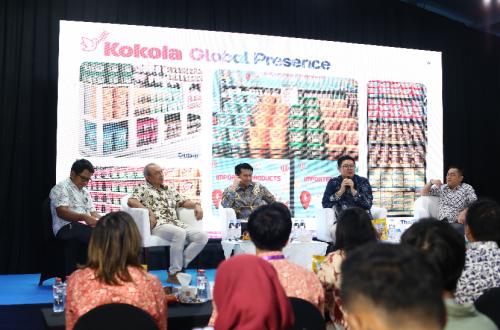
“PKE is now sufficiently capable of supporting new and existing entrepreneurs. This turmoil should be a positive side to increase the volume of exports,” said Tony Prianto during his speech at the 2026 Media Working Visit event themed “Ministry of Finance Supports Labour-Intensive Sectors to Support Economic Growth”, in Gresik, East Java, on Friday (17/4/2026).
The same sentiment was expressed by Sulaeman, Executive Director of Business II at LPEI. He explained that in uncertain situations, product selection and transaction clarity (underlying) become key variables. LPEI ensures that every financing, from raw material procurement (trade finance) to post-sale (post-financing), has an accountable basis to maintain the company’s financial health amid systemic geopolitical impacts.
Sulaeman said LPEI conducts stress testing on the entire portfolio to identify those affected by supply chain disruptions. This step is taken to map the impact of supply chain disruptions on exporters’ portfolios, particularly those with buyer bases in conflict areas like the Middle East.
“However, we have already anticipated this. It is very important for us to ensure the underlying of those trade products is clear, both for raw materials and sales. Even though there is an impact on each company’s finances, this anticipation keeps the portfolio under control,” explained Sulaeman.