
Eroded but not toppled, Kramat's centre for government gear still survives
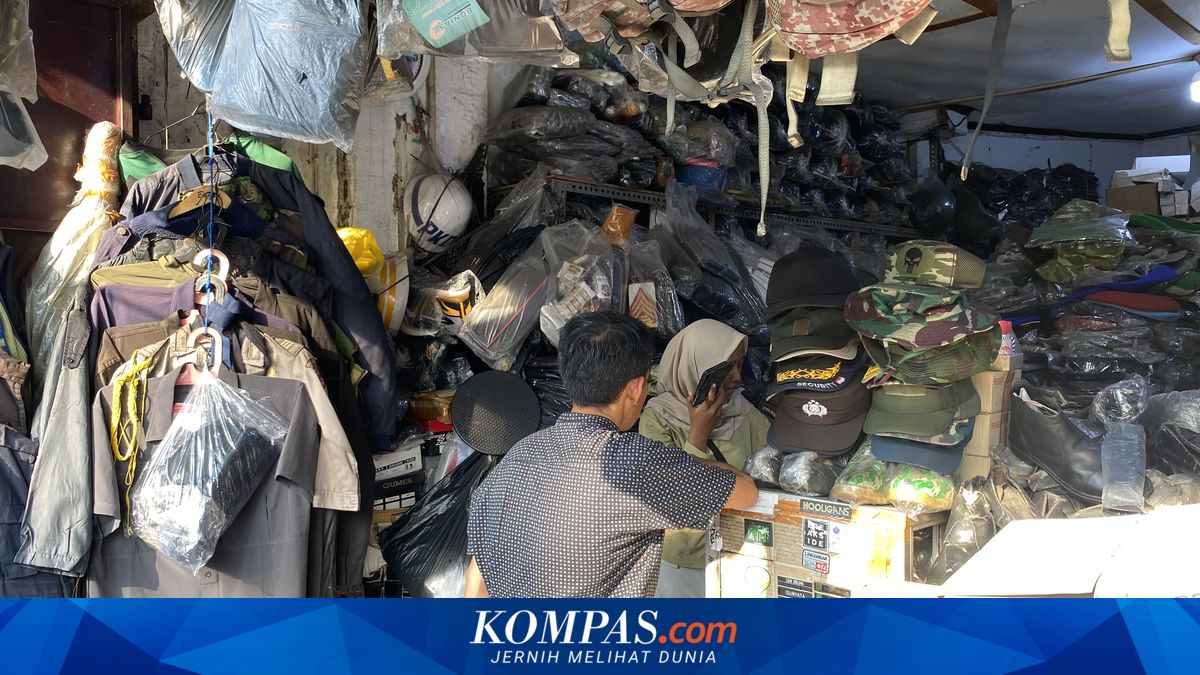
JAKARTA, KOMPAS.COM - A row of shops selling security-guard equipment, TNI-Polri insignia, and embroidery and tailoring services for uniforms still operates in the Kramat, Senen district of Central Jakarta, amid the onslaught of online marketplaces and changes in consumer purchasing patterns.
Although not as bustling as a decade ago, the pulse of trade in the area known as the centre for official equipment has not completely faded.
Great Institute economist Adrian Nalendra Perwira said the presence of online marketplaces and physical equipment centres like those in Kramat does not have to cancel each other out but can drive a division of economic functions.
“I see that the presence of online marketplaces and physical equipment centres like in Kramat do not have to cancel each other out, but rather trigger a division of economic functions,” he told Kompas.com on Wednesday, 20 May 2026.
Such goods are now easily found on digital platforms with transparent pricing.
However, the equipment centre in Kramat has characteristics different from other general trading hubs.
Many products sold require size adjustments, custom embroidery, and standards tailored to the needs of institutions or user companies.
“As the centre for TNI-Polri insignia and security equipment, many products are highly specific, require precise sizing, custom embroidery, and meet institutional standards. The bespoke or customised orders segment cannot be easily transferred to regular online transactions,” he said.
He assessed that marketplaces merely erode the function of Kramat as a place to seek information and compare stock directly.
Now, most consumers perform initial searches via marketplaces before coming to the shop.
“Previously people came to seek information, compare shops, and see stock in person. Now that information-searching function is largely taken over by marketplaces,” he said.
Consumers now come to shops carrying price references from marketplaces, leaving retailers with thinner profit margins.
“Today buyers come to shops not as price-blind buyers, but as buyers who already carry price references in their heads,” Adrian said.
He added that this condition puts offline traders under significant cost pressures, including kiosk rents, electricity, and staff wages, while online sellers can operate at more efficient costs.
Nevertheless, he sees physical stores retaining a chance to survive as long as they do not only sell generic goods.
“Goods with price sensitivity will move online, while items requiring quality assurance and precision, such as customised uniforms, will remain controlled by physical stores,” said Adrian.
Therefore, he believes the most realistic strategy for businesses in Kramat is to combine online and offline channels.
“Standard goods should be marketed through digital channels, while physical stores become centres for specialist services,” he said.