
Erdogan: Closure of the Strait of Hormuz necessitates a change in energy security approach
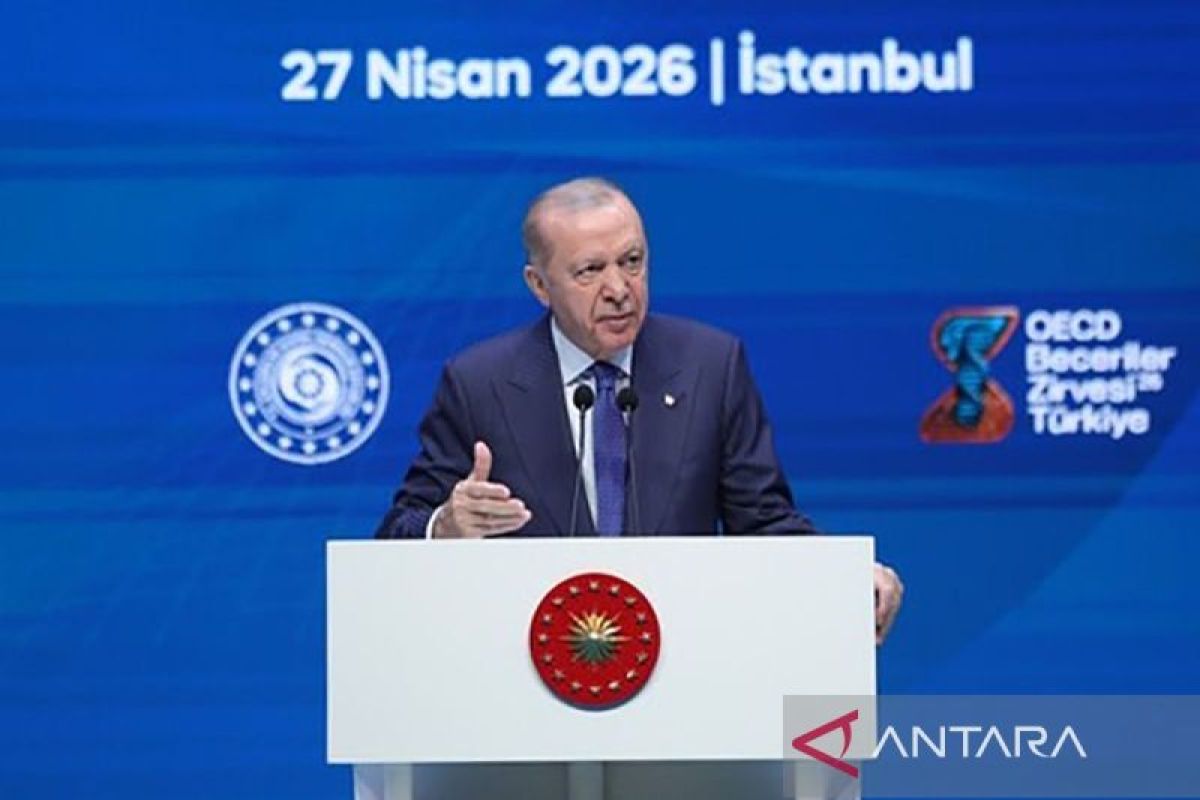
Ankara (ANTARA) - The crisis in the Strait of Hormuz has demonstrated that energy security is a matter of national sovereignty, Turkish President Recep Tayyip Erdogan said on Wednesday.
Turkey’s Minister of Transport and Infrastructure, Abdulkadir Uraloglu, said on Wednesday that Turkish authorities are in talks with Saudi Arabia regarding a railway route that would largely follow the same path as the Hejaz Railway.
The new route could potentially be extended to Oman and is considered to offer an alternative to the Strait of Hormuz.
“The closure of the Strait of Hormuz teaches us that energy security is not only a matter of development, but also a matter of sovereignty and national security,” Erdogan said at a ceremony to inaugurate facilities built under a renewable energy investment program.
Erdogan said that a number of recent events have reaffirmed Turkey’s strategic importance in global energy.
The prolonged crisis in Iran and the Strait of Hormuz has reinforced the republic’s role as one of the main energy hubs in the region.
The President also said that the goal of Turkey’s energy policy remains to reduce dependence on external suppliers by increasing domestic production and developing renewable energy sources.
He added that the Turkish government wants to continue to diversify sources of supply and improve energy efficiency in economic activities.
Erdogan also noted that the Turkish economy has grown for 23 consecutive quarters despite external shocks, and authorities expect Turkey to maintain this momentum until 2026.
On February 28, the US and Israel launched attacks on a number of targets in Iran, including in Tehran, causing damage and casualties among civilians.
Iran retaliated by attacking Israeli territory and US military facilities in the Middle East.
On April 7, Washington and Tehran announced a ceasefire. The negotiations held in Islamabad ended without a breakthrough.
Meanwhile, the escalation of tensions around Iran has led to a de facto blockade of the Strait of Hormuz, which is a major route for the shipment of oil and liquefied natural gas from the Persian Gulf countries to global markets.
The blockade has pushed up global fuel prices.
Source: Sputnik/RIA Novosti
Translator: Katriana