
Environmental Crisis Threatens Jakarta as Draft Environmental Protection and Management Regulation Deemed Urgent
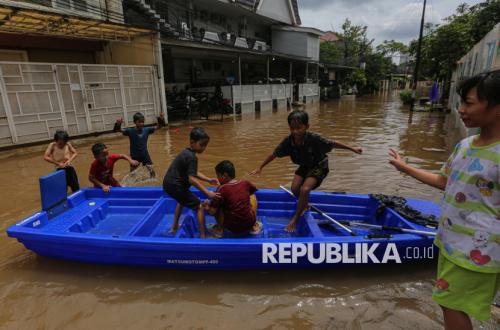
JAKARTA — Environmental pressures in Jakarta continue to intensify amid population growth, declining water quality, and subsidence of land in coastal areas. These conditions are deemed to necessitate stricter long-term policies to maintain environmental sustainability in the capital.
The Democratic–Perindo faction of the Jakarta Provincial Legislative Council raised these concerns during a plenary session on Monday (9 March 2026) to present general remarks on the draft Regional Regulation regarding the Plan for Environmental Protection and Management (RPPLH). The draft regulation is considered urgent for immediate ratification as it will serve as the basis for Jakarta’s environmental development direction for the next 30 years.
Ali Muhammad Johan, chairman of the Democratic–Perindo faction in the Jakarta Provincial Legislative Council, stated that the RPPLH draft regulation requires urgent ratification as the drafting of such a document is a legal obligation of the regional government. This requirement is stipulated in Law Number 32 of 2009 on Environmental Protection and Management, Government Regulation Number 26 of 2025, and the Environmental Minister Regulation Number 27 of 2025.
“This draft regulation is a much-needed policy. Until now, Jakarta’s obligation to prepare an RPPLH has not been fulfilled,” Ali said on Monday (9 March 2026).
Ali explained that the RPPLH is a long-term environmental planning document spanning 30 years that serves as a reference for various regional development documents, ranging from long-term regional development plans and medium-term regional development plans to spatial planning. The draft establishes three phases towards a sustainable global city: the initiation and stabilisation phase (2025–2035), the acceleration and synchronisation phase (2035–2045), and the optimisation phase towards a sustainable global city in the period 2045–2055.
Nevertheless, Ali assessed that Jakarta’s current environmental condition has reached a stage requiring serious attention. Based on academic documentation and draft regulation annexes, Jakarta’s environmental carrying capacity and assimilative capacity are reported to have been exceeded.
The environmental support capacity index stands at merely 0.10, with the ability to support a population of approximately 440,000 people. Meanwhile, Jakarta’s population has reached approximately 11 million people.
Additionally, Jakarta’s Environmental Quality Index in 2024 was recorded at 56.39, falling within the moderate category. This figure represents only a marginal increase from 55.83 in the previous year.
Water quality index has even declined from 42.73 in 2020 to 41.22 in 2024. “The decline in water quality index demonstrates that pollution control, particularly from domestic waste and densely populated residential areas, has not been effective,” Ali said.
Another issue highlighted is the subsidence of land in northern Jakarta’s coastal zone. The draft regulation document notes that land subsidence rates in North Jakarta can reach 11 centimetres per year, with some locations experiencing rates of 30 to 50 centimetres annually.
This situation has resulted in approximately 40 per cent of Jakarta’s territory now lying below sea level. This condition threatens to worsen tidal flooding, weaken gravitational drainage systems, accelerate seawater intrusion into inland aquifers, and jeopardise the sustainability of mangrove ecosystems in coastal areas.
Additionally, the availability of public green open space in Jakarta currently stands at only about 5.2 per cent of the total area. Water supply resilience remains dependent on supplies from outside the region, particularly from Jatiluhur Reservoir and Karian Reservoir.
Meanwhile, greenhouse gas emissions in Jakarta are dominated by electricity consumption at 53 per cent, followed by the fossil fuel-based transportation sector.
Ali stressed that deliberations on the draft regulation must produce operational regulations with tangible impact. The Democratic–Perindo faction also questioned several important aspects, ranging from mechanisms for adjusting the RPPLH with existing development documents, environmental indicator targets, cross-sectoral coordination, to cross-regional cooperation schemes in the Greater Jakarta region.
In the interim, Mujiyono, chairman of the Democratic Party Jakarta regional board, believed several standards still require strengthening in the main body of the draft regulation. According to Mujiyono, addressing strategic environmental issues requires integrated action as various problems are interconnected, such as groundwater exploitation which impacts land subsidence.
Mujiyono also proposed that RPPLH targets should not only be set per 10 years but should be divided into five-yearly targets to align with the regional development evaluation cycle. “In this way, RPPLH implementation can be more easily monitored and adjusted with regional development planning,” Mujiyono said.