
Environment Minister Supports MUI Fatwa Declaring Dumping Waste Into the Sea as Haram
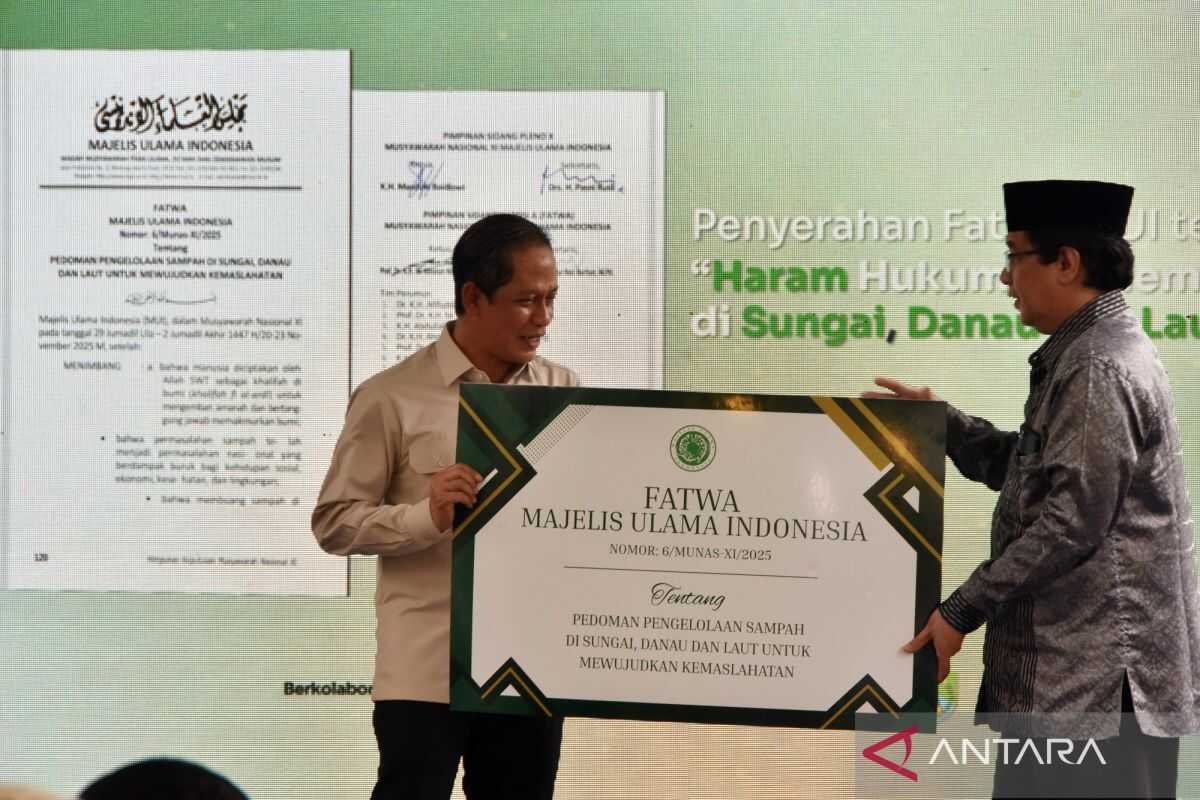
Jakarta (ANTARA) - Environment Minister Hanif Faisol Nurofiq expressed his appreciation for the Indonesian Ulema Council (MUI) fatwa declaring it haram to dump waste into rivers, lakes, and the sea.
In a statement confirmed from Jakarta on Sunday, Environment Minister and Head of the Environmental Control Agency (BPLH) Hanif welcomed the reinforcement as a strategic step in fostering behavioral change among the public.
“Technical and regulatory approaches must be strengthened with moral awareness. The support of religious scholars provides tremendous momentum to drive behavioral change so that people become more disciplined in managing waste,” Minister Hanif said.
During a Clean-Up Action and Tree Planting event along the Cikeas River in Sentul, Bogor Regency, West Java, on Sunday (2/15), Minister Hanif stated that Indonesia is currently facing serious pressure from a waste crisis affecting environmental quality, public health, and climate change.
“We can no longer delay. Uncontrolled waste from land ends up in rivers and the sea. We must break this chain at its source. Our target is to transform this emergency into a management system that turns waste into a resource,” Minister Hanif said.
At the event, MUI also reaffirmed its fatwa declaring it haram to dump waste into rivers, lakes, and the sea as a form of moral responsibility in preserving the environment.
MUI Deputy Secretary General for Economic Affairs Hazuarli Halim said the fatwa was born out of concern over increasingly evident environmental degradation.
“This fatwa is a form of religious responsibility in responding to the environmental damage that is occurring. Dumping waste into rivers, lakes, and the sea is not only a violation of regulations but also contradicts the principle of safeguarding public welfare,” Hazuarli said.
With MUI’s support, the Ministry of Environment/BPLH emphasized that waste management must be carried out comprehensively, starting from reduction at the source, improving public literacy, and consistent law enforcement to prevent pollution of Indonesia’s rivers and seas.
Through collaboration among the government, religious leaders, the business sector, communities, and the public, the Ministry of Environment/BPLH hopes that upstream waste control can become the key to breaking the chain of pollution and preserving the sustainability of river and marine ecosystems.