
Environment Minister States 60 Percent of Denpasar Residents Already Sort Waste
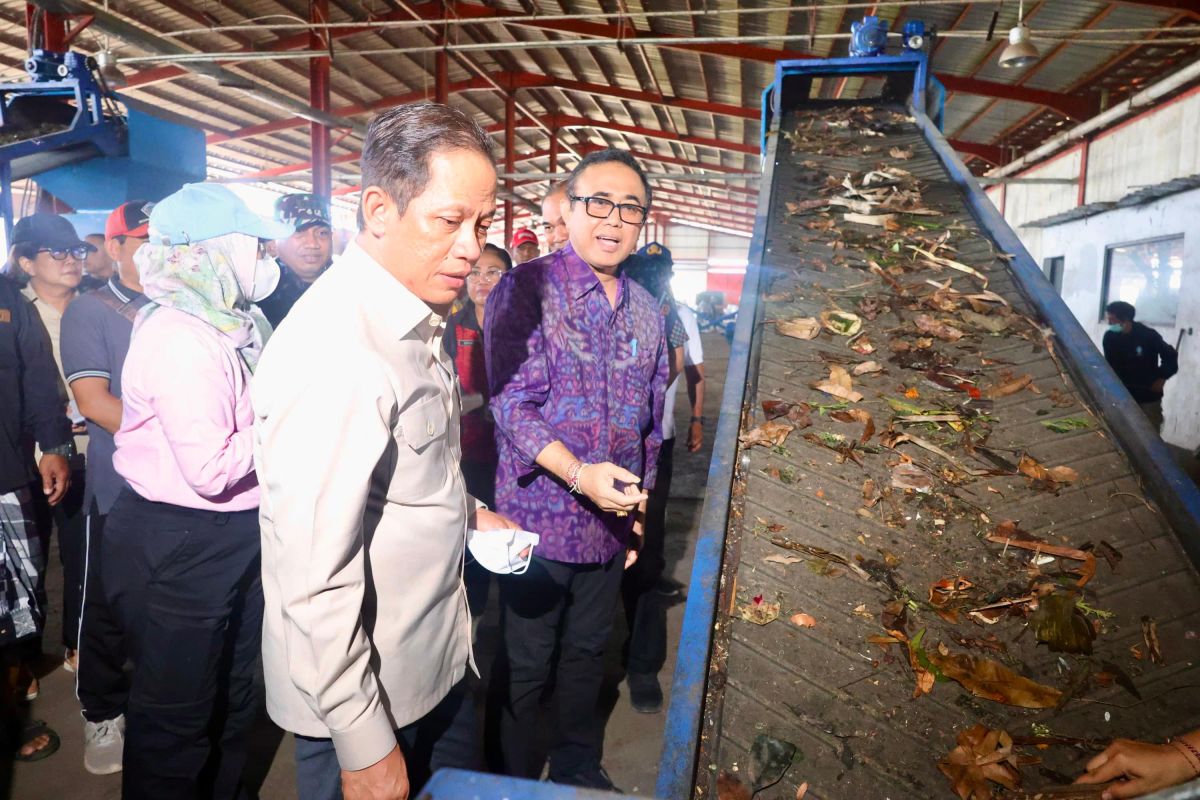
Denpasar (ANTARA) - Indonesia’s Environment Minister Hanif Faisol Nurofiq stated that 60 percent of Denpasar residents in particular, and the people of Bali in general, have shown significant progress in waste sorting. This was conveyed by the Environment Minister, accompanied by Bali Governor I Wayan Koster and Denpasar Mayor I Gusti Ngurah Jaya Negara, during his visit to the integrated waste processing site (TPST) Kesiman Kertalangu in Denpasar, Bali, on Friday. Environment Minister Hanif Faisol revealed that based on available data, more than 60 percent of Bali’s population has begun sorting waste at the source. According to him, this achievement represents an extraordinary cultural leap that is not easily accomplished. “This is a manifestation of the hard work of all components of Balinese society, from the governor and mayor to traditional village officials. Building the habit of sorting waste is not easy, but Bali has demonstrated significant progress,” he said. He explained that waste management in Bali Province, particularly in Denpasar and Badung areas, is now a focus of oversight by the Ministry of Environment and Forestry together with the Provincial Government of Bali. This aligns with the mandate of Law No. 18 of 2008 on Waste Management, where the governor has the obligation to supervise the implementation of waste management policies in the regions. Environment Minister Hanif Faisol emphasised the importance of law enforcement against waste management violations. With the sorting achievement reaching 60 to 70 percent, local governments are deemed necessary to implement light criminal sanctions (tipiring) for individuals who do not sort waste or litter indiscriminately. “It is unfair if disciplined communities are not protected. Anyone who violates must be subject to tipiring sanctions, as a form of justice for those who have strived,” he said. On that occasion, Hanif also highlighted the operational development of TPST Kesiman Kertalangu, which has been operating optimally since its establishment in 2021. Currently, the processing capacity is around 60-80 tonnes per day and is targeted to increase to 200 tonnes per day by June. In addition, the reduction in waste load at the Suwung landfill also shows significant progress, with handling capacity approaching 200 tonnes per day. Combined with the contribution from the Tahura landfill of about 100 tonnes per day, the total waste handling through TPST in Bali is projected to reach 500 tonnes per day. The Environment Minister affirmed that the practice of open dumping at all landfills in Bali must be stopped no later than August. If not, the central government will take firm legal action against landfill operators who continue to use that system. Specifically for the Suwung landfill, it is planned to be developed into an energy-based waste processing facility (waste to energy). Therefore, the quality of incoming waste must be well sorted to meet the technology’s requirements. “In the future, only certain non-organic waste may enter Suwung. This is important to support the waste-to-energy operations in the coming years,” he said. Hanif is optimistic that Bali can achieve a comprehensive cultural change in waste management. He emphasised that a region’s progress is not only measured by physical development but also by its ability to manage the environment. “Advanced countries are not only marked by tall buildings, but by how well they manage waste. Cleanliness is the true reflection of culture,” he added. Meanwhile, source-based waste management strengthening continues to be promoted, given that waste sorting is an obligation for every individual as stipulated in Law No. 18 of 2008. Regency/city governments are tasked with coordinating management in their areas, while the governor plays a supervisory role. The Ministry determines the standards that regents and mayors must follow, namely three things: turning waste into a resource, improving the living environment, and protecting public health. In addition to TPST Kesiman Kertalangu, Environment Minister Hanif Faisol Nurofiq’s visit itinerary also included the Suwung landfill, TPST Tahura 1 and Tahura 2, as well as the Sesetan TPS3R site.