
Environment Minister Inspects Chemical Warehouse and River in South Tangerang, Reveals Failure to Have Wastewater Treatment Plant
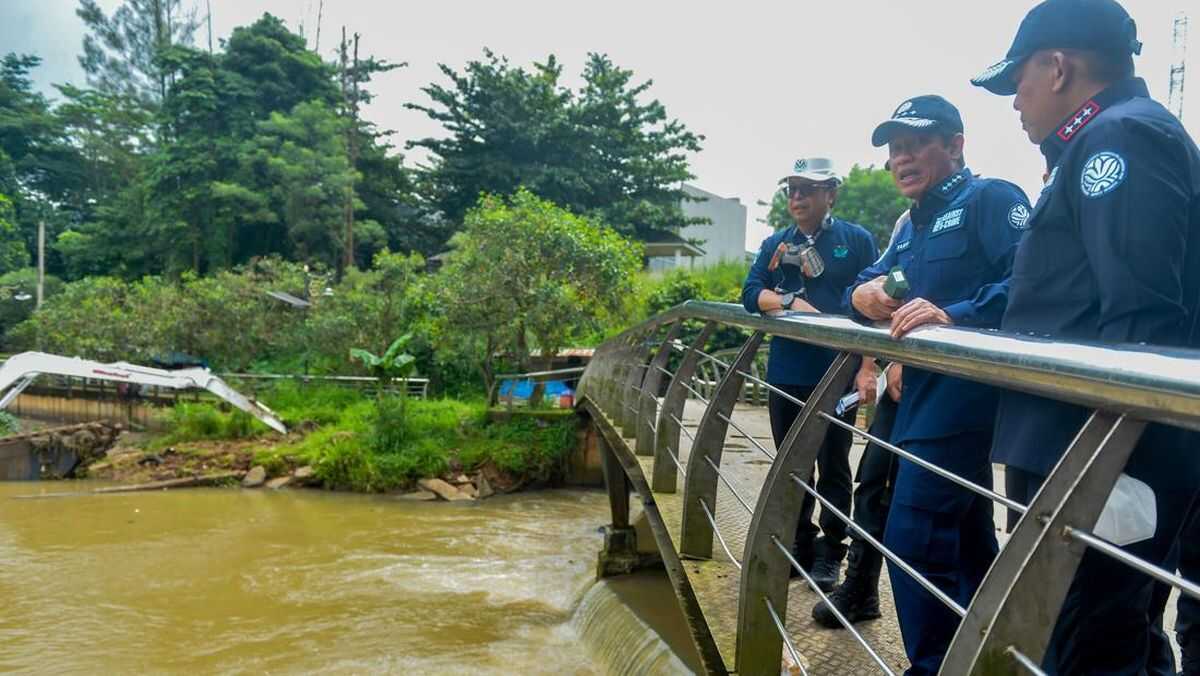
South Tangerang, CNN Indonesia – Environment Minister Hanif Faisol Nurofiq personally inspected the site of the burned chemical warehouse in the Taman Tekno area, Setu, South Tangerang City, Banten, on Friday (2/13) morning. He also inspected the river suspected of being contaminated following the warehouse fire.
During the visit to the warehouse area, Hanif discovered that there was no wastewater treatment plant (IPAL) on site. During the field inspection, Hanif stated that the waste treatment facility that should be a basic standard for chemical handling was not available at the location.
“I don’t see any wastewater treatment plant. So it can’t even be called poor, because there simply isn’t one. This is a fatal error that should never have occurred,” Hanif said at the burned warehouse site.
He stressed that the Ministry of Environment (KLH) together with police authorities will thoroughly investigate the suspected violations, including possible breaches of environmental protection and management regulations. The government is also using this case as material for evaluating the oversight system and environmental approval process, particularly for chemical storage and processing facilities.
“We are treating this case seriously because the impact is significant and it serves as a lesson for all parties,” Hanif said.
River Contamination Response
Hanif said the handling of this case has been underway since the initial incident, including monitoring of water contamination suspected to originate from pesticides. He added that the Ministry of Environment together with relevant agencies continues to monitor the movement of water flows suspected of being contaminated.
Based on preliminary monitoring results, the contaminated flow has reached the Teluk Naga area after passing through waterways connected to the Cisadane River.
“We are taking samples to assess the extent of the impact caused. Hundreds of samples have already been taken and are currently still undergoing testing,” he said.
Hanif explained that testing is not only being conducted on water quality but also on benthos — organisms living on the riverbed. Benthos serves as a biological indicator for assessing river health. According to him, the test results will form the basis for determining the level of contamination and environmental remediation measures.
“Benthos is an important bioindicator for assessing river viability and the impact of contamination that has occurred,” he said.