
Entrepreneur Reveals Causes of Prolonged Traffic to Gilimanuk Port
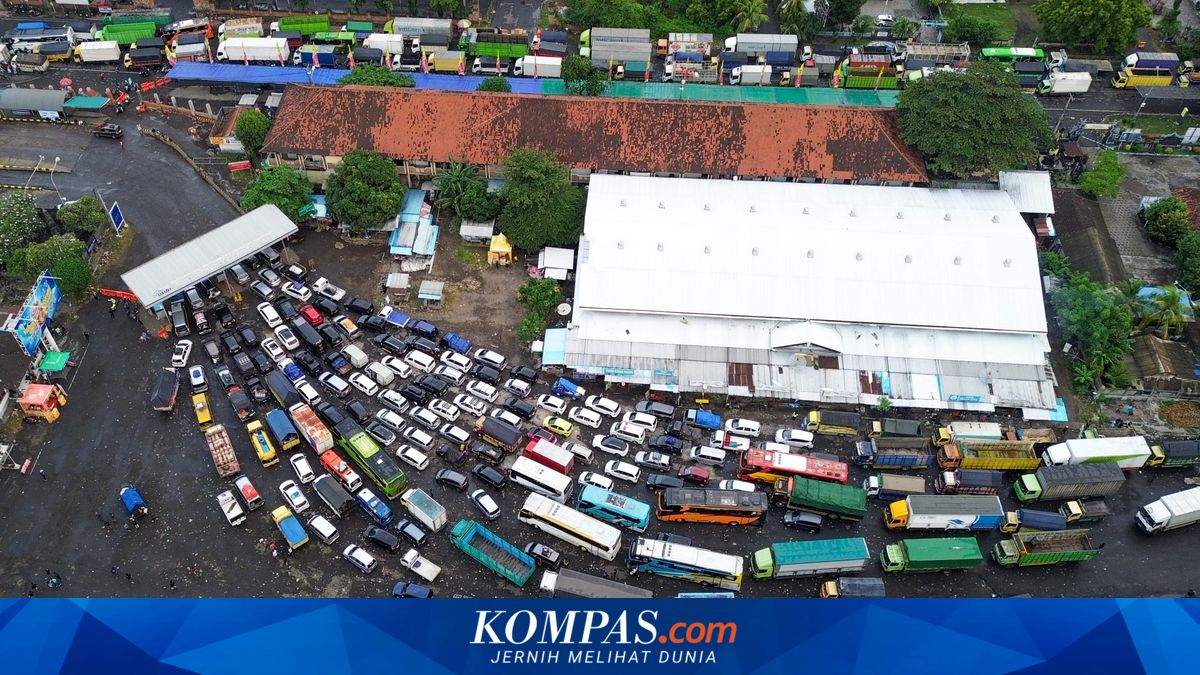
JAKARTA, KOMPAS.com — Severe congestion has developed on the route to Gilimanuk Port over recent days.
Vehicle queues have stretched to tens of kilometres due to increased public mobility ahead of the approaching Nyepi Day celebration, which coincides with Lebaran migration flows.
Khoiri Soetomo, chairman of the National Association of River, Lake, and Ferry Transport Operators (GAPASDAP), stated that the congestion is not solely driven by the surge in vehicles.
According to him, the ferry transport system has also not been optimally organised.
“During this period, two major traffic flows converge simultaneously: the Lebaran migration exodus and Balinese residents departing for Nyepi Day celebrations, resulting in vehicle volumes increasing significantly over an almost identical timeframe,” Khoiri stated in an official statement on Monday (16 March 2026).
“The primary issue is not merely the vehicle surge, but also the lack of an organised system for vehicle arrivals at the port and the imbalance between fleet expansion and port infrastructure development, in terms of quantity, quality, and capacity,” he said.
According to Khoiri, ferry transport remains relatively open compared to other transport modes.
Vehicles can proceed directly to the port even without a ticket or booking code.
This situation causes vehicles to arrive simultaneously in large numbers without clear scheduling arrangements.
The port consequently lacks sufficient mechanisms to manage vehicle flows from upstream.
Furthermore, improved road infrastructure development has accelerated vehicle flows towards the port.
However, port capacity expansion has not developed proportionately with the increase in vehicle flows.
As a result, the port has become a bottleneck in the ferry transport system.
“Motorways accelerate vehicles towards the port, but port capacity has not increased proportionately,” Khoiri said.
“When the port becomes a bottleneck, vehicle queues become unavoidable and roads to the port become vehicle parking areas,” he added.