
Entire Indonesia to Have 100% Electricity Coverage by 2029, Government Partners with Industry
Jakarta, CNBC Indonesia - Deputy Minister of Energy and Mineral Resources (ESDM) Yuliot has emphasised the importance of synergy between the government and domestic industries. This is particularly to support the acceleration of national electrification, improvement of energy efficiency, and strengthening the use of domestic products.
This was stated during a visit to one of the electrical equipment and lighting manufacturing industries in Tangerang, as part of efforts to encourage the readiness of the national industry in supporting strategic programmes in the electricity sector.
On that occasion, Yuliot stressed that the government is focusing on increasing the national electrification ratio, which currently stands at around 98%, and is targeted to reach 100 percent by 2029.
“Currently, our electrification ratio is around 98%. Starting from 2025, we will begin, and by 2029, we aim to achieve electrification for the entire region at around 100%. So there will be no more dark areas. We will be free from darkness,” Yuliot stated, quoted from a written statement on Thursday (16/4/2026).
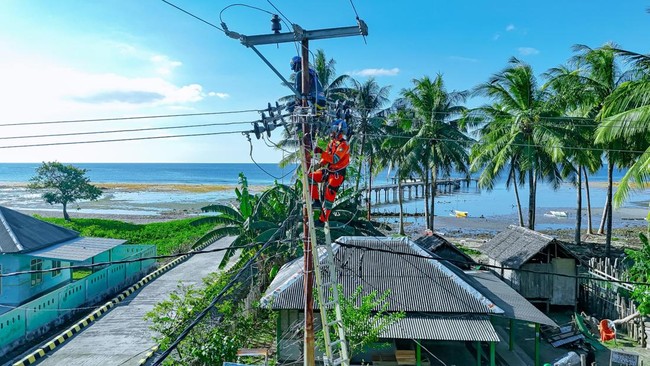
To achieve this target, the government continues to accelerate the village electricity (Lisdes) programme as an effort to equalise energy access across all regions of Indonesia.
In 2025, this programme will cover around 1,516 villages as part of the electrification target. Overall, by 2029, it is estimated that around 10,000 villages will be completed to gain access to electricity.
This electrification programme will also drive the need for various large-scale electricity infrastructure, thereby opening opportunities for domestic industry involvement in supporting the provision of electrical equipment and technology.
In addition, the government is also promoting energy efficiency through the development of green buildings and the utilisation of new renewable energy, including rooftop Solar Power Plants (PLTS) in the industrial sector.
Furthermore, he affirmed that the government is preparing regulations to improve the safety of electrical installations through the use of protective devices such as Residual Current Breaker with Overcurrent (RCBO).
In its implementation, the government is also encouraging that the needs for such devices can be met by domestic industries if production capacity is available.
“If this can be produced here, we will not give any leeway for imports from outside,” he asserted.
Through this visit, it is hoped that collaboration between the government and industry players in supporting the energy transition agenda, equitable access to electricity, and sustainable development of the electricity sector in Indonesia can be strengthened.