
Ensuring smooth Eid 2026 exodus from Ciwandan Port
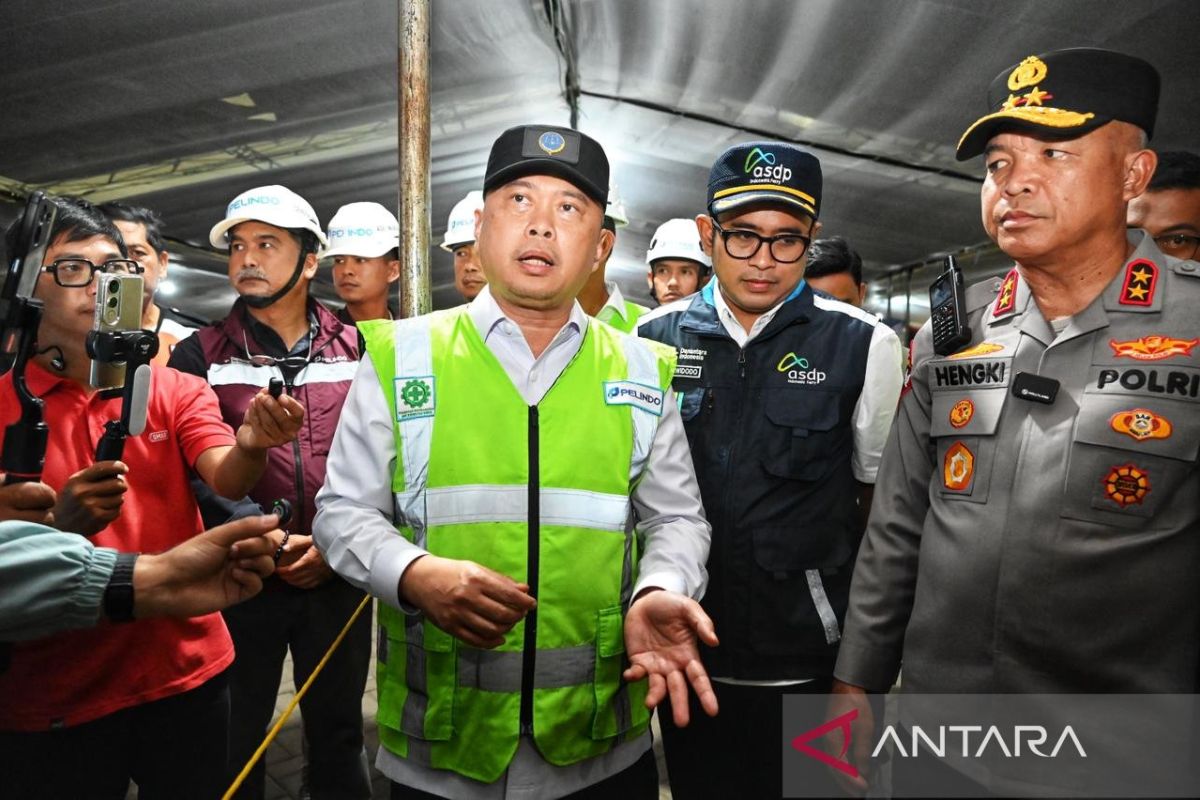
Ciwandan Port plays a strategically vital role as a supporting port in alleviating congestion on the primary Java–Sumatera transport corridor.
Jakarta — Each Eid season brings both the promise of homecoming and the challenge of ensuring journeys unfold safely. Amid the massive surge in mobility during these periods, the quality of transport management becomes crucial in determining whether travel becomes a calming experience or an exhausting ordeal.
Transport Minister Dudy Purwagandhi’s inspection of Ciwandan Port in Cilegon during the peak of the 2026 Eid exodus provides important insight into how the state endeavours to manage this dynamic more systematically and humanely. The Transport Minister’s presence alongside the Banten Regional Police Chief in the field was far from merely symbolic; it reflected a supervisory approach grounded in on-the-ground reality. Rather than merely reviewing reports, they directly witnessed how vehicles were managed, how travellers were served, and how inter-agency coordination functioned under high-volume pressure.
From the inspection results, the Transport Minister confirmed that operations at Ciwandan Port ran smoothly and in good order, even performing better than the previous year. This assessment is not merely a technical evaluation but also an indicator of policy learning from past experience.
In the context of transport management, the existence of alternative nodes such as Ciwandan becomes key to distributing operational load. Without supporting ports, pressure on primary facilities would increase exponentially, potentially triggering lengthy congestion and safety risks. Thus, optimising Ciwandan’s function demonstrates that transport policy is no longer centralised but increasingly moving towards more adaptive operational decentralisation.
Notably, attention was not confined solely to vehicle movement but also extended to service quality for passengers. The Transport Minister personally inspected various supporting facilities, ranging from service counters to comfort amenities provided within the port area. Direct interaction with motorcyclists preparing to cross to Bakauheni became part of a more empathetic approach. Herein lies the emergence of a more human-centred face of public transport, where policy extends beyond statistics and capacity figures to touch user experience.
Enhanced facilities represent one concrete indicator of such improvement efforts. The availability of service counters operated by Pelindo and government agencies demonstrates that transport systems do not function in isolation but through cross-institutional collaboration. In emergency conditions or field constraints, the presence of accessible assistance points becomes crucial in maintaining traveller confidence. This further illustrates that quality public service is not merely about speed but about preparedness to address uncertainty.