
Ensure Price and Stock of Basic Commodities Secure, Ahmad Luthfi Monitors Market with Trade Minister
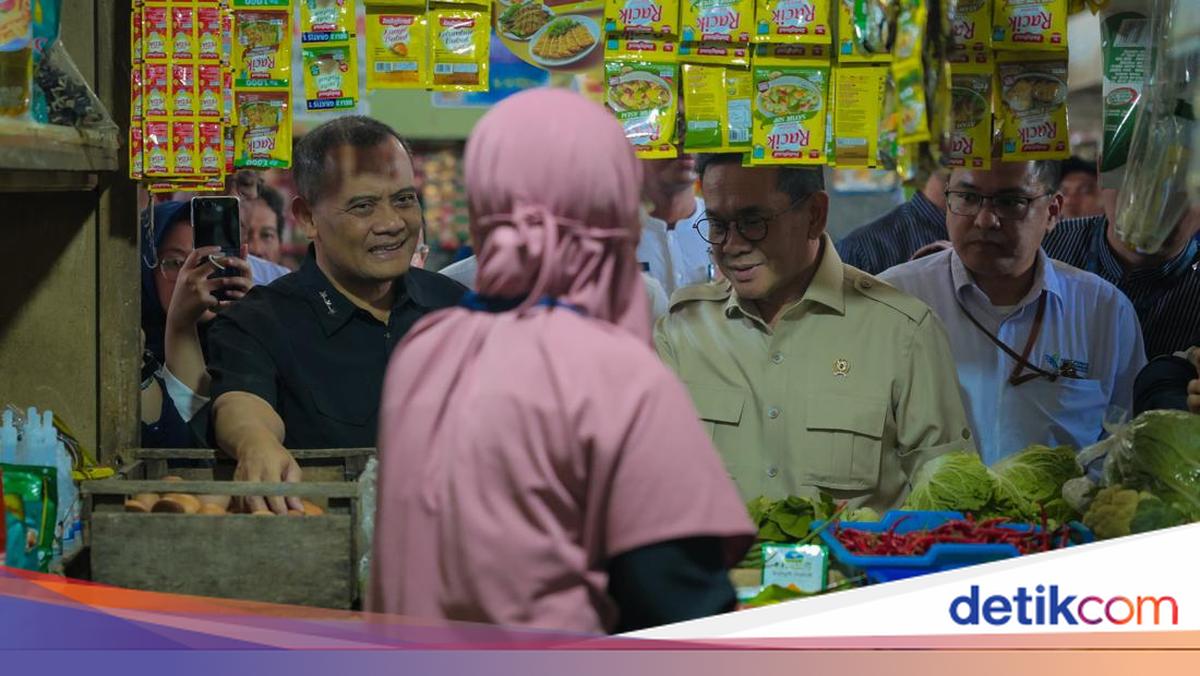
Budi stated that market monitoring is conducted to ensure price stability and adequate supply of basic commodities ahead of Eid al-Fitr.
“We conduct this monitoring to ensure prices remain controlled and supplies are sufficient, so the public can shop with peace of mind,” said Budi in a statement on Thursday (12 March 2026).
During this visit, both officials were accompanied by Kudus Regent Sam’ani Intakoris as they walked through market alleys. They also stopped at several stalls to enquire about prices of various commodities, ranging from chicken meat, beef, rice, cooking oil, to eggs from traders.
“What is the price of meat, ma’am?” asked Budi.
“Thank God, it is still at the standard rate of Rp140,000 for buffalo and beef meat. But at the moment, beef is a bit difficult to obtain,” said one trader, Rina.
Rina stated that meat commodity prices have begun to increase since the beginning of the year. Traders hope that supply remains available ahead of Eid.
At one vegetable stall, a trader also mentioned that red chilli prices currently stand at around Rp30,000 per kilogram. Meanwhile, bird’s eye chilli reaches around Rp40,000 per kilogram.
These figures remain below the Highest Retail Price (HET) listed on the price stabilisation information board at the market. In this list, the reference price for red chilli falls in the range of Rp40,000 to Rp57,000 per kilogram.
Meanwhile, several other commodities are listed in the government’s reference price list, including premium rice at Rp14,900/kg, medium rice at Rp13,500/kg, SPHP rice at Rp12,500/kg, Minyakita cooking oil at Rp15,700/litre, sugar at Rp17,500/kg, and chicken eggs at Rp30,000/kg.
Market Price Monitoring Through SP2KP
Budi explained that the government monitors basic commodity price developments through the Market Monitoring and Basic Commodities System (SP2KP). Through this system, the government can monitor price movements across approximately 550 market points spread across more than 500 districts and municipalities.
“Through this application, we can track price developments every day. When there is a price increase, there are levels to it and we can immediately determine intervention measures,” he said.
Nevertheless, Budi stressed that direct market inspections remain important to ensure actual price conditions and goods availability on the ground.
“We still conduct direct market inspections to understand the real situation, both goods availability and price developments,” said Budi.
He added that direct market visits are also expected to help maintain price stability among traders.
“When we visit the market directly, it also psychologically helps traders maintain prices to keep them controlled,” he explained.
Meanwhile, Luthfi stated that the regional government continues to monitor price developments in traditional markets, so that the public can continue to obtain basic commodities at affordable prices.
“We will intervene if basic commodity prices experience increases,” he concluded.