
Eni Invests US$15 Billion in Gas Projects in East Kalimantan
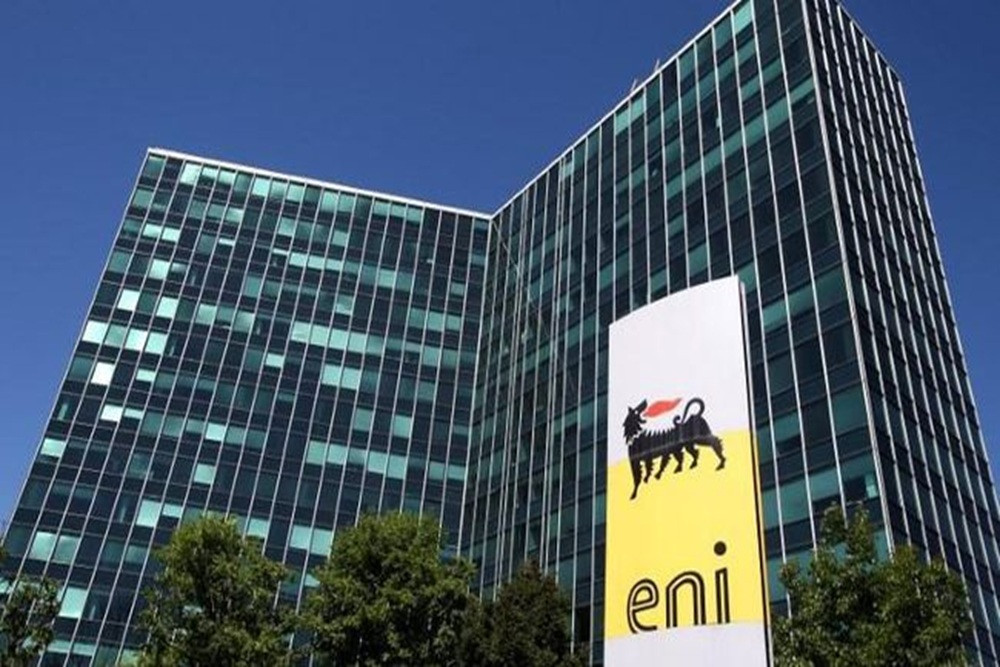
Global energy company Eni has officially taken the Final Investment Decision (FID) for the development of the Gendalo-Gandang (South Hub) and Geng North-Gehem (North Hub) gas projects off the coast of East Kalimantan, with an investment value reaching US$15 billion.
This decision was made just 18 months after the approval of the Plan of Development (POD) in 2024.
Head of SKK Migas Djoko Siswanto welcomed the investment decision as a strong signal of global investor confidence in Indonesia’s upstream oil and gas investment climate.
“This investment decision is an important step in supporting the increase in national gas production while strengthening Indonesia’s energy resilience. SKK Migas, together with the government, will continue to encourage the acceleration of strategic projects like this to provide maximum benefits for the country and society as well as to boost economic growth,” said Djoko Siswanto in an official statement on Friday (20/3/2026).
This US$15 billion investment positions Eni’s project as one of the largest foreign investment commitments in the past decade.
Djoko revealed that they have carried out the tender process for goods and services procurement as well as purchasing Long Lead Items (LLI).
“Yesterday, the Managing Director of Eni Indonesia reported to the Minister of Energy and Mineral Resources about this FID announcement,” he said.
He mentioned that the South Hub project covers the development of the Gendalo and Gandang fields at water depths of 1,000–1,800 metres with the drilling of 7 production wells that will be connected to the existing Jangkrik facility.
Meanwhile, the North Hub project, covering Geng North and Gehem, will be developed at more challenging depths of 1,700–2,000 metres with the drilling of 16 production wells.
For this project, Eni will build a new Floating Production Storage and Offloading (FPSO) facility with a processing capacity of more than 1 billion cubic feet of gas per day and 90,000 barrels of condensate per day.
Overall, the two projects have potential resources of around 10 trillion cubic feet of gas (TCF) and 550 million barrels of condensate.
He stated that production is projected to start in 2028 and reach its peak in 2029 with a capacity of around 2 billion cubic feet of gas per day and 90,000 barrels of condensate per day.
According to him, the produced gas will be piped to shore to supply the domestic distribution network and support LNG production at the Bontang facility to meet domestic needs and exports.
Meanwhile, the condensate will be processed and stored at the offshore FPSO facility before being shipped using tanker vessels.
The reactivation of Train F at the Bontang LNG Plant is a strategic step that accelerates gas monetisation.
As is known, the Bontang facility, which has been operating since 1977, has experienced a decline in gas supply in recent years. Reactivating Train F will revive the previously idle LNG production capacity.
From an employment perspective, Djoko projects significant economic impacts.
“With that investment value, it is estimated to absorb a large number of workers, up to thousands of people,” he said.
Furthermore, this project will be part of the assets to be merged in a business partnership between Eni and Malaysia’s energy company Petronas to form a new company (NewCo) targeted to have production of more than 500,000 barrels of oil equivalent per day in 2029.
The formation of NewCo with Petronas is a common asset consolidation strategy in the oil and gas industry.
For additional information, Eni has been operating in Indonesia since 2001 and is one of the key gas producers in the Kutai Basin in the Makassar Strait, an area now developing as Indonesia’s strategic gas production hub.
Eni’s track record in Indonesia, particularly in operating the Jangkrik Field, demonstrates the company’s capability in managing complex deepwater gas projects.