
Energy Transition Becomes Increasingly Urgent, Communities in Three Affected Regions Push for Justice and Transparency
Indonesia’s energy transition stands at a crossroads. Amid threats of rising Fuel Oil (BBM) prices due to Middle East dynamics, the policy of early retirement of Coal-Fired Power Plants (PLTU) is instead slowing down the national energy agenda. Meanwhile, demands for transparency and justice from communities affected by New Renewable Energy (EBT) projects in West Sumatra, North Sumatra, and West Java are growing stronger. Their aspirations, summarised in the Just Energy Transition Workshops held in each region, affirm a common call: that accelerating the energy transition must proceed inclusively, rooted in local wisdom, and prioritising public welfare, rather than mere numerical targets on paper.
The energy sector is one of the largest contributors to global emissions, with coal predicted by the International Energy Agency to remain the largest source of electricity until 2030. Indonesia has responded through its Nationally Determined Contribution (NDC) commitment, the Net Zero Emission target for 2060, and several policies to accelerate EBT, but implementation remains hampered, such as the unfulfilled early retirement of PLTU and EBT projects that have not fully involved the voices of affected communities.
In North Sumatra, research by the Srikandi Lestari Foundation shows that 70 percent of residents near the Pangkalan Susu PLTU fully understand the impacts of coal burning from the PLTU. “However, because of the narrative that clean energy is expensive, it becomes less appealing,” explained Director of the Srikandi Lestari Foundation, Sumiati Surbakti.
Furthermore, she emphasised the need for comprehensive environmental recovery programme data to ensure fair compensation for affected residents around PLTU locations. “If early retirement of PLTU is eventually carried out and the energy transition is implemented, the important thing is fair compensation for affected communities because this concerns the future of our grandchildren,” she said.
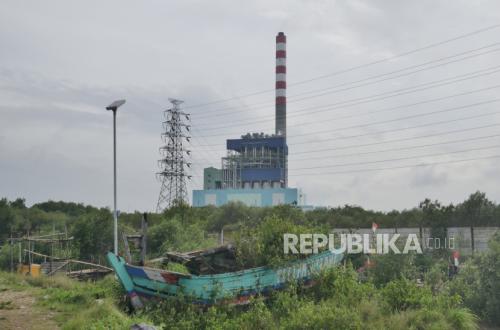
Meanwhile, in West Java, the plan for early retirement of the Cirebon-1 PLTU has been welcomed by fishermen to crab peelers, given the impacts it has caused so far. The jetty facility or coal transportation dock often forces fishermen to detour because their routes are blocked by the jetty bridge. Wiwid, a crab peeler from Waruduwur Village, Indramayu, revealed the economic impacts felt by women. “We are also affected. Crab catches have decreased, so our income has also reduced,” she stated during the workshop discussion.
In West Sumatra, field practices show that energy transition without justice will only give birth to new conflicts. The selection of technology not aligned with community characteristics, along with the absence of transparency and community involvement from the early stages, makes the energy transition vulnerable to being perceived merely as a claim of “clean energy” or simply to meet emission reduction targets. “Conflicts in energy projects like the Geothermal Power Plant (PLTP) in Gunung Talang, for example, occur because the government is more focused on building a transition narrative without ensuring community involvement. As a result, large-scale projects are viewed as a form of natural resource exploitation that sacrifices residents,” revealed Diki Rafiqi, Director of LBH Padang.
According to researcher from the Center for Agrarian and Environmental Justice (CAEJ), Andalas University, Apriwan, the main problem with energy transition in the region, particularly in West Sumatra, does not lie in the absence of policies or technical potential, but in the lack of synchronisation between centralistic national policy designs and local conditions. From analysis of various EBT projects in West Sumatra such as Danau Singkarak, Gunung Talang, Tandikek Singgalang, and Muara Laboh, emerging issues include social resistance, adat land conflicts, trust crises, and unequal distribution of economic benefits.
“This situation should not be seen merely as rejection of the energy transition, but rather indicates that there are still justice gaps in energy transition governance,” he said. Apriwan stated that to achieve a just transition, integration between global frameworks and local values is needed. Such as applying the principles of Adat Basandi Syarak, Syarak Basandi Kitabullah, and Salingka Nagari. “Adat Basandi Syarak, Syarak Basandi Kitabullah serves as a source of moral legitimacy and public ethics, while Salingka Nagari provides a local institutional structure based on nagari that emphasises deliberation, consensus, and collective ownership of natural resources,” he explained.
Meanwhile, Onrizal from Green Justice Indonesia revealed that a just energy transition in the North Sumatra region is not merely a national mandate, but a strategic opportunity to build a fair green economy and improve community quality of life. “North Sumatra has potential renewable energy sources to accelerate the energy transition while maintaining social justice for vulnerable communities in accelerating emission reductions,” he explained.
Director of Rhizoma and implementer of the workshop in West Java, Meiki Paendong, stated that early retirement of PLTU does not only rely on replacing technology to reduce emissions but must also ensure justice for communities that have been affected by PLTU. “The voices of local residents must be an important part of every policy-making because the energy transition is not merely a technical and economic issue but a social process that must involve affected communities as the main subjects of change,” she said.