
Energy Transition and the Rise of Nusantara Talent
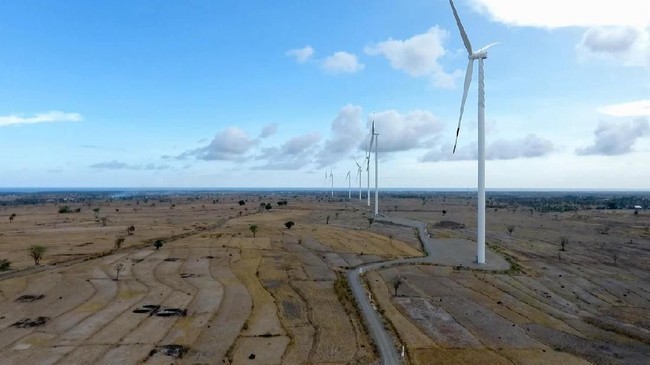
Global energy transition is no longer merely a shift in power sources, but a race to master technology that will determine who leads and who merely serves as a market in the world’s new economic civilisation. Therefore, the National Awakening Day commemoration on 20 May 2026 should not end as a ceremonial remembrance of the past, but serve as a catalyst to declare Indonesia’s technological sovereignty. Indonesia’s natural wealth—abundant sunlight, relentless coastal winds, and major rivers cutting through the archipelago—will hold no strategic value if the nation fails to produce exceptional talent capable of independently designing, assembling, and managing green energy infrastructure. This is where the fundamental meaning of national energy awakening finds its relevance. Indonesia’s energy future will ultimately depend not just on natural resources, but on human quality and innovation at the heart of national economic development. The world is witnessing unprecedented global capital shifts toward the green economy, with clean energy investments reaching trillions of dollars annually, permanently reshaping the global geo-economic landscape. In this rapidly evolving global competitive landscape, Indonesia’s position is highly strategic. The nation offers vast potential for hundreds of gigawatts of solar power. The Kayan River in North Kalimantan holds world-class hydropower potential, while coastal and offshore regions provide ideal conditions for large-scale industrial wind farms. Yet these blessings could turn into irony if Indonesia merely becomes a market for foreign green technology products. Building energy sovereignty means ensuring that solar panels across Nusantara, wind turbine blades along the coast, and smart transmission systems underpinning the national grid are designed and managed by skilled Indonesian hands. Full reliance on imported technology merely shifts dependency from fossil fuels to new dependencies on foreign components and technology. Global experiences show that successful energy transitions always begin with human capital development. Countries leading the global green industry have placed human capital investment and technological innovation as their primary foundation long before large-scale physical infrastructure development. They understand that green-skilled labour is the core engine driving the new energy civilisation. For instance, Europe aggressively runs retraining programmes for carbon-intensive sector workers to adapt to renewable energy industries. Their vocational education curricula are specifically designed to produce wind turbine technicians, building energy efficiency experts, and battery material recycling specialists. This structured approach ensures the energy transition does not leave the workforce behind. In East Asia, green industry dominance is built through strong synergy between universities, research centres, and manufacturing sectors. Governments and industries not only incentivise clean energy plant construction but also invest heavily in domestic research and technology development. From this synergy emerge high-tech solar panels, modern energy storage systems, and offshore wind turbines that dominate global supply chains. Close collaboration between academia, industry, and state funding creates a continuously evolving innovation ecosystem. In the United States, the private sector is incentivised through various schemes to establish green workforce training centres and industrial apprenticeship programmes. Regions once dependent on traditional mining are gradually transformed into clean energy manufacturing and power storage technology hubs. The common thread from all global experiences is clear. Green industry revival never stems from a single actor, but from large-scale collaboration between government, industry, educational institutions, and business communities. For Indonesia, this massive investment in human quality and technological innovation has a strong philosophical foundation: the values of Pancasila Economics. The transition to clean energy must be designed as a machine for creating high-quality, equitable, and inclusive jobs. Economic decarbonisation must not benefit only a few large corporations or specific social groups. Instead, this transformation should serve as an instrument for equitable prosperity through new skill mastery across the entire nation. Applying Pancasila Economics values ensures every technological leap delivers widespread economic benefits. When Indonesia builds solar component manufacturing facilities, wind turbine assembly centres, or domestic power control industries, it is effectively revitalising the national economic supply chain. These activities will spur the growth of thousands of small and medium enterprises involved in material supply, engineering services, logistics, and infrastructure maintenance. In the spirit of empowerment, young people across regions must not