
Energy Subsidies Could Exceed Rp 100 Trillion
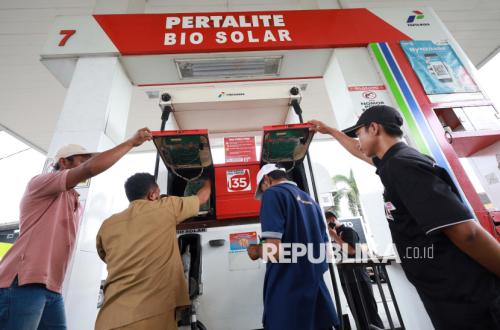
REPUBLIKA.CO.ID, JAKARTA — The surge in global oil prices due to international geopolitical tensions is beginning to strain Indonesia’s fiscal room. In certain scenarios, the burden of energy subsidies is estimated to swell far beyond the 2026 state budget assumptions.
Executive Director of CORE Indonesia, Muhammad Faisal, stated that the rise in oil prices is a crucial factor that could drive a significant increase in subsidies.
“If the average global oil price exceeds $80 per barrel, with an exchange rate of around Rp17,000 per US dollar, the additional energy subsidies could surpass Rp100 trillion,” Faisal said when contacted by Republika on Friday (27/3/2026).
According to Faisal, this calculation uses the annual average price, not short-term fluctuations. This means that even if prices temporarily breach $100 per barrel due to geopolitical escalation, the pressure on subsidies is still calculated based on the yearly average.
He warned that at that level alone, the 2026 state budget deficit could potentially exceed 3 per cent of Gross Domestic Product (GDP).
Based on assumptions of Brent oil prices around $110 per barrel, an exchange rate of Rp16,976 per US dollar, and a Pertalite quota of 29.7 million kilolitres (KL) in the 2026 state budget, the economic price of fuel is estimated at around Rp16,300 per litre.
With the set selling price for Pertalite at Rp10,000 per litre, the subsidy per litre reaches about Rp6,300. Multiplied by the total volume of 29.7 billion litres, the total energy subsidy needs could reach around Rp187 trillion.
This figure far exceeds the state budget subsidy assumption of Rp120 trillion, resulting in an overrun of about Rp67 trillion. In percentage terms, the subsidy burden swells by around 56 per cent from the initial allocation.
This pressure could intensify if oil prices continue to rise. In a moderate scenario, with oil prices rising about 20 per cent, total subsidies could reach Rp282 trillion.
Meanwhile, in a high-increase scenario, subsidies could surge to around Rp425 trillion. Even in extreme conditions, the subsidy burden could breach Rp500 trillion, which is deemed unsustainable for the state’s finances.
Faisal assessed that the government cannot rely solely on budget efficiency to mitigate this pressure. Overly deep efficiency measures risk stifling economic growth, including household consumption and business activities.
As an alternative, he advocated refocusing and re-evaluating the budget, by redirecting spending from less priority areas to more urgent sectors.
“With such steps, the budget deficit can be kept below 3 per cent, and subsidised fuel prices do not need to be raised,” he explained.